

Harbinger expands medium-duty lineup with HC Series electric truck
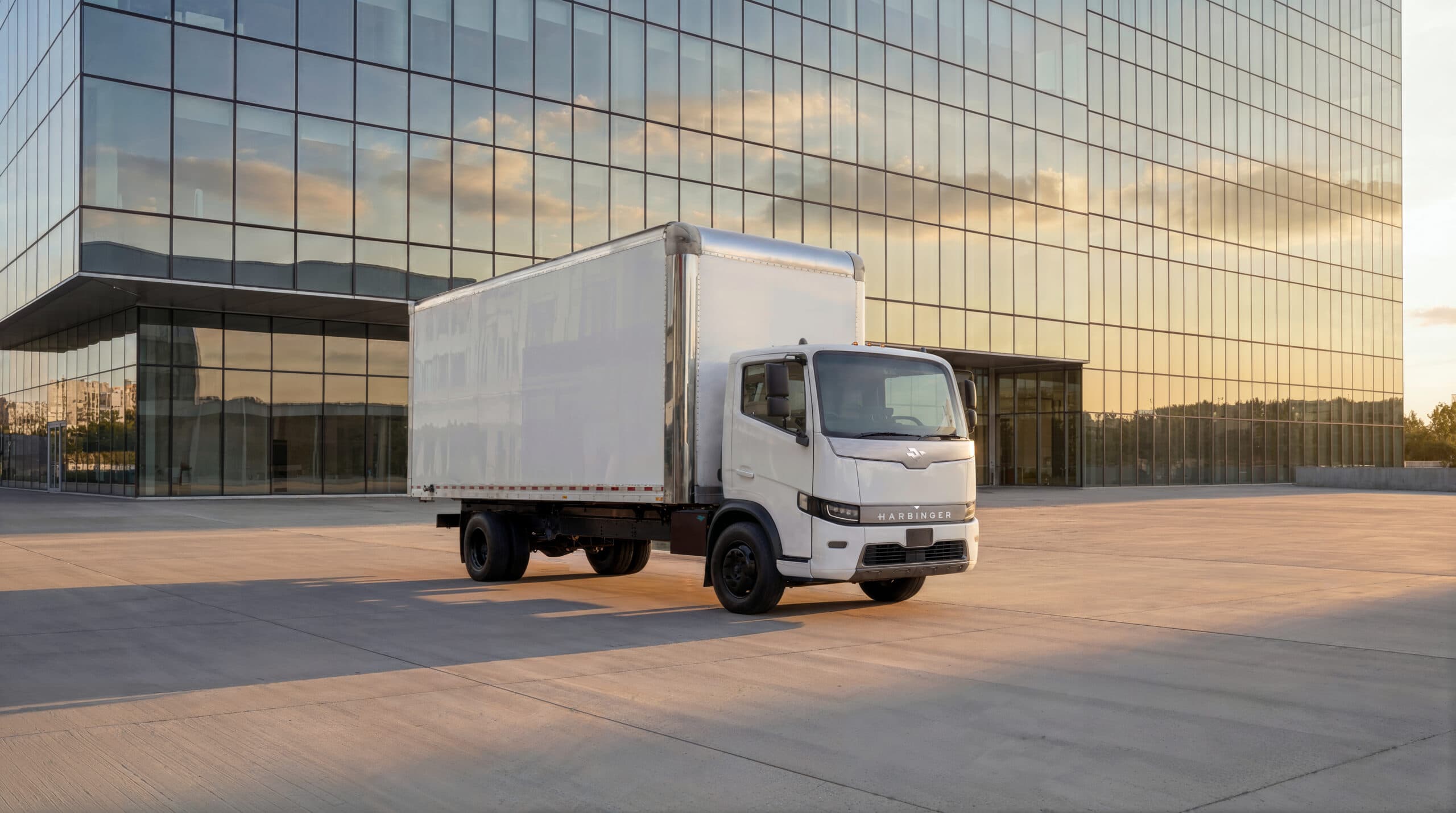
Harbinger unveiled the HC Series Cab at Work Truck Week 2026, a medium-duty electric/hybrid truck rated at 26,000 lbs GVW with 500-mile hybrid range and 15kW exportable power — built ground-up on a proprietary EV architecture with 450,000-mile durability targets. Both all-electric and plug-in hybrid variants are available for order now, targeting urban and regional fleet operators who've been forced to choose between payload, range, and maneuverability. The truck's 42-foot turning diameter on a 158-inch wheelbase and 29-inch frame height are positioned as best-in-class for last-mile density environments. This directly impacts the cost structure of third-party logistics carriers, regional delivery networks, and FBA-alternative fulfillment operators serving Amazon, Walmart, and DTC brands.
The non-obvious play here is in last-mile fulfillment cost trajectories for mid-size 3PL operators that serve 7-8 figure sellers.
If vehicles like the HC Series scale into regional carrier fleets over the next 18-24 months, fuel and maintenance cost reductions could compress per-shipment rates — but the near-term winners are large shippers with leverage to renegotiate carrier contracts, not small sellers.
The 15kW onboard power export is a sleeper feature: fleets running mobile fulfillment, field service, or pop-up retail (think TikTok Shop live event logistics) gain operational flexibility without generator overhead.
Sellers heavily dependent on regional 3PLs should start asking carriers directly about fleet electrification timelines — because carriers that modernize faster will have structurally lower operating costs and potentially offer better rate locks.
The competitive moat risk is real for sellers who lock into long-term 3PL contracts at current diesel-era pricing without rate-review clauses.
This launch is part of a structural shift in commercial fleet electrification that will reshape last-mile logistics economics by 2027 — the same urban density corridors where Amazon, Walmart GoLocal, and Shopify Deliverr-style networks compete are the exact target market for the HC Series.
As fleet operators absorb lower total cost of ownership on electric platforms, the per-unit economics of regional delivery will bifurcate: early-adopter carriers gain margin, late-adopter carriers face stranded diesel asset costs and pass them to shippers.
For marketplace operators, this is a 24-month leading indicator of potential last-mile rate deflation in major metros — but only for sellers positioned with flexible carrier agreements and multi-carrier fulfillment strategies heading into that window.
Pull your Shipping Cost by Carrier report in your 3PL or Shopify/Amazon Seller Central dashboard this week and flag any regional carrier where fuel surcharges exceed 8% of base rate — those carriers are most exposed to diesel cost volatility and most likely to reprice aggressively before electrifying, meaning you want shorter contract terms or fuel-adjustment clauses NOW.
Contact your top 2 regional 3PL partners this week and ask one direct question: 'What percentage of your delivery fleet will be EV or hybrid by Q4 2026?' — if they can't answer, they're behind, and you should begin qualifying a backup carrier with a documented electrification roadmap before peak season rate negotiations in Q3.
In the next 30-90 days, watch for Harbinger order volume announcements or fleet partnership deals with regional carriers — the second domino is last-mile rate compression in urban corridors (LA, NYC, Chicago, Dallas), which will force Amazon DSP operators and regional 3PLs to either modernize or lose contracts, reshuffling the carrier landscape sellers depend on for FBM and DTC fulfillment.
Bottom Line
Electric truck economics are coming for your 3PL rates — sellers with fuel surcharge clauses win, everyone else pays the transition tax.
Source Lens
Industry Context
Useful background context, but lower-priority than direct platform, community, or operator intelligence.
Impact Level
medium
Electric truck economics are coming for your 3PL rates — sellers with fuel surcharge clauses win, everyone else pays the transition tax.
Key Stat / Trigger
500-mile hybrid range on a 26,000-lb GVW medium-duty electric truck
Focus on the operational implication, not just the headline.
Full Coverage
Urban and regional fleets have long wrestled with a brutal trade-off: sacrifice payload for maneuverability, or give up range to haul more cargo. Add in an electric battery pack, and the math becomes trickier. Harbinger is betting its new HC Series Cab can end that compromise.
The California-based manufacturer unveiled the medium-duty low-cab-forward work truck at Work Truck Week 2026 in Indianapolis earlier this month. Both all-electric and plug-in hybrid models are now available for order.
“The HC Series Cab represents a major expansion of our product line and a defining moment for the medium-duty industry,” said John Harris, co-founder and CEO of Harbinger. “For too long, fleets have had to compromise between payload, maneuverability, range and onboard capability.
We engineered this platform to outperform legacy diesel options while unlocking new advantages through electrification and our range-extended hybrid system to enable real work in the field.” What’s under the hood The truck carries a 26,000-pound gross vehicle weight rating with a payload capacity that Harbinger says matches leading vehicles in the segment.
Its low-cab-forward design lets fleets fit longer cargo boxes on shorter wheelbases, adding usable cargo space without stretching overall vehicle length. The hybrid version uses a gasoline engine to recharge batteries, pushing range up to 500 miles depending on configuration and drive cycle. The vehicle can also recharge while parked without plugging in.
Perhaps more useful for crews in the field: An onboard AC inverter delivers up to 15 kilowatts of exportable power. In hybrid mode, that power runs continuously through onboard generation. No separate generator is needed. The platform also supports full power take-off to run hydraulic and body-mounted equipment.
Improved turning diameter and durability The HC Series Cab has a 42-foot turning diameter on the 158-inch wheelbase, which Harbinger calls best-in-class. Frame height is roughly 29 inches at gross vehicle weight rating, speeding up entry, exit and loading.
The low-cab-forward driving position improves sightlines for urban safety, while independent front suspension smooths out the ride. Unlike electric trucks converted from diesel platforms, Harbinger built this vehicle from scratch on its own electric architecture.
The company designs and manufactures the powertrain, battery system, steering and brakes in-house. Shared parts across Harbinger vehicles let fleets simplify service and cut downtime. A modular front end makes repairs easier. Harbinger engineered the platform for durability beyond 450,000 miles.
Safety tech coming later this year Harbinger recently acquired Phantom AI to bring more driver-assistance features to its trucks. Current models include backup cameras with dynamic trajectory, virtual bumpers and acoustic alerts. Later in 2026, Harbinger will add emergency braking, adaptive cruise control and lane keeping to its electric and hybrid vehicles.
The company said the move responds directly to fleet demand for better driver protection. The post Harbinger expands medium-duty lineup with HC Series electric truck appeared first on FreightWaves.
Original Source
This briefing is based on reporting from FreightWaves. Use the original post for full primary-source context.
Style
Audience