

Latest week U.S. rail shipments flat
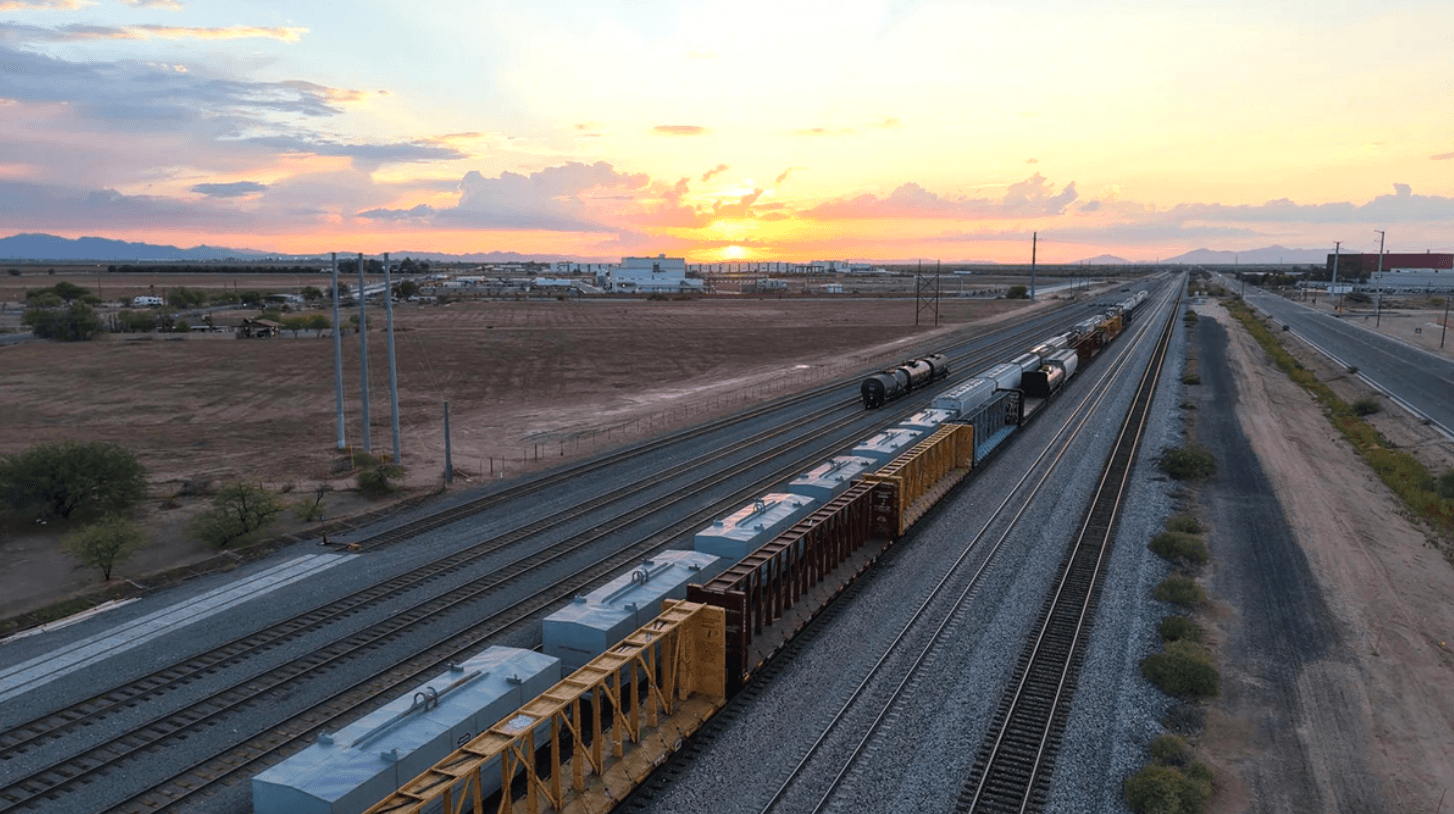
U.S. rail intermodal volume is flat to slightly negative (-0.5% YTD through Week 10 of 2026) while carloads show modest 5% YTD gains — a bifurcated signal indicating that containerized freight moving via rail is stalling even as bulk commodities strengthen. J.B. Hunt confirmed on earnings that low intermodal rates have failed to pull volume from trucking, meaning truckers are holding pricing power. Grain surged 18.4% and petroleum 11.3% week-over-week, signaling agricultural and energy input cost pressures building in the supply chain. For marketplace operators, the critical read is that domestic freight capacity remains abundant and truckload is winning — which has direct implications for inbound replenishment costs and FBA prep center economics in Q2 2026.
The non-obvious play: intermodal weakness with trucking strength means spot truckload rates are NOT collapsing the way shippers hoped, which quietly compresses margins for sellers who built Q2 landed cost models assuming rail-driven rate relief.
If you're sourcing domestically or running cross-country FBA replenishment lanes from West Coast ports or Midwest 3PLs, your freight broker may be quoting you flat-to-higher truckload rates through June.
Sellers running thin-margin consumables or oversized catalog on Amazon should immediately audit Q2 inbound freight assumptions — a 10-15% freight cost variance on a $2M inbound replenishment budget is a $200-300K P&L miss before a single unit sells.
The second-order hit lands on Walmart DSV and Shopify DTC brands using regional carrier networks that benchmark against intermodal — expect those contracts to reprice upward at mid-year renewal.
The flatness in intermodal volume despite low rates is a structural signal, not a blip — it confirms the truckload sector has regained competitive footing and will hold pricing power through at least mid-2026, eliminating the freight cost tailwind many operators were counting on to offset tariff and platform fee headwinds.
In the broader 2026 marketplace landscape, this stacks on top of rising Amazon FBA fee adjustments and Walmart fulfillment cost increases, meaning the cost-to-deliver squeeze is coming from multiple directions simultaneously.
Brands that haven't diversified their freight strategy — specifically by building hybrid truckload/intermodal routing guides — are most exposed as margin compression accelerates heading into back-to-school and pre-holiday inventory build cycles.
Pull your Amazon Inventory Performance dashboard and cross-reference your inbound shipment cost per unit against Q1 actuals — if your truckload line-haul cost has crept above $0.08/lb on standard replenishment runs, renegotiate with your 3PL or freight broker NOW before Q2 peak booking windows close in April.
This week, contact your freight broker and explicitly ask for a truckload vs. intermodal rate comparison on your top 3 inbound lanes — if the spread is under 8%, move volume to truckload immediately since intermodal reliability is not compensating for the marginal savings given current service levels.
In the next 30-60 days, model a scenario where your Q2-Q3 inbound freight costs run 12-18% above Q1 budget — grain and petroleum spikes are upstream cost signals that hit packaging, food, and industrial SKUs hardest; brands in those categories should lock forward freight contracts before carriers reprice in May.
Bottom Line
Intermodal is losing to trucks in 2026 — if you modeled rate relief into your Q2 landed costs, you're already behind on margin.
Source Lens
Industry Context
Useful background context, but lower-priority than direct platform, community, or operator intelligence.
Impact Level
medium
Intermodal is losing to trucks in 2026 — if you modeled rate relief into your Q2 landed costs, you're already behind on margin.
Key Stat / Trigger
Intermodal YTD volume down 0.5% through first 10 weeks of 2026 while truckload holds pricing power
Focus on the operational implication, not just the headline.
Full Coverage
Freight on U. S. lines saw minimal increases in the latest data reported by the Association of American Railroads. Total U. S. traffic was 508,737 carloads and intermodal units, up 1. 1% from the same week a year ago. Carloads came to 228,299 units, up 1%, while containers and trailers totaled 280,438, up 1. 1% from 2025.
Grain continued its recent rally, leading six of 10 carload commodity groups that improved week on week, up 18. 4%. Petroleum and related products was the other double-digit gainer, up 11. 3%. Metallic ores and metals backslid after previous-week increases, off 8. 1%, while forest products fell by 8%.
(Chart: AAR) Through the first 10 weeks of 2026, cumulative volume on U. S. railroads reached 2,222,692 carloads, up 5%, and 2,754,646 intermodal units, weaker by 0. 5% y/y. Intermodal services provider J. B. Hunt in an earnings call said low rates have so far failed to take share from a strengthening truckload sector. Total combined U. S.
traffic year-to-date was 4,977,338 carloads and intermodal units, narrowly up 1. 9%. North American rail volume for the week on 9 reporting U. S. , Canadian and Mexican railroads totaled 330,589 carloads, down 0. 8%, and 368,448 intermodal units, ahead by 1. 7% from a year ago. Total combined traffic was 699,037 carloads and intermodal units, up 0. 5%.
Volume for the first 10 weeks of this year totaled 6,849,595 carloads and intermodal units, an increase of 2. 4% compared with 2025. Subscribe to FreightWaves’ Rail e-newsletter and get the latest insights on rail freight right in your inbox. Read more articles by Stuart Chirls here.
Original Source
This briefing is based on reporting from FreightWaves. Use the original post for full primary-source context.
Style
Audience