‘Our biggest challenge has been keeping them in stock’: Mahjong sets are big business for brands
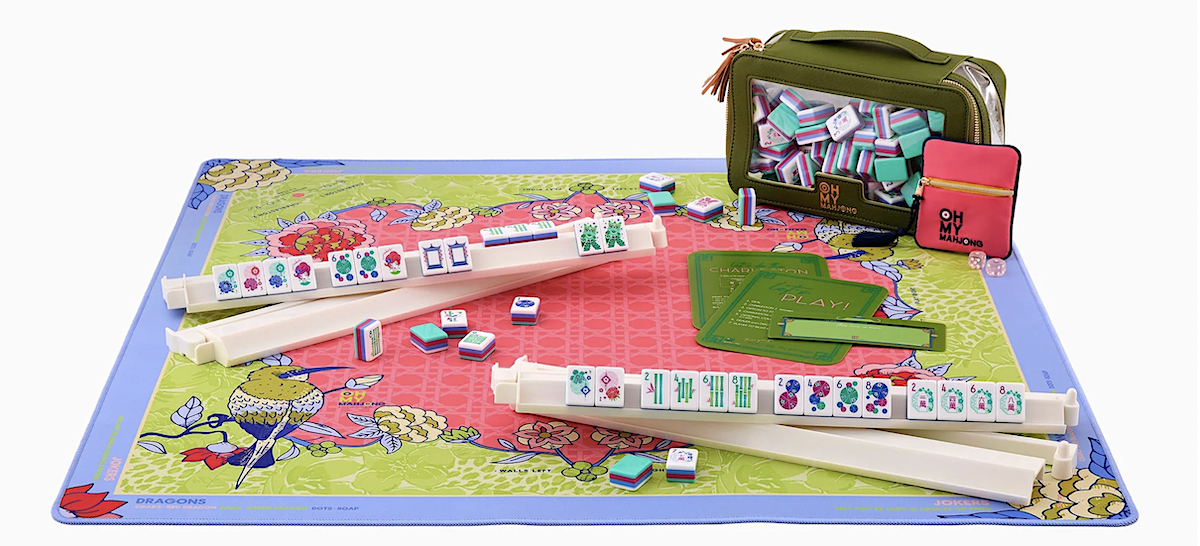
Mahjong is having a moment in the U.S. as a new generation discovers the pastime — and brands are cashing in.
Source Lens
Industry Context
Useful background context, but lower-priority than direct platform, community, or operator intelligence.
Impact Level
medium
Use this briefing to decide whether your team needs an immediate workflow, policy, or reporting change.
Key Stat / Trigger
No single quantitative trigger surfaced in this report.
Focus on the operational implication, not just the headline.
Full Coverage
Global Retail // October 29, 2026 ‘Our biggest challenge has been keeping them in stock’: Mahjong sets are big business for brands By Julia Waldow Oh My Mahjong Megan Trottier, the founder and CEO of lifestyle brand Oh My Mahjong, learned to play mahjong about 20 years ago, from her college roommate.
Trottier loved the tile-based game, but didn’t play it again until Covid, at a friend’s suggestion. Trottier got hooked once again, and she saw an opportunity to put a modern spin on American Mahjong, which has different tiles and winning hands compared to Chinese Mahjong.
After meeting weekly with friends for games, Trottier started Oh My Mahjong out of her Dallas garage in 2022. At the time, there weren’t lots of mahjong accessories to choose from, Trottier told Modern Retail. She started making colorful designer mahjong mats and storage bags. In 2023, Oh My Mahjong generated $1 million in sales.
In 2025, that number rose to $40 million. Oh My Mahjong has already surpassed that figure in 2026. “There was nothing in the market like there is now,” Trottier said. “Now, everywhere you look, there’s something mahjong.” Mahjong — a game that combines both luck and skill — is having a moment as a new generation discovers the pastime.
Mahjong originated during the 1800s in China and expanded to the U. S. and Europe in the 1900s. Today, it has become popular among young people seeking out tactile, offline experiences. On Google, searches for “mahjong” are up 70% year over year in the U. S. and up 50% globally since 2021, per Google Trends. In the U. S.
, mahjong is enjoying a renaissance, alongside analog activities like collecting vinyl records or crocheting. “I think we live in such a digital world that people crave connection,” Trottier said. “[Mahjong] forces you to put your phone down. It forces you to find three people to play with. It forces you to use your brain.
You can’t drink too much [because you need to concentrate]. All these trends that people are craving, [mahjong] brings together, at one table.” Similar to the rise of tabletop games, many retailers today carry mahjong and are adding more styles each year.
Anthropologie and Urban Outfitters, for instance, sell different types of sets, including travel versions. People can also buy mahjong tiles and accessories via Amazon, Walmart, Crate & Barrel, West Elm, Hot Topic and even Temu.
There are plenty of mahjong-inspired products, too, like socks from Sock Candy, beaded bags from Ink + Alloy, and playing cards from REI. “It’s fun to see the evolution over the past four years,” Trottier said. “You were begging people to carry you, and now, they’re coming to you.”
‘I don’t even see our full demand’ Oh My Mahjong has added dozens of SKUs since 2022 as demand builds. Its bestsellers include mats and tile sets, the latter of which can retail for $400. Today, the brand has a presence in more than 2,000 retail doors and sells a mat every 10 seconds.
Oh My Mahjong’s business is 60% DTC and 40% wholesale, with partners including Bloomingdale’s, Neiman Marcus and Tuckernuck. Oh My Mahjong also recently opened an 80,000-square-foot warehouse in Texas and is launching an app to connect people with other mahjong players. Trottier even recently wrote a book about mahjong that’s now a New York Times bestseller.
Limited-edition sets are powering some of the brand’s growth, too. In early October, Oh My Mahjong released a collaboration with LoveShackFancy that sold out in under five minutes. Its website also debuts new tile designs regularly, with names like Papaya Spritz and Emerald.
The products have become collectibles, especially among members of the brand’s Mahji Mentorship program, a network of thousands of teachers across the U. S. “Lots of people will have three, four, five mats,” Trottier said. “Some of our teachers have 20 tile [sets]. … And depending on what [events] they host, it’s like, ‘Oh, it’s fall.
I’m going to get out my fall mat with my more fall tiles.'” Jonathan Adler introduced mahjong sets in 2025 to complement its other offerings like backgammon, tic-tac-toe and chess. The home brand, started in 1993 by designer and potter Jonathan Adler, sells furniture, lighting and accessories.
Alison Bergen, president of Jonathan Adler, said it took a year to develop the mahjong sets, which retail for $695, with the exception of the brand’s lower-priced sets and mats found at Michaels. Today, mahjong is the fastest-growing category within games at Jonathan Adler. “Our biggest challenge has been keeping [the sets] in stock,” Bergen said.
“I don’t even see our full demand. This summer, everything was sold [out] by the time it landed because we ha
Original Source
This briefing is based on reporting from Modern Retail. Use the original post for full primary-source context.
Style
Audience