

Regulator wants additional, detailed information on UP-NS rail merger
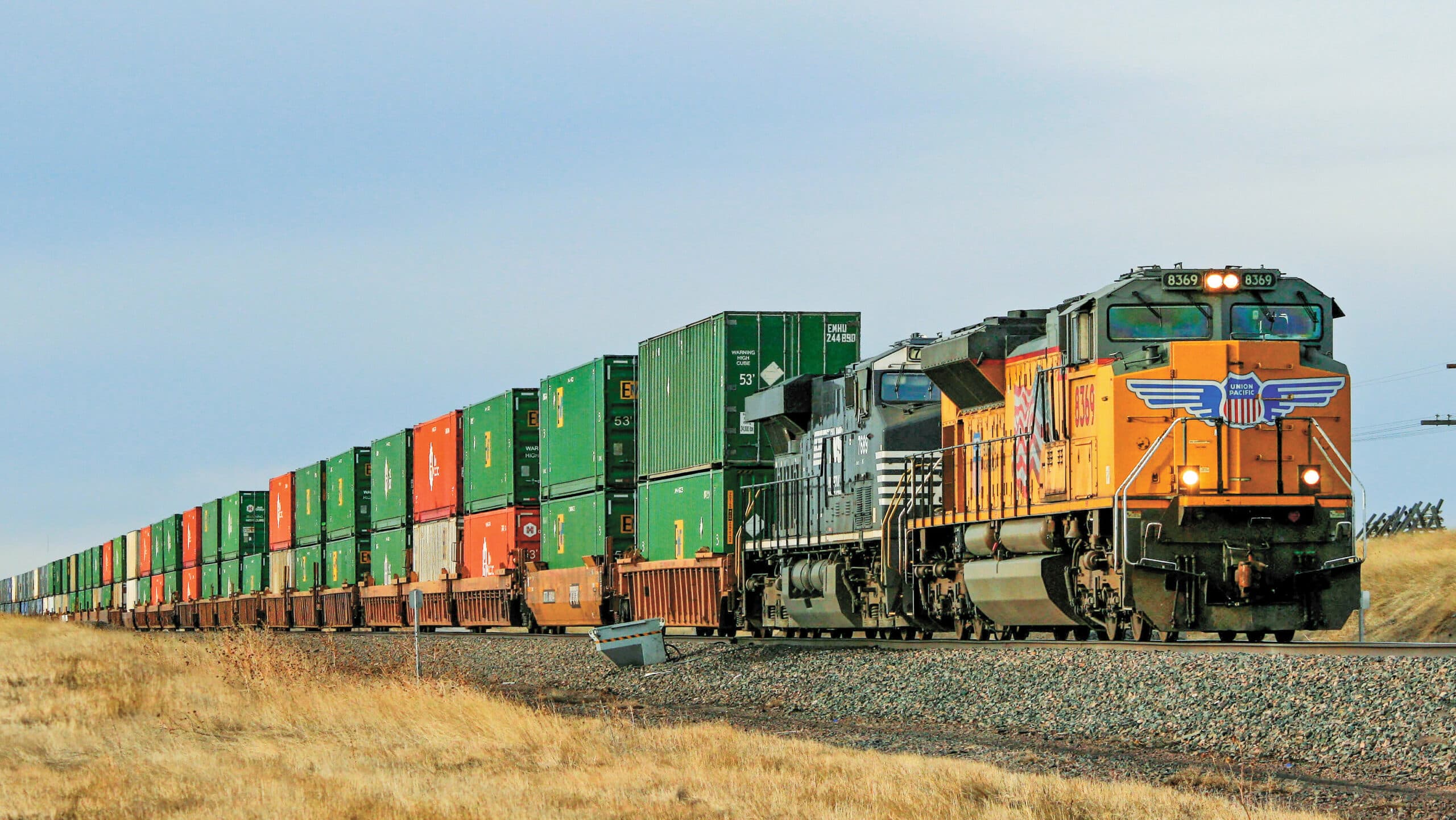
The Surface Transportation Board (STB) is demanding granular internal documents — confidential memos, banker studies, synergy forecasts, and competitive market analyses — from Union Pacific and Norfolk Southern before their revised $85B merger application drops in late April 2026. This is the first transcontinental rail merger evaluated under post-2001 stringent rules, triggered after 1990s mergers caused catastrophic service failures. The DOJ has flagged these documents as 'critically important,' signaling serious antitrust scrutiny that could delay or reshape the deal timeline well beyond Q2 2026. If approved, this merger would consolidate two of the largest U.S. freight rail networks into a single transcontinental operator controlling a massive share of domestic freight capacity.
The non-obvious play: regulatory friction on this merger is a leading indicator of prolonged freight rate volatility, and sellers running lean FBA replenishment cycles or relying on intermodal rail for import-to-DC routing should treat this as a 12-18 month supply chain disruption signal, not background noise.
If the STB slow-walks approval or imposes service conditions, shippers will face capacity uncertainty on key east-west corridors — exactly the lanes that feed Walmart and Amazon DCs in the Midwest and Southeast.
For a $10M/year seller, this is the moment to audit your 3PL contracts for rate lock provisions and diversify carrier mix away from pure rail-dependent intermodal before Q3 bid season.
The margin compression risk isn't from the merger itself — it's from the 12-24 months of operational limbo while two massive railroads optimize for deal approval rather than service reliability.
This merger, if approved, would fundamentally redraw the U. S. freight rail map and represents the most significant logistics infrastructure consolidation since the 1990s — a decade that ended in service meltdowns that cost shippers billions.
In the 2026 marketplace landscape where Amazon and Walmart are both aggressively expanding their own logistics networks, a disrupted rail system creates a structural advantage for platforms with owned last-mile and middle-mile assets, further pressuring third-party sellers who depend on open freight markets.
This is part of a broader trend of supply chain infrastructure consolidation — from ocean carrier alliances to port automation to rail — that is systematically compressing the margin buffer independent sellers have historically used to absorb logistics shocks.
Pull your inbound freight cost report in Seller Central or your 3PL portal this week and flag any SKUs where intermodal rail accounts for more than 40% of replenishment routing — those are your highest exposure units if UP or NS deprioritizes commercial freight during merger review chaos.
Contact your freight broker or 3PL this week and explicitly ask them to model a 15-20% rate increase scenario on UP and NS corridors for Q3-Q4 2026 bids — if your landed cost breaks above your current ACOS-adjusted break-even, reprice or shift to truck-based intermodal on those lanes now before annual contracts close.
In the next 30-90 days, watch for the revised merger application filing in late April 2026 — the STB's response timeline will signal whether this deal faces a 6-month review or a multi-year slog; a prolonged review is the second domino that triggers shippers to hoard contracted capacity, spiking spot rates on affected corridors exactly when peak season inventory builds begin.
Bottom Line
Rail merger limbo = freight rate volatility for 18 months — lock your intermodal contracts before Q3 bid season or pay spot.
Source Lens
Industry Context
Useful background context, but lower-priority than direct platform, community, or operator intelligence.
Impact Level
medium
Rail merger limbo = freight rate volatility for 18 months — lock your intermodal contracts before Q3 bid season or pay spot.
Key Stat / Trigger
$85 billion proposed transcontinental rail merger under STB review
Focus on the operational implication, not just the headline.
Full Coverage
While Union Pacific and Norfolk Southern prepare to file a revised merger application in late April, federal regulators are requesting specific data related to the proposed transcontinental tie-up.
The request for documents to be submitted prior to the revised application likely could include highly sensitive data related to the $85 billion deal – the first to be evaluated under more stringent rules enacted in 2001 after mergers in the Nineties led to serious rail service meltdowns.
The request included in a seven-page decision released Wednesday follows a recommendation to the STB from the Department of Justice that such documents are of “critical importance” and reflect real-time business decisions and forecasts concerning the merging companies’ operations, and forecasts of future market conditions.
Justice said such documentation is typical when it and the Federal Trade Commission review mergers, guided by the Hart-Scott-Rodino antitrust legislation.
The regulator asked for internal reports, confidential memoranda, and studies by the companies’ bankers, consultants and other advisors evaluating the acquisition “with respect to market shares, competition, competitors, markets, potential for sales growth, and expansion into new product or geographic markets.”
Data covering synergies and efficiencies that are expected to be produced by the merger were also included in the request. “Union Pacific (NYSE: UNP) remains committed to following the STB process and will be responding to the requests for the information they need to evaluate this historic merger,” the company said in a statement.
Subscribe to FreightWaves’ Rail e-newsletter and get the latest insights on rail freight right in your inbox. Read more articles by Stuart Chirls here.
Original Source
This briefing is based on reporting from FreightWaves. Use the original post for full primary-source context.
Style
Audience