

The Industry Is Focused on 200,000 Non-Domiciled CDLs — But There Is Another 200,000-Driver Story Nobody Is Covering
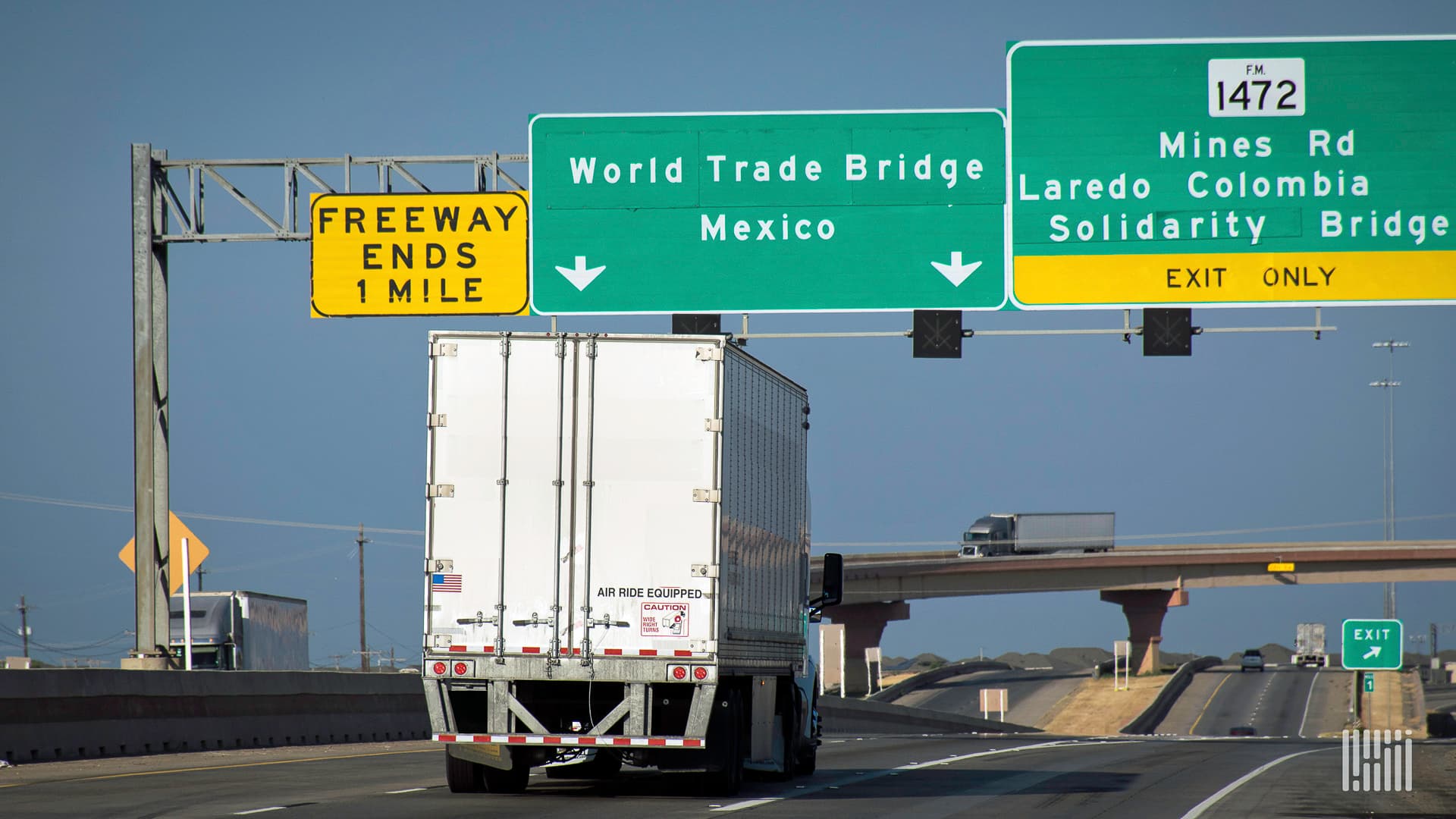
As of January 2, 2026, 202,345 CDL holders are legally barred from driving, with 159,226 (78.7%) having taken zero steps toward reinstatement — effectively removing them from the driver pool permanently. Clearinghouse-II (effective November 18, 2024) downgraded their licenses, making this a structural, not cyclical, capacity loss.
Fewer available drivers means tighter capacity and higher freight rates, compressing margins on replenishment shipments and FBA inbound logistics — especially for sellers moving bulk SKUs. Sellers still using spot rates without contracted carrier relationships will feel this first.
This is a regulatory-driven supply shock to trucking capacity, not a demand-side fluctuation — it compounds existing margin compression for sellers already absorbing rising fulfillment and storage fees across Amazon and Walmart.
Audit your inbound freight costs in Seller Central's Shipping Queue or your 3PL dashboard now — if spot rates are climbing versus your 90-day average, lock in contracted rates before summer peak demand tightens capacity further.
In the next 30 days, contact your freight broker or 3PL to negotiate a capacity guarantee or rate lock for Q3/Q4 — reduced driver supply historically precedes rate spikes heading into peak season.
Bottom Line
200K sidelined drivers means tighter freight capacity and higher shipping costs for sellers.
Source Lens
Industry Context
Useful background context, but lower-priority than direct platform, community, or operator intelligence.
Impact Level
medium
200K sidelined drivers means tighter freight capacity and higher shipping costs for sellers.
Key Stat / Trigger
159,226 prohibited CDL holders have taken zero steps toward reinstatement as of January 2, 2026
Focus on the operational implication, not just the headline.
Full Coverage
The chart below is real. It comes directly from FMCSA’s Drug and Alcohol Clearinghouse. It is publicly available. And based on the coverage it has received relative to its significance, it might be the most important piece of data in the trucking industry that the industry has largely ignored.
Here is what it says, in plain language, and then here is what it means for every carrier operating in the current environment. What the Chart Actually Shows The FMCSA Drug and Alcohol Clearinghouse launched in January 2020. It is a federal database that tracks every drug and alcohol testing violation for CDL and CLP holders in the United States.
When a driver tests positive or refuses a test, the violation is reported to the Clearinghouse. From that point forward, the driver is in “prohibited” status — they cannot legally perform safety-sensitive functions, including operating a commercial motor vehicle, for any DOT-regulated employer until they complete the Return-to-Duty (RTD) process.
As of January 2, 2026, the Clearinghouse shows 328,431 total CDL and CLP holders with at least one violation on record. Of those: 202,345 are currently in “prohibited” status — meaning they cannot legally drive a commercial vehicle right now, today.
Their CDL has been downgraded to a standard passenger license by their state following the Clearinghouse-II rule that took effect November 18, 2024. Breaking down where those 202,345 prohibited drivers are in the process: 159,226 have not started the RTD process at all. They received a violation, and they have done nothing.
No SAP evaluation request sent, no contact with a Substance Abuse Professional, nothing.
2,117 had an SAP request sent but it has not been confirmed 6,003 have a SAP designation confirmed — they are assigned to a SAP but have not completed the evaluation 1,271 had their SAP request declined 10,010 completed the initial SAP assessment 23,718 have been determined eligible for RTD testing — they finished the SAP process and are waiting to pass a return-to-duty drug test On the other side: 126,086 are in “not prohibited” status, meaning they went through the RTD process and completed it.
Within that group, 85,136 have a negative RTD test result on file, and 40,950 have completed their entire follow-up testing plan. The Number That Defines the Story: 159,226 More than 159,000 CDL and CLP holders with active violations in the federal database have not taken a single step toward getting back in compliance. Not one.
No SAP contact, no evaluation, no engagement with the process at all. That is 78. 7% of all currently prohibited drivers — and it is not a surprise to anyone who has been watching this data accumulate since 2020. In March 2025, The Trucker reported that 63.
2% of drivers with a positive substance test had never started the RTD process and had essentially “chosen to change careers” rather than go through the steps to requalify. The January 2026 data shows that percentage has gotten worse, not better.
The RTD process requires a driver to complete a DOT-qualified Substance Abuse Professional evaluation, finish any recommended treatment or education, pass a return-to-duty drug test, and then undergo a minimum of six unannounced follow-up tests during the first twelve months back on the road.
The entire process can cost between $2,000 and $5,000 out of the driver’s pocket. For a driver who left trucking, got a job in another industry, or simply cannot afford the process, the path back to a CDL is financially and logistically demanding enough that most are not taking it.
What this means in aggregate is that 159,226 people who at one point held commercial driving credentials — people who knew how to operate an 80,000-pound vehicle, who had passed a CDL exam, who had experience behind the wheel of a heavy truck — are parked. Permanently, for most practical purposes. They are not coming back.
Clearinghouse-II Changed Everything — Effective November 18, 2024 Before November 18, 2024, a driver with a prohibited Clearinghouse status could still hold a CDL. States were not required to connect their licensing systems to the Clearinghouse in real time.
A driver could fail a drug test, never complete RTD, and still carry a valid CDL in their wallet — and still get hired by a carrier that either didn’t run the Clearinghouse query or falsely assumed the CDL itself meant the driver was clean. Clearinghouse-II closed that.
Since November 18, 2024, every state driver licensing agency is required to query the Clearinghouse when processing CDL applications, renewals, transfers, and upgrades. A driver in prohibited status gets denied.
Existing CDL holders in prohibited status have their license downgraded to a standard passenger license — they physically lose their commercial driving privileges, not just their ability to be employed as a driver. States have 60 days from receiving the notification to complete the downgrade.
This is why the January 2026 number matters more than the June 2025
Original Source
This briefing is based on reporting from FreightWaves. Use the original post for full primary-source context.
Style
Audience