

Intermodal rail edges ahead of carloads in flat week
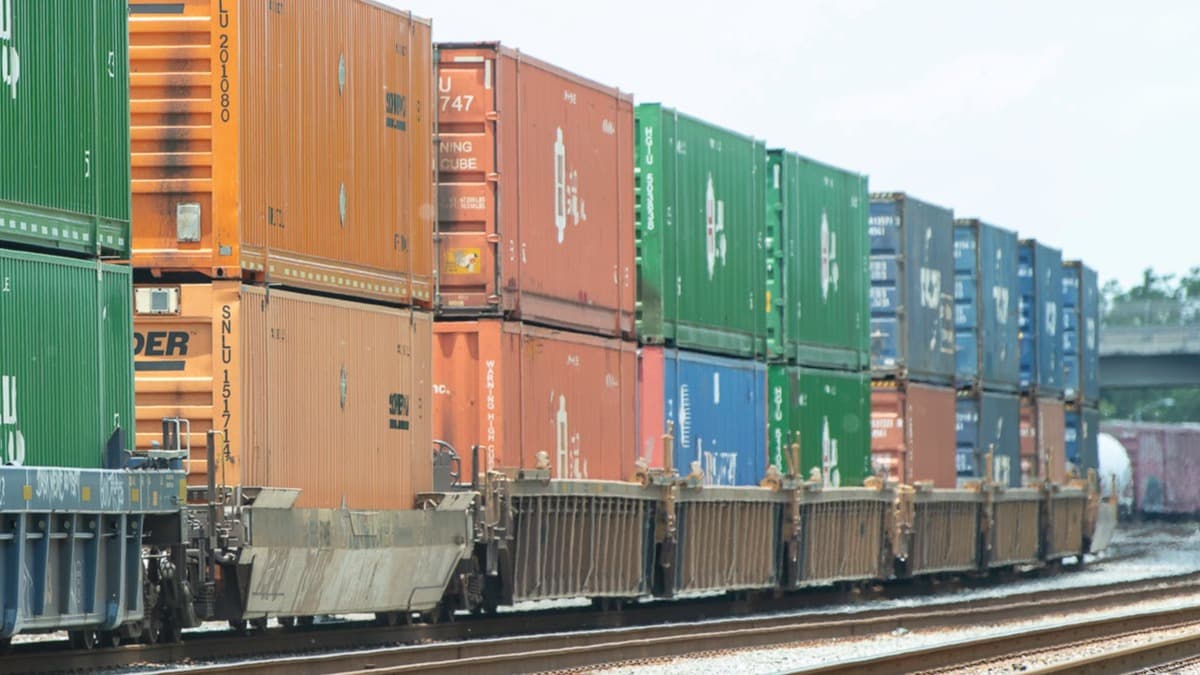
U.S. rail traffic was essentially flat for the week ending March 28, 2026, with intermodal volume up 1.6% y/y to 282,088 units while carloads fell 0.8%. Coal dropped 8.3% and metals used in steel production fell 2%, signaling softness in industrial commodity flows.
Flat intermodal rail movement with declining industrial inputs (steel, minerals) suggests upstream supply chain pressure isn't easing — but no acute freight crunch is forming either. Sellers relying on bulk or heavy goods (furniture, hardware, auto parts) should watch lead times from domestic suppliers dependent on these inputs.
Mild industrial commodity weakness in rail data reflects broader demand uncertainty heading into mid-2026 — relevant context for sellers planning Q2 inventory builds in categories tied to construction, hardware, or manufacturing.
Check supplier lead times for metal or mineral-dependent SKUs — steel-adjacent input costs could creep up if rail declines persist into Q2 2026.
If you use rail-dependent 3PLs for Midwest or Southeast replenishment, confirm transit time SLAs haven't slipped — flat volume doesn't mean flat performance.
Bottom Line
Flat rail traffic signals no freight surge but quiet industrial input softness for goods sellers.
Source Lens
Industry Context
Useful background context, but lower-priority than direct platform, community, or operator intelligence.
Impact Level
medium
Flat rail traffic signals no freight surge but quiet industrial input softness for goods sellers.
Key Stat / Trigger
Intermodal volume up 1.6% y/y to 282,088 units for week ending March 28
Focus on the operational implication, not just the headline.
Full Coverage
Intermodal traffic edge ahead in a down week for commodity freight on U. S. railroads, the Association of American Railroads said. Total U. S. weekly rail traffic for the week ending March 28 was 515,921 carloads and intermodal units, up 0. 5% from the same week a year ago. Carload freight totaled 233,833 units, down 0.
8%, while intermodal volume came to 282,088 containers and trailers, better by 1. 6% y/y. Six of 10 carload commodity categories gained led by petroleum, 11. 2%; chemicals, 5. 9%; and non-categorized freight, 7%. Coal led decliners at 8. 3% followed by nonmetallic minerals such as sand and stone, 3.
8%; and metallic ores and minerals typically used in steel production, 2% lower y/y. (Chart: AAR) Through the first 12 weeks of 2026, U. S. railroads reported cumulative volume of 2,684,108 carloads, ahead 4. 2%, and 3,311,403 intermodal units, a decrease of 0. 2% percent from 2025.
Total combined traffic reached 5,995,511 carloads and intermodal units, up 1. 7% North American weekly volume on 9 reporting U. S. , Canadian and Mexican railroads was 342,214 carloads, lower by 2. 1%, and 371,548 intermodal units, up 0. 8% y/y. Total combined weekly traffic slipped 0. 6% to 713,762 carloads and intermodal units.
Volume for the first 12 weeks of 2026 was 8,245,424 carloads and intermodal units, a narrow 1. 8% gain from 2025. Subscribe to FreightWaves’ Rail e-newsletter and get the latest insights on rail freight right in your inbox. Read more articles by Stuart Chirls here.
Original Source
This briefing is based on reporting from Freightwaves. Use the original post for full primary-source context.
Style
Audience