

The Person Running DHS Has Changed – Here Is What That Means for the Immigration Enforcement That Has Been Reshaping Trucking for a Year
A March 16 Final Rule eliminates CDL eligibility for ~97% of 200,000 non-domiciled holders, and DHS leadership change from Noem to Mullin (target start March 31) signals no policy reversal — enforcement continues with a new face. Combined with 7,000+ CDL schools removed and 17,000 California CDLs revoked, trucking capacity is tightening toward 2021-level conditions.
Tighter trucking capacity means higher spot and contract rates are coming — sellers relying on LTL or FTL for replenishment to FBA/WFS warehouses should lock in carrier contracts now before rates spike. Pull your inbound shipping cost-per-unit from the last 90 days as your baseline before Q3 comparisons become painful.
This is a regulatory-driven supply shock, not a demand event — margin compression hits sellers who treat freight as a fixed cost rather than a variable to hedge. Brands without diversified carrier relationships or buffer inventory strategies will absorb the hit directly into profitability.
Check your FBA/WFS inbound shipping rates now — if you're on spot rates, negotiate a contract in the next 30 days before capacity tightens further and carriers reprice.
Model a 15-25% freight cost increase into your COGS for Q3-Q4 replenishment orders; adjust minimum price floors in your repricer tool today to protect margin.
Bottom Line
Trucking capacity crunch incoming — sellers must lock freight rates now.
Source Lens
Industry Context
Useful background context, but lower-priority than direct platform, community, or operator intelligence.
Impact Level
medium
Trucking capacity crunch incoming — sellers must lock freight rates now.
Key Stat / Trigger
97% of ~200,000 non-domiciled CDL holders lose eligibility under March 16 Final Rule
Focus on the operational implication, not just the headline.
Full Coverage
For most of the past year, two federal agencies have been doing more to reshape the trucking driver pool than anything else in the industry: the Department of Transportation with its non-domiciled CDL crackdown, and the Department of Homeland Security with its immigration enforcement raids.
DOT and DHS have operated in close coordination — DOT tightening who can legally hold a CDL, DHS pulling drivers off interstates and out of their homes who could no longer pass that standard. That two-agency enforcement operation has been one of the primary supply-side stories in trucking since mid-2025.
It is part of why FMCSA removed over 7,000 CDL schools from its Training Provider Registry. It is why California revoked 17,000 CDLs in a single enforcement action.
It is why the March 16 Final Rule on non-domiciled CDLs is projected to eliminate CDL eligibility for an estimated 97% of the roughly 200,000 non-domiciled holders who do not qualify under the new H-2A, H-2B, or E-2 visa standard.
And it is why analysts at FTR Transportation Intelligence have projected that if the full scope of immigration enforcement and CDL restriction plays out, the trucking market could see capacity tightening not experienced since 2021. Now the person running DHS has changed.
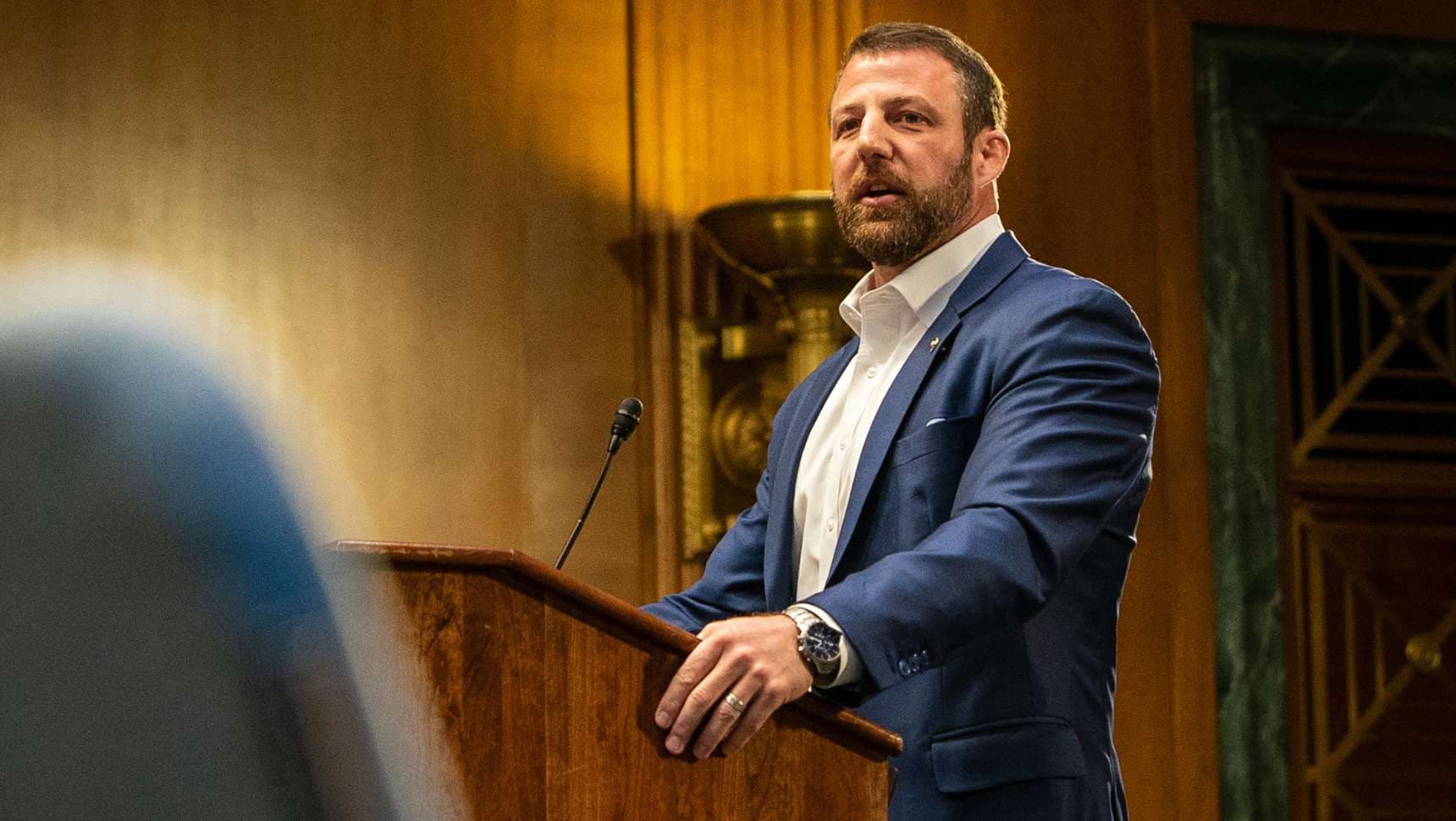
On March 5, President Trump announced he was removing Kristi Noem from the Secretary position and nominating Senator Markwayne Mullin of Oklahoma to replace her, with a target start date of March 31. Mullin’s confirmation hearing before the Senate Homeland Security Committee is scheduled for March 18.
Here is what you need to know about who is leaving, who is coming in, and what the change means for the enforcement that has been reshaping the driver pool your operation competes against. Why Noem Left and Why It Matters Kristi Noem did not leave voluntarily.
She was pushed out — and the reasons behind her removal matter because they tell you whether the policy direction changed or just the face running it. Noem became politically toxic inside the administration for reasons that had little to do with immigration enforcement itself.
A fatal shooting incident in Minneapolis involving federal immigration enforcement agents killing two U. S. citizens — a tragedy that prompted immediate backlash from both parties — put her at the center of the administration’s most damaging news cycle.
Separately, reporting on her use of taxpayer funds for private jet travel and a pricey DHS advertising campaign drew criticism from both Democratic opponents and Republican allies who expected tighter fiscal management.
At a Senate Judiciary Committee hearing two days before her removal, Republican Senator Thom Tillis of North Carolina publicly called her leadership a “disaster” — a rare, direct rebuke from within her own party. The bipartisan criticism gave Trump political cover to make a change.
Importantly, the stated direction of DHS policy — aggressive immigration enforcement, removal of undocumented immigrants from the country, close coordination with DOT on CDL eligibility — was not among the criticisms. Noem was removed for management and political optics, not for being too aggressive on the enforcement mission.
That distinction matters enormously when you are trying to project what comes next. DHS stated on its website in January that nearly three million people had been deported or otherwise left the country due to the administration’s crackdown. That is the policy result the White House views as a success.
No one in a position of authority is arguing that the enforcement was wrong — only that Noem was the wrong messenger for it.
Who Markwayne Mullin Is and Why He Is Relevant to Trucking Mullin is a 48-year-old first-term Republican senator from Oklahoma, an enrolled member of the Cherokee Nation, a former MMA fighter who went 5-0 as a professional, and a former owner of Mullin Plumbing — a family business that ran a fleet of service vehicles.
He came to Congress in 2012 and moved to the Senate in 2023. He has been among Trump’s closest allies in the Senate, functioning as what Majority Leader John Thune called a “Senate whisperer” — the person who explained the legislature’s positions to Trump and successfully brought both sides to agreement on key votes.
If you follow trucking at all, you may know Mullin from something other than legislation. In 2023, he challenged Teamsters president Sean O’Brien to a physical fight on the Senate floor after O’Brien posted something critical about him on social media.
Mullin stood up from his committee seat, invited O’Brien to step outside, and said “we can be two consenting adults and finish it here.” The exchange went viral.
The two have since reconciled and are reported to have a working relationship, but the moment illustrated something about Mullin’s temperament that is worth knowing: he does not back down from confrontation and he is not primarily motivated by optics management — which is arguably the central failure of the person he is rep
Original Source
This briefing is based on reporting from FreightWaves. Use the original post for full primary-source context.
Style
Audience