

How Carriers Can Prepare for CVSA’s International Roadcheck 2026
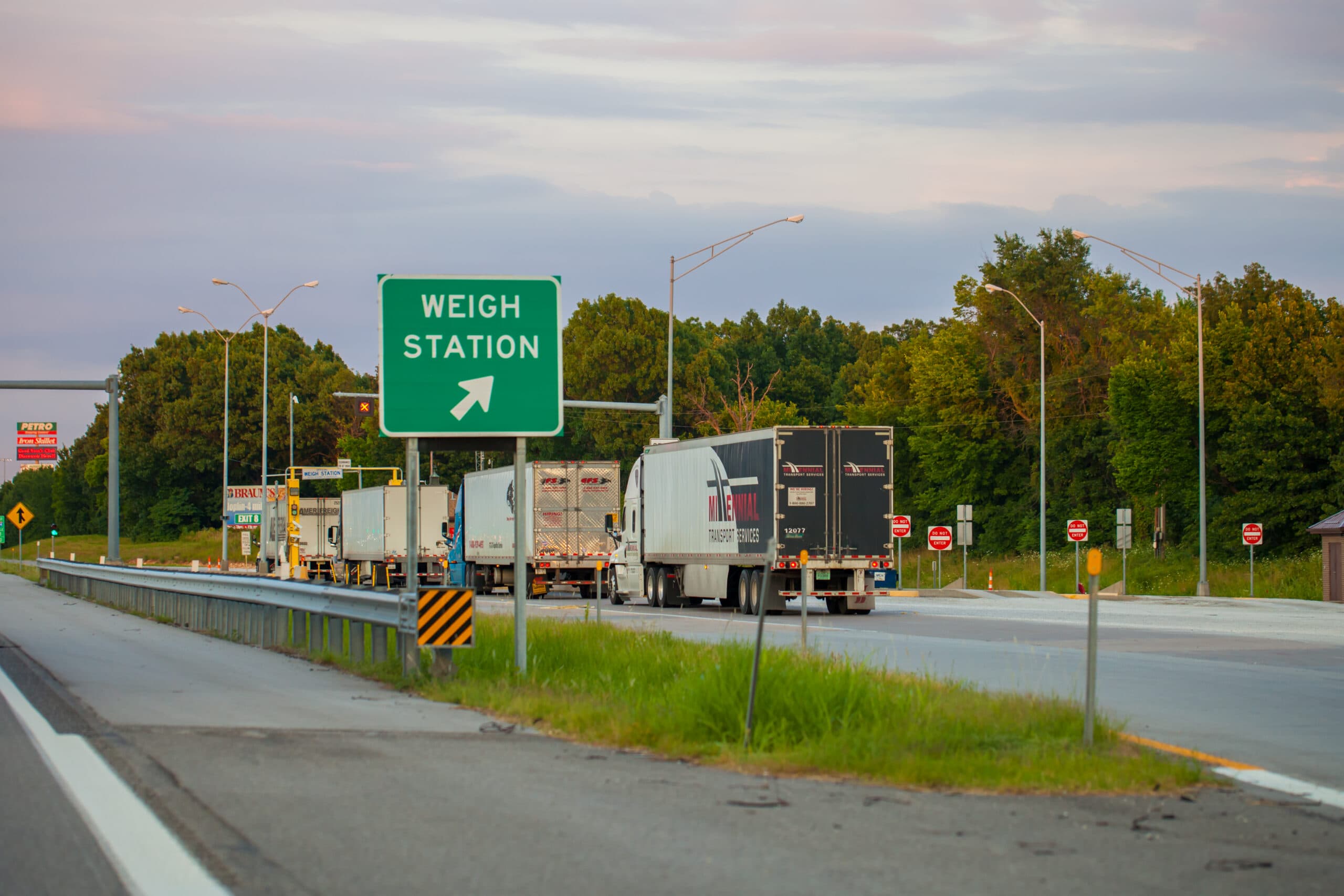
CVSA's International Roadcheck runs May 12-14, 2026, targeting ELD tampering and cargo securement violations during 72-hour enforcement. FMCSA revoked 23 ELDs in just Feb-March 2026, with 58,000+ false duty status violations logged in 2025.
Carriers hauling marketplace replenishment inventory face higher out-of-service risk this window, which can delay FBA, Walmart DC, and Target DC inbounds. Sellers with Q2 inventory shipments timed around this window should build 1-2 day buffer into expected receive dates.
Regulatory crackdowns on freight compliance create unpredictable supply chain disruptions, adding another variable to already tight retail replenishment windows and reinforcing the case for inventory buffers over just-in-time restocking.
Check your carrier's ELD compliance status against FMCSA's registered devices list before booking May 12-14 freight -- an out-of-service driver means missed receiving windows and potential stockouts.
If you have FBA or retail DC shipments scheduled May 12-14, contact your 3PL or freight broker now to reschedule or add transit buffer to avoid late check-in penalties.
Bottom Line
Roadcheck May 12-14 means freight delays -- pad your inbound inventory timelines.
Source Lens
Industry Context
Useful background context, but lower-priority than direct platform, community, or operator intelligence.
Impact Level
medium
Roadcheck May 12-14 means freight delays -- pad your inbound inventory timelines.
Key Stat / Trigger
58,000+ false records of duty status violations documented during 2025 Roadcheck
Focus on the operational implication, not just the headline.
Full Coverage
The Commercial Vehicle Safety Alliance’s annual International Roadcheck is scheduled for May 12-14, and this year’s event will zero in on two issues that continue to generate tens of thousands of violations across North America: ELD tampering/falsification and cargo securement. This year, inspectors are going old school.
During the 72-hour enforcement window, CVSA-certified inspectors at weigh stations and pop-up sites across the U. S. , Canada, and Mexico will conduct thousands of Level I inspections (meaning a comprehensive 37-step review of both driver qualifications and vehicle mechanical fitness).
On average, nearly 15 commercial motor vehicles are inspected every minute during Roadcheck, making it the largest targeted enforcement campaign on commercial vehicles in the world.
Mark Barlar, Director of DOT Regulatory Compliance at Reliance Partners, sat down with FreightWaves to break down what drivers and carriers should expect from this year’s event and how to prepare for it. The enforcement landscape has shifted, and the days of taking ELD data at face value are over.
The ELD Trust Problem ELDs were introduced to simplify hours-of-service compliance and eliminate the ambiguity inherent in paper logs. But according to Barlar, a growing subset of users has weaponized the technology’s own architecture against its intended purpose. “Some people have figured out how to change ELD source files to hide drive time,” Barlar said.
“This has been an increasingly prominent issue over the last few years, and authorities have been adapting to new falsification methods by returning to more manual investigations.” When discrepancies appear, inspectors are forced to revert to the very methods ELDs were supposed to replace.
“Officers treat ELDs as paper logs and impugn or verify records with other sources,” Barlar said. Law enforcement is now cross-referencing driver logs against toll receipts, bills of lading, fuel records, and data collected from license plate readers across the country. The scope of the problem has drawn attention at the federal level.
FMCSA revoked nine ELDs from its registered devices list in February 2026 alone and pulled an additional 14 in March. That activity followed a steep escalation in 2025, when the agency revoked 38 devices, which was itself an increase of more than 80% compared to 2024.
False records of duty status were the second-most cited driver violation during last year’s Roadcheck, with more than 58,000 cases documented. Barlar noted that the problems are not distributed evenly across the ELD market.
“Several ELDs in common use have a good reputation, but the problems are mostly coming from certain startups and overseas companies,” he said. “It’s likely that there will be more regulation on ELDs as a result of this issue.”
Some states categorize the violation as tampering or falsification outright, while others cite a driver when the device is simply failing to function as a compliant record of duty status. The consequences at roadside are immediate and can be relatively severe.
“When an inspector finds one of these violations or a false record of duty status, they will typically declare the driver to be out of service for ten hours,” he said. The prevalence of manipulation has also eroded the informal benefit of the doubt that inspectors once extended to drivers with minor log discrepancies.
“The prevalence of tampering forces law enforcement to be less lenient with the benefit of the doubt when there’s evidence of record discrepancies,” Barlar said. In previous years, minor issues like unassigned drive time were easy for an inspector to identify and sometimes dismiss. But now, any inconsistency triggers a deeper review.
Carriers should note that inspectors won’t just be looking at the current day’s logs. “Inspectors will be checking records for the previous seven days, so a total of eight days will need to be verified,” Barlar said. “You should always stay diligent with your ELD, but make sure your drivers are paying close attention during this period.”
That eight-day review window means that a single lapse from the week before Roadcheck can lead to an out-of-service order during the event itself. Carriers should consider auditing driver logs in the days leading up to May 12 to catch and correct any issues before an inspector does. For the event, Barlar said states are pulling out all the stops.
“States will bring people off special assignments to work at the facilities,” he said. “Some areas of the state will work 24 hours a day during this period.” Cargo Securement The vehicle-side focus area for 2026 Roadcheck is cargo securement, a category that generated more than 34,000 violations in 2025.
Of those, over 18,000 were issued because cargo was not properly secured to prevent leaking, spilling, blowing, or falling, and more than 16,000 involved unsecured vehicle components or dunnage. Carriers should not assume the scrutiny is limited to open-deck trailers. “Law enforcement will
Original Source
This briefing is based on reporting from Freightwaves. Use the original post for full primary-source context.
Style
Audience