Walmart unveils AI agent shopping controls, spending limits
Walmart is launching Agent Profiles, Agent Gateway, and new purchasing rules within the next month to let AI agents shop on customers' behalf with spending limits ($50–$200) and per-purchase approval controls. Sellers on Walmart Marketplace will face a new AI-driven product discovery layer that determines which listings agents surface.
This accelerates AI-driven commerce as a new discovery channel alongside search and ads — sellers who treat listing optimization as a one-time task will lose visibility as agentic shopping scales across Walmart and Sam's Club.
AI agents shopping autonomously will prioritize listings with clean, structured data — content gaps that humans overlook will now cause agents to skip your products entirely. Walmart sellers should audit their listings for complete attributes, accurate categories, and competitive pricing now, before Agent Profiles go live.
Operational Impact
This story may require teams to revisit workflows, monitoring, or platform assumptions.
Bottom Line
Walmart AI agents mean listing quality now drives autonomous purchase decisions.
Source Lens
Analyst Intelligence
Research or editorial analysis that adds market context beyond the official announcement.
Impact Level
medium
Walmart AI agents mean listing quality now drives autonomous purchase decisions.
Key Stat / Trigger
70% of consumers want to review or override an AI purchase before checkout
Focus on the operational implication, not just the headline.
Full Coverage
Walmart wants its shoppers to stay in control as artificial intelligence (AI) agents take on a bigger role across ecommerce. The retailer is rolling out new tools designed to let customers oversee AI agent purchases, streamline how agents shop and set boundaries for what they can and cannot do on shoppers’ behalf. Announced Wednesday (Oct.
21), the changes are designed to support agentic commerce across Walmart and Sam’s Club. Walmart acknowledged that not everyone will want to shop using AI agents. But for those who do, the retailer said its goal is to “make our experience the most trusted” by building safeguards into the shopping process.
To support that, Walmart is introducing three updates: Agent Profiles: To let shoppers authorize AI agents, set spending limits and track purchases. Agent Gateway: For giving agents a more direct connection to Walmart’s shopping services. New purchasing rules: Setting limits on agents’ actions and access to customer information.
Beyond changes for shoppers, Walmart is helping its marketplace sellers prepare for AI-driven product discovery, which could open up new opportunities to reach customers. The move builds on Walmart’s existing AI shopping efforts. These include its Sparky AI shopping agent and integrations with Meta’s Muse, OpenAI ChatGPT and Google’s Gemini.
The retailer has not specified which agents will support the new profiles at launch. Walmart ranks No. 2 in Digital Commerce 360’s Top 1000 Database. The market research tool tracks North America’s largest online retailers by their annual ecommerce sales. Walmart is No. 37 in Digital Commerce 360 and ReFiBuy’s AI Commerce Rankings.
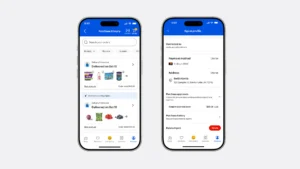
That set of rankings is available in the Top 1000 Pro with AI Database. How Walmart’s AI agent profiles will work Walmart agent profiles | Image credit: Walmart press release Walmart said it plans to launch Agent Profiles within the next month, giving shoppers a way to oversee AI-led purchases.
Currently, purchases made by AI agents appear alongside customers’ own orders in their Walmart accounts, with no way to tell them apart.
The new feature will allow agents to “shop using dedicated profiles linked to a customer’s account, so customers can approve purchases, set spending limits, and see which purchases were made by an agent,” Daniel Danker, Walmart’s executive vice president of AI acceleration, product and design, said in a LinkedIn post.
Through Agent Profiles, shoppers can choose to approve AI purchases one at a time. Alternatively, they can allow agents to spend up to a preset limit, such as $50, $100 or $200. The company outlined three steps for setting up an Agent Profile: Start in the agent’s app: Walmart creates a profile when a customer first shops through its Agent Gateway.
Connect to Walmart: Customers sign in to their Walmart accounts to authorize and link the agent’s profile. Set spending controls: Shoppers choose a spending limit, review purchases made by agents and can delete profiles at any time.
On Walmart’s website, agents will see “the same prices that a human would see,” with offers and fees displayed before purchase, the company noted. What protections apply when AI agents shop? Walmart is also “setting expectations for how AI agents work with customers and our company,” Danker said.
These safeguards come as consumers remain wary of giving AI control over purchases. In survey results published in August, payments technology provider NMI asked 1,000 U. S. adults about AI shopping. Only 11% of those surveyed reported using AI to complete a transaction.
Meanwhile, 70% wanted the ability to review or override an AI purchasing decision before checkout. Only 10% said they would give AI full control over a purchase. Addressing concerns, Walmart said its new terms require customers to approve agent purchases by default.
Shoppers can authorize spending within preset limits, though the company said it could still require additional approval. The rules also bar agents from acting beyond a shopper’s instructions, accessing unauthorized information or receiving payment-card details, according to Walmart. Additionally, agents cannot add or change payment methods.
If an agent makes an unintended purchase, Walmart said its existing returns process will apply. Agents that violate the terms will be blocked from its website. Even so, information shoppers share directly with third-party AI apps remains subject to those providers’ privacy policies, the company said.
Walmart builds a direct connection for AI agents Walmart is also developing the Agent Gateway, which gives AI systems a faster, more direct way to shop with the retailer. Currently, agents use a browser to shop following steps designed for people. “This can be slow and error-prone, and agents may get stuck along the way,” Walmart said.
The Agent Gateway aims to address this using Model Context Protocol (MCP). The open standard developed by Anthropic allows AI applications to connect with external tools and services. T
Audit Walmart Seller Center listings for missing attributes and category fields — agent algorithms will deprioritize incomplete listings when making autonomous purchase decisions.
Within 30 days, ensure your pricing is competitive at the item level; agents shopping within preset spending limits will likely sort by value, making price position critical at launch.
Original Source
This briefing is based on reporting from Digital Commerce 360. Use the original post for full primary-source context.
Style
Audience