Hangover-prevention supplements are the hottest new wellness trend
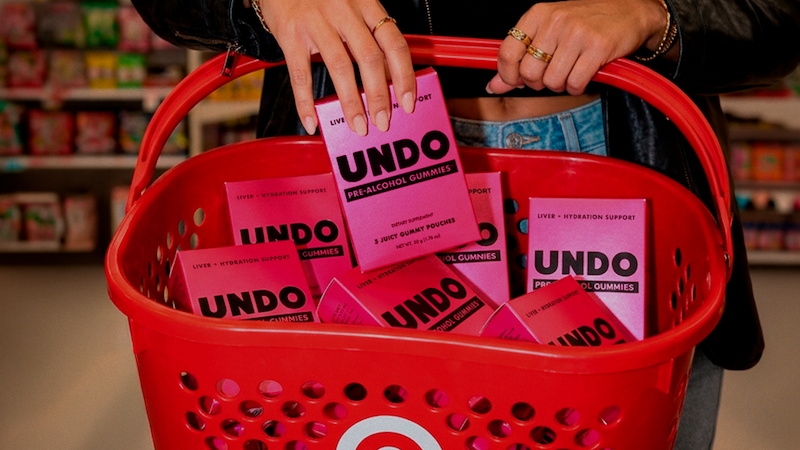
Hangover-prevention supplements (DHM-based gummies, drinks, jellies) are hitting Target, 7-Eleven, and resort/hospitality retail in 2026, with brand Undo launching in 889 Target locations after a $1M seed round. The category is carving shelf space in beauty/wellness aisles, not traditional supplements.
This reflects broader premiumization of the functional beverage/supplement aisle as 'mindful drinking' creates new adjacent categories — sellers in electrolytes, liver support, and vitamin B niches face new competition but also a rising-tide demand surge.
Target's placement of these SKUs in beauty/wellness rather than supplements signals a merchandising shift that creates a white space opportunity — brands positioned as lifestyle products (not health claims) may get better placement and discovery. Sellers in adjacent wellness categories (electrolytes, vitamins, liver support) should audit their browse node assignments and keyword targeting now.
Operational Impact
This story may require teams to revisit workflows, monitoring, or platform assumptions.
Bottom Line
Hangover-prevention hits Target shelves, opening a new wellness category for adjacent brands.
Source Lens
Industry Context
Useful background context, but lower-priority than direct platform, community, or operator intelligence.
Impact Level
low
Hangover-prevention hits Target shelves, opening a new wellness category for adjacent brands.
Key Stat / Trigger
889 Target locations for Undo brand rollout in August 2026
Focus on the operational implication, not just the headline.
Full Coverage
CPG Playbook // September 3, 2026 Hangover-prevention supplements are the hottest new wellness trend By Gabriela Barkho Undo A new wave of gummies, jellies and drinks is promising that people can now have all the fun of alcohol without the hangover.
Pre-alcohol and anti-hangover products, typically designed to be taken while drinking alcohol or before, aim to mitigate the effects of alcohol with ingredients like Dihydromyricetin (DHM), electrolytes and vitamins.
Pre-alcohol prebiotic drink Zbiotics was recently spotted at New York City’s Cote Korean Steakhouse, served at $12 per shot alongside its $23 martinis. A pair of Brown University students recently launched Day-guard, a Korean pre-alcohol jelly that promises to prevent hangovers.
Liqure, a line of anti-hangover gummies, is also expanding into convenience stores after launching three years ago. And it’s not just preventative supplements driving growth in retail. New brand Fool’s Fix bills itself as a post-drinking solution to hangovers.
This wave of brands shows that the rise in mindful drinking is creating adjacent wellness categories for young people who want to indulge without the headache. Pre-alcohol gummy brand Undo launched in 2025 with an origin story rooted in Las Vegas nightlife culture, as the founders met at the Wynn resort and casino.
The venue also gave co-founders Ben Delamont, Jen Delamont and Kevin Mai their first chance at sampling at a live event. In August, the company announced it closed a $1 million seed round to support its next phase of growth as it bets on the hangover-prevention category.
In mid-August, the brand rolled out in 889 Target locations nationwide after entering 1,000 independent stores, including resorts and convenience stores like 7-Eleven Hawaii. The founders coincidentally fell into their early nightlife- and hospitality-focused distribution strategy.
“Our strategy at first was to go the same route as everybody else and do DTC and launch on platforms like TikTok and Amazon,” co-founder and COO Jen Delamont said. Instead, the brand had early opportunities to test in retail starting in Las Vegas.
Through connections at Wynn’s Encore Beach Club, the brand sampled to 4,000 attendees last Labor Day weekend, when the Chainsmokers were headlining a show. The resort then gave Undo a permanent space at its checkout area. Then, Undo secured a similar deal with MGM.
Undo’s gummies consist of its hero ingredient, Dihydromyricetin (DHM), plus a liver antioxidant that co-founder and CEO Ben Delamont says has been used in Asia for centuries. “We’re not necessarily reinventing the ingredients,” he said. Undo’s formula also contains electrolytes and a vitamin B complex to support hydration and recovery.
“We’re just trying to do it in a different format so that people are excited to use and share the product.” The early high interest in these products and retailers’ attention, Ben Delamont said, shows promise for the category. However, using them effectively still requires some customer education.
“A lot of consumers don’t know that these products exist,” he said. Undo suggests taking one serving before or while drinking, and another for every four to five drinks. Now, Ben Delamont said that Target presents a different growth opportunity for the brand, as the big-box retail environment is where people go for product discovery.
“At Target we’re not placed in the traditional supplement section; we’re alongside beauty wellness products,” he said. “We are still a supplement, but the way we’re going is to target people who could really use this product,” Ben Delamont said.
Nate Rosen, founder of Express Checkout, said the emergence of the pre-alcohol supplement category is a convergence of a few overlapping trends. “It’s partly a side effect of the trend toward alcohol‑free or reduced drinking,” said Rosen, whose company covers CPG news and trends.
“But it is also a major part of the wellness industrial complex that has emerged in recent years.” Rosen added that while more people try to optimize every aspect of their health, not everyone is willing to give up every unhealthy habit.
“Especially a habit that’s so ingrained in so many aspects of culture, society and the broader social scene such as alcohol,” he said. Health-conscious consumers will continue to keep drinking if they can feel better about it. “And these pre- and post-drinking solutions enable them to,” Rosen said.
“Overall, this is more tied to wellness culture than to the sober‑curious movement,” Rosen said, adding that, overall, young people are still drinking alcohol despite being more focused on wellness than previous generations.
Indeed, Undo is aimed at people who want to have a few drinks with colleagues at happy hour, he said, but still want to be productive the next day without the consequences. “So we’re really trying to position this differently so that it reaches the mas
Check your supplement product's browse node and category placement on Target and Amazon — if you're in 'Dietary Supplements' but fit 'Beauty Wellness,' request a reclassification to capture emerging search traffic in this category.
In the next 30 days, build out a DHM, electrolyte, or 'hangover recovery' keyword cluster in your Amazon Sponsored Products campaigns to capture early search volume before competition saturates it.
Original Source
This briefing is based on reporting from Modern Retail. Use the original post for full primary-source context.
Style
Audience