

Benchmark diesel up again, but by smallest amount in weeks
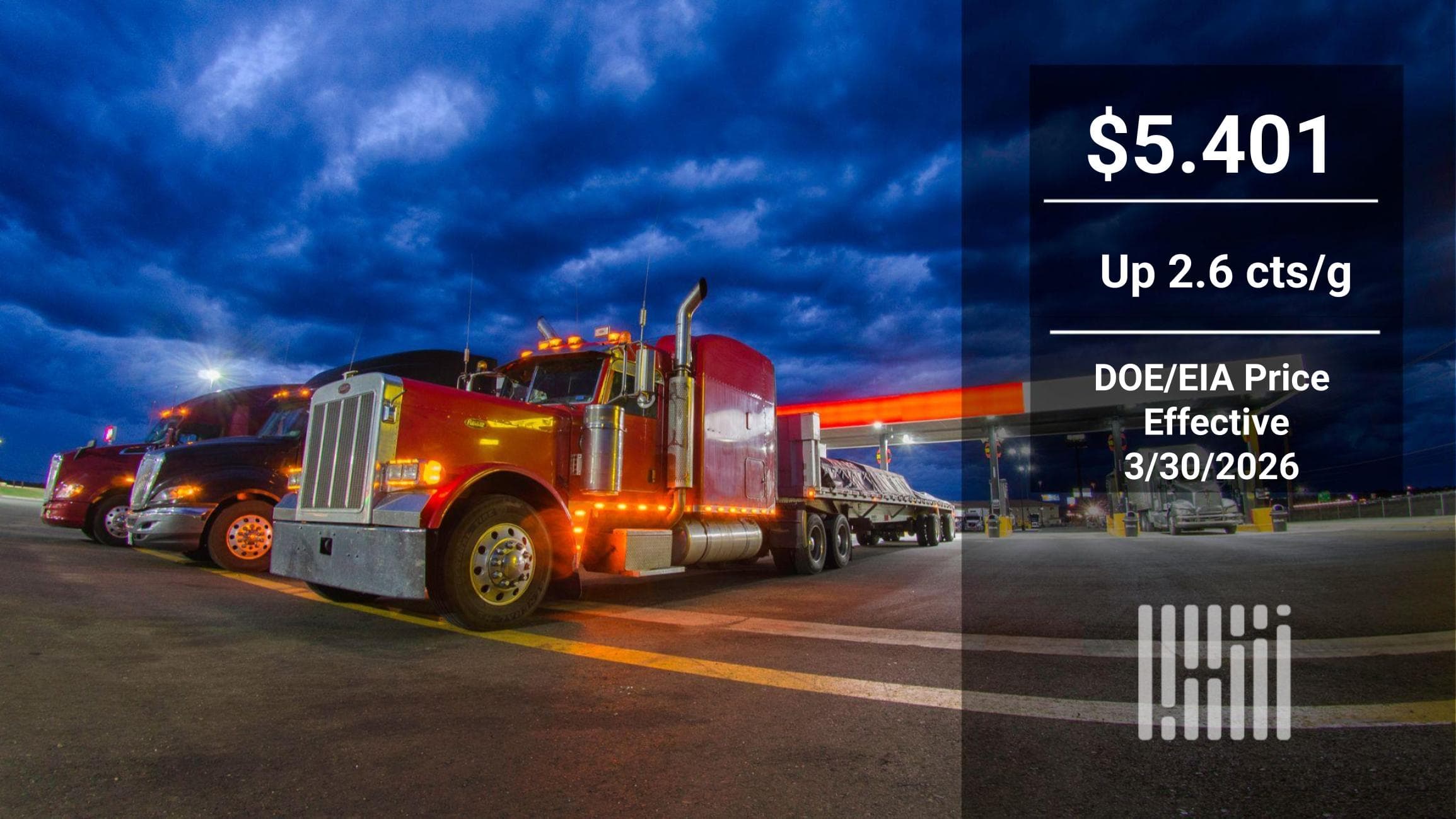
Diesel hit $5.401/gallon as of March 31 — up $1.942/gallon since Jan 12 — marking 11 consecutive weeks of increases driven by the Iran war shock. Fuel surcharges on inbound and outbound freight are now at their highest since November 2022.
Carriers will pass these costs through fuel surcharges within 30–60 days, compressing margins on any seller using 3PL, FTL, or LTL freight. Sellers on thin margins should audit their shipping cost lines now and model a 10–15% freight cost increase into Q2 COGS before repricing.
Sustained diesel above $5 is a structural margin compression event for product sellers — mirroring 2022 post-Ukraine dynamics — and accelerates the cost-of-goods inflation cycle that forces price increases or SKU rationalization.
Pull your freight invoices for Feb–March and calculate fuel surcharge as % of total shipping cost — if surcharges exceed 25%, raise prices or renegotiate carrier contracts before Q2 peak.
In the next 30 days, update your COGS assumptions in your replenishment model to reflect $5.40+ diesel and build a 10% freight buffer into any new POs or FBA shipment estimates.
Bottom Line
Diesel at $5.40/gal means freight costs squeeze Q2 seller margins.
Source Lens
Industry Context
Useful background context, but lower-priority than direct platform, community, or operator intelligence.
Impact Level
medium
Diesel at $5.40/gal means freight costs squeeze Q2 seller margins.
Key Stat / Trigger
Diesel up $1.942/gallon since January 12, now at $5.401/gallon
Focus on the operational implication, not just the headline.
Full Coverage
For the 11th consecutive week, the benchmark diesel price used for most fuel surcharges rose, but by a number that looks almost tiny compared to the prior three weeks. The Department of Energy\Energy Information Administration average weekly retail ultra low sulfur diesel (ULSD) price rose by 2. 6 cents/gallon to $5. 401/g.
That increase is far less than the prior three weeks coming out of the start of the Iran war, which posted increases of 96. 2, 21. 2 and 30. 4 cts/g, respectively. The scorecard over those 11 weeks of increases is that the price of ULSD at the pump, according to the EIA, is $1. 942/g higher since January 12, when it was $3.
459/g, the last price posted before the 11-week runup began. At $5. 401/g, the DOE/EIA price is the highest it has been since a $5. 141/g price posted November 28. 2022. The price was above $5/g for 32 weeks that year, following Russia’s invasion of Ukraine in late February of that year.
The invasion is generally considered to have begun on February 24; the DOE/EIA price popped above $5 for the first time that year with its March 14 publication. While one of the great parlor games in the business media is whether the price of oil will reach $200/b, for some products it already is there. The price for ULSD on CME settled Monday at $4.
3643/g, which comes out to about $183. 30/b. But Friday, the settlement was $4. 4955/g, which translates to about $188. 81/b. The recent high settlement from March 20 of $4. 6084/g translates to $193. 55/b. That price is for a barrel of diesel delivered into New York harbor a month from now. For example, trading Tuesday is for April barrels.
But given that the calendar flips over to April Wednesday, it will be May barrels trading as the front month on the contract beginning that day. But the market structure is backwardation, with the highest-priced barrel being the one with the most immediate delivery. That’s what happens in tight markets.
And that means that spot physical barrels of diesel for delivery in the first days and weeks of April will likely be priced significantly higher than the May ULSD price on CME. It is that spot physical price that is what fuel suppliers look at in setting their wholesale numbers, depending on location.
So for example, a Milwaukee wholesale supplier would set their price on the basis of Chicago spot diesel; an Atlanta wholesaler’s number would be based on the Gulf Coast, as supplies from that region travel into Atlanta via the Colonial Pipeline, and so on through the major spot markets in the U. S.
, which also include the New York harbor, Los Angeles and a Midwest area called Group 3. Those wholesale prices are what the retailers see, and set the direction of movements at the street level.
Jeffrey Currie, long-time energy analyst and Chief Strategy Officer of Energy Pathways at The Carlyle Group, told a recent television interview that those sorts of prices already are here. The process, he said, should be called “molecular contagion.” “Last week we were talking about shortages in Singapore where jet fuel spiked to $230 a barrel,” he said.
“This week it’s in Rotterdam. Rotterdam is $220 a barrel, Thailand, Philippines, New Zealand, Australia. So this thing’s going intercontinental.” He added that the spread between some of these physical prices across various markets has disappeared or shrunk.
“There’s no more price spread, there’s no more spare battles, there’s no policy fix, and it’s just physics,” he said. “These are physical supply chains, and that idea of financialization and the ability to print money doesn’t apply here. You can’t print molecules.”
More articles by John Kingston DEF sensors no longer required on trucks, other diesel equipment: EPA Louisiana staged truck accident scheme: next sentencings likely postponed again newsATA sought compensation in Rhode Island trucking tolls case; it got nothing The post Benchmark diesel up again, but by smallest amount in weeks appeared first on FreightWaves.
Original Source
This briefing is based on reporting from Freightwaves. Use the original post for full primary-source context.
Style
Audience