Fuel, congestion push trans-Pacific ocean rates near $9,500
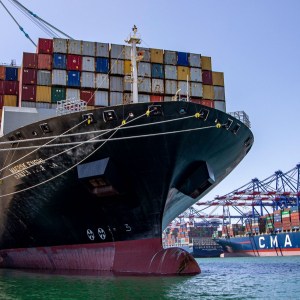
Trans-Pacific ocean freight rates hit ~$7,600/unit (West Coast) and ~$9,500/unit (East Coast) as Iran-U.S. tensions spike bunker fuel costs and typhoon congestion compounds carrier blanked sailings. Rates are at 2024 peak-season levels with no meaningful relief expected until late September at earliest.
Compounding logistics disruptions — Mideast conflict, typhoons, Panama Canal drought restrictions, European port strikes — are structurally elevating freight costs into 2026 peak season, accelerating margin compression for import-dependent marketplace sellers with no quick relief valve.
Sellers who locked in Q4 inventory orders assuming freight normalization are now facing margin compression on landed costs — this is the moment to audit your COGS assumptions against current spot rates before finalizing holiday pricing. If you're still sourcing on spot, negotiate or pre-pay for November-December sailings now before El Niño-driven Panama Canal restrictions add another layer.
Operational Impact
This story may require teams to revisit workflows, monitoring, or platform assumptions.
Bottom Line
$9,500/FEU East Coast rates mean Q4 margins are already tighter than planned.
Source Lens
Industry Context
Useful background context, but lower-priority than direct platform, community, or operator intelligence.
Impact Level
high
$9,500/FEU East Coast rates mean Q4 margins are already tighter than planned.
Key Stat / Trigger
$9,500 per unit to the U.S. East Coast as of early September 2026
Focus on the operational implication, not just the headline.
Full Coverage
The Iran war is pushing bunker fuel prices back toward mid-year levels, setting a higher cost floor for container shipping even as trans-Pacific spot rates show early signs of cooling from peak-season highs.
Climbing fuel costs are likely setting an elevated floor for container rates, but ocean prices are still largely being driven by demand trends and disruptions to capacity availability. Tensions between Iran and the U. S.
continue to climb around the Strait of Hormuz, with Iran now announcing plans to impose a wider exclusion zone on areas near the strait, said shipping analyst snd SONAR data contributor Freightos (NASDAQ: CRGO) in an update.
Fuel rates have trended up since the ceasefire collapse in July, but recent escalations as well as an increase in Chinese crude imports have pushed bunker fuel prices back up to levels last seen in June.
Trans-Pacific ocean rates declined slightly last week, suggesting there won’t be additional rate increases in what is likely the last few weeks of peak season. But elevated demand that started in late May has kept prices at peak levels since early July. window. googletag = window. googletag || {cmd: []}; googletag. cmd.
push(function() {var gptSlot = googletag. defineSlot('/21776187881/FW-Responsive-Main_Content-Slot1', [[300, 100], [320, 50], [728, 90], [468, 60]], 'div-gpt-ad-1709668545404-0'). defineSizeMapping(gptSizeMaps. banner1). addService(googletag. pubads()); googletag. pubads(). enableSingleRequest(); googletag. pubads(). collapseEmptyDivs(); googletag.
enableServices(); setInterval(function() {if (! document. hidden) {googletag. pubads(). refresh([gptSlot]); } }, 30000); }); googletag. cmd. push(function() {googletag. display('div-gpt-ad-1709668545404-0'); }); The SONAR Ocean Booking Index currently trailing two of the past three years’ demand.
Current rates of about $7,600 per unit to the West Coast and $9,500 to the East Coast are about back to levels last seen during peak season in 2024 when seasonal demand, Red Sea disruptions to capacity and some frontloading ahead of a possible East Coast labor strike combined to push rates up sharply.
Severe typhoon-driven congestion at Asia container hubs are likely also contributing to current rate levels. Carriers have increased blanked sailings for this week, possibly to recover schedules disrupted by the storms, which could also help keep prices elevated even if demand has started to ease.
Panama Canal trims transits, delays deeper draft cut The Panama Canal Authority has postponed an additional half-foot draft reduction for Neopanamax transits until further notice, though it is still bracing for drought conditions from the expected El Niño this year.
The authority reduced daily transits by four to 32 this month, though Neopanamax daily slots used by long haul container vessels have only been reduced by one.
Mediterranean lanes ease faster than North Europe Asia-Europe container rates ticked down slightly last week to $4,500 to North Europe and $4,700 to the Mediterranean, though Mediterranean prices have declined further so far this week to about even with North Europe.
Going back to 2017, Asia-Mediterranean rates have on average been 17% higher than Asia-North Europe prices, though at times they have been lower. The current sharper decline from peak season highs for Mediterranean rates — a $2,600/37% drop compared to $1,300 and 23% for N.
Europe lanes — may reflect both the recent increase in Red Sea transits for some Mediterranean services and that congestion at North Europe hubs is keeping upward pressure on rates for those lanes even after peak season demand. Still, rates for both lanes remain $1,000–$1,700 above pre-peak season levels, likely due to Far East congestion as well.
Recent port worker strikes in Germany and the Netherlands are now also contributing to some of the backlog. window. googletag = window. googletag || {cmd: []}; googletag. cmd. push(function() {var gptSlot = googletag. defineSlot('/21776187881/fw-responsive-main_content-slot3', [[728, 90], [468, 60], [320, 50], [300, 100]], 'div-gpt-ad-1665767553440-0').
defineSizeMapping(gptSizeMaps. banner1). addService(googletag. pubads()); googletag. pubads(). enableSingleRequest(); googletag. pubads(). collapseEmptyDivs(); googletag. enableServices(); setInterval(function() {if (! document. hidden) {googletag. pubads(). refresh([gptSlot]); } }, 30000); }); googletag. cmd. push(function() {googletag.
display('div-gpt-ad-1665767553440-0'); }); Read more articles by Stuart Chirls here. Read more: Jones Act service gets new 10-year port deal window. googletag = window. googletag || {cmd: []}; googletag. cmd. push(function() {var gptSlot = googletag.
defineSlot('/21776187881/fw-responsive-main_content-slot4', [[300, 100], [320, 50], [728, 90], [468, 60]], 'div-gpt-ad-1709668086344-0'). defineSizeMapping(gptSizeMaps. banner1). addService(googletag. pubads()); googletag. pubads(). enableSingleRequest(); googletag. pubads(). collapseEmptyDivs(); googletag. enableServices(); setInterval(function()
Pull your landed cost calculator now — if your Q4 margin model assumed sub-$5,000/FEU freight, reprice or adjust ad spend targets in Seller Central/Walmart Connect before campaigns go live in October.
Book Q4 container space within the next 2-3 weeks: Panama Canal has already cut daily transits to 32 and further draft reductions are pending, which will squeeze East Coast routing capacity heading into peak.
Original Source
This briefing is based on reporting from Freightwaves. Use the original post for full primary-source context.
Style
Audience