

Port of Los Angeles forecasts 7% container volume decline
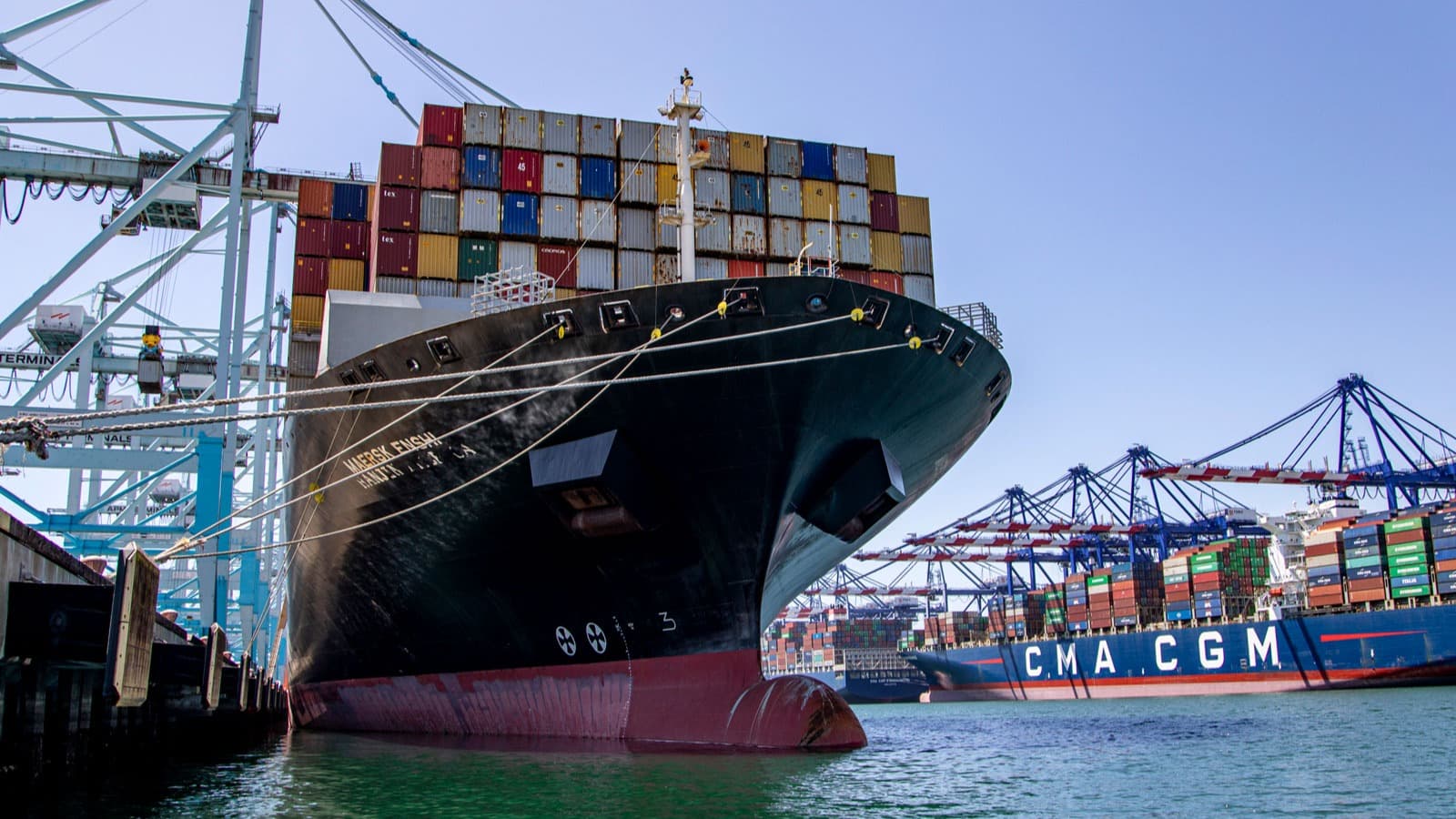
The Los Angeles Board of Harbor Commissioners has approved a $3.4 billion annual budget for fiscal 2026-2027 for the Port of Los Angeles. The increase comes as the port, which along with neighboring Long Beach comprises the busiest U.S. container gateway, is forecasting a 7% decline in box volumes, to 9.3 million twenty foot equivalent […] The post Port of Los Angeles forecasts 7% container volume decline appeared first on FreightWaves.
Source Lens
Industry Context
Useful background context, but lower-priority than direct platform, community, or operator intelligence.
Impact Level
medium
Use this briefing to decide whether your team needs an immediate workflow, policy, or reporting change.
Key Stat / Trigger
No single quantitative trigger surfaced in this report.
Focus on the operational implication, not just the headline.
Full Coverage
The Los Angeles Board of Harbor Commissioners has approved a $3. 4 billion annual budget for fiscal 2026-2027 for the Port of Los Angeles. The increase comes as the port, which along with neighboring Long Beach comprises the busiest U. S. container gateway, is forecasting a 7% decline in box volumes, to 9.
3 million twenty foot equivalent units (TEUs) in fiscal 2026-2027. The San Pedro Bay complex has keenly felt the effects of the Trump administration’s trade war with China, with ongoing tariffs and other measures pushing importers to increasingly seek alternative maritime routes into North America through Mexico and Canada.
China has also sought out new trade agreements in Africa and boosted business with Europe, as it makes plans to sustain its massive export economy, the world’s largest. China’s share of all containerized imports through Los Angeles has fallen to about 40% in 2026, down from 53. 4% in 2025 and 61% in 2020.
Port management cited continued volatility in global trade and uncertainty about trade policy as contributing factors to a more cautious cargo volume outlook. The hub is owned and operated by the City of Los Angeles through its Harbor Department.
Increased investments in operational and community public-access infrastructure are covered in the budget, as well as support for sustainability and technology programs. “The passage of this budget reflects the strength and forward-looking vision of the Port of Los Angeles.
We’re enhancing our infrastructure, advancing our sustainability initiatives, and ensuring we keep the port competitive in the global economy,” said Los Angeles Mayor Karen Bass, in a statement.
Bass, who has championed environmental investments that help the port meet water and air quality requirements, and advocated for the port’s economic role, thanked Executive Director Gene Seroka and Commission President Lucille Roybal-Allard for their leadership.
The budget increase totals $665 million over FY2025-2026, mostly on a 31% expansion for capital improvements. But it also includes higher subsidies for the Port’s Clean Truck Fund Rate and cost-of-living increases for staff salary and benefits as the port accounts for outside inflationary pressures.
Projected operating revenues of $826 million represent a 26% increase y/y, with shipping services accounting for 65% of that. Operating expenses are projected to rise by 6% to $452 million. Capital improvement spending will set a 10-year mark, and center on container terminal modernization and transportation improvements in and out of the port.
Construction has started on the $74 million rail expansion at Berths 302-305 and $130 million SR 47/Vincent Thomas Bridge interchange reconfiguration. A request for proposals for Pier 500 at Terminal Island, the first new container terminal in decades, was issued in late 2025.
The 200-acre terminal will feature two new berths and 3,000 linear feet of new wharf designed for larger next-generation container ships in natural deep water. Expansions are planned at cargo terminals operated by Fenix Marine Services and LATiL, a unit of Mediterranean Shipping Co.
, and a new cruise facility to replace and expand existing operations was announced earlier this year. Read more articles by Stuart Chirls here.
Original Source
This briefing is based on reporting from Freightwaves. Use the original post for full primary-source context.
Style
Audience