

Like trucking and railroads, shipping struggles in fight for talent, aging workforce
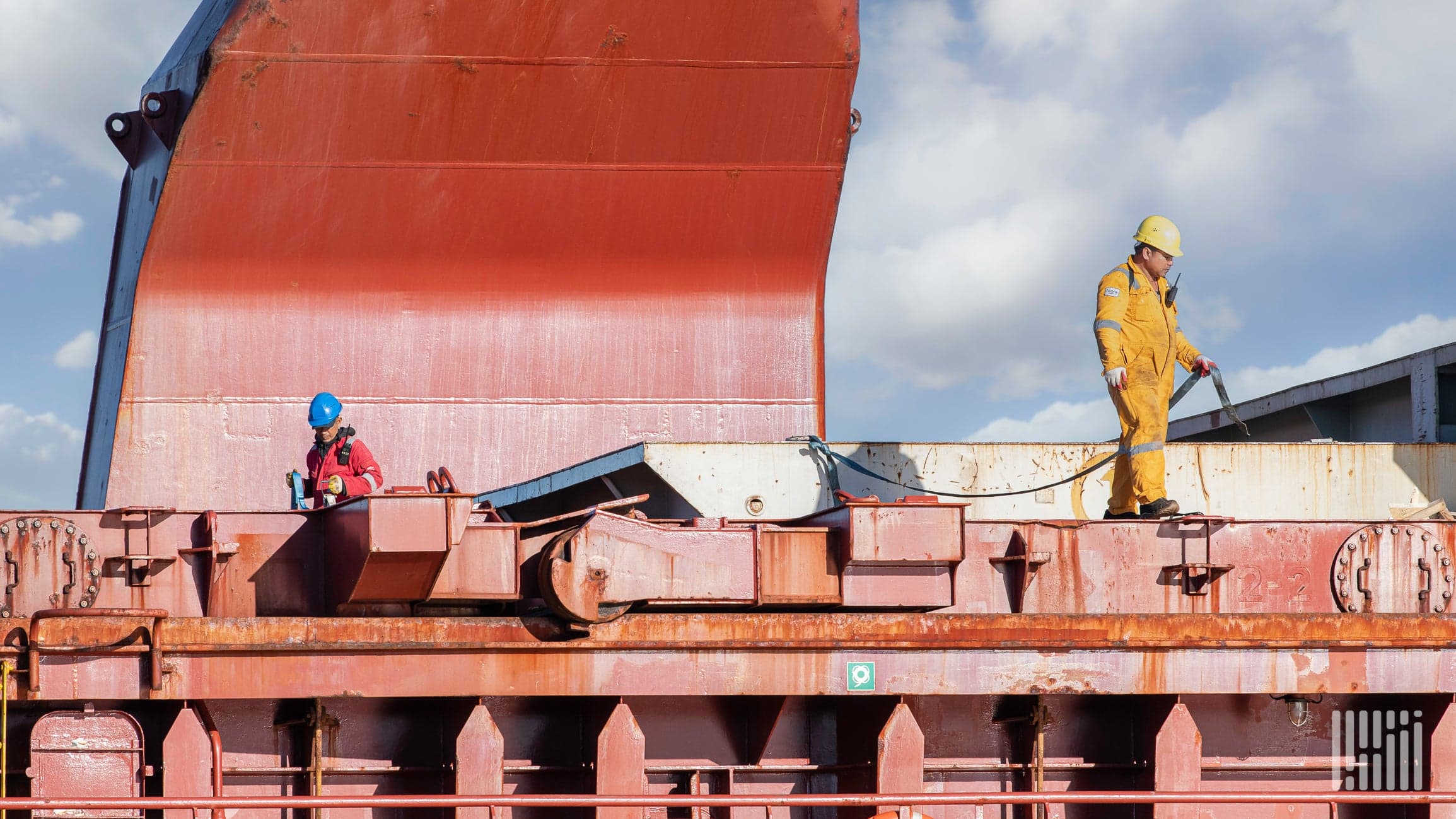
Shipowners are confronting a crisis in how to sustain a workforce of 2 million crewing the global commercial fleet. The post Like trucking and railroads, shipping struggles in fight for talent, aging workforce appeared first on FreightWaves.
Source Lens
Industry Context
Useful background context, but lower-priority than direct platform, community, or operator intelligence.
Impact Level
medium
Use this briefing to decide whether your team needs an immediate workflow, policy, or reporting change.
Key Stat / Trigger
No single quantitative trigger surfaced in this report.
Focus on the operational implication, not just the headline.
Full Coverage
Shipowners and operators are challenged with a global fight for talent in an industry that relies on 2 million men and women to crew the world’s fleet of commercial maritime vessels.
“This could hardly be more topical at a time when around 20,000 seafarers are stuck in the Persian Gulf,” said Paul Pathy, president of the Baltic and International Maritime Council (BIMCO), at the group’s seminar in Athens.
“At times like these, it’s not only the principle of freedom of navigation that is compromised, but also the freedom of our seafarers who are prevented from going home to their families. Once again, they are paying a very high price in the middle of a conflict. Their freedom of navigation should never be negotiable.”
Copenhagen-based BIMCO is a global association of shipowners, charterers, shipbrokers, and agents. “[W]hen shipping makes the headlines, it’s usually because something has gone wrong, and too often what gets lost behind the headlines is the human dimension; the people,” said BIMCO Secretary General and Chief Executive David Loosley.
The meeting came ahead of the release later this month of a report detailing maritime workforce issues.
Elpi Petraki, an executive with shipowner Enea Management of Greece and president of the Women’s International Shipping & Trading Association, told a panel about the importance of not only attracting the younger generation of seafarers, but also of focusing on retaining the experience and institutional knowledge of individuals who are transitioning to shore-based roles.
Looking at the profile of a seafarer, and what is needed to prepare them for the future, “there are gaps in the recruitment and training processes,” said Julia Anastasiou, chief crew management officer at OSM Thome, a leading ship management company headquartered in Norway with offices in the United States.
She added there is a fight for talent as opposed to a fight for recruitment, and that gaps and costs translate to human beings. Improvements must be done collectively and involving governments, flag states and other stakeholders, Anastasiou said. New technologies have made upskilling a critical need for hundreds of seafarers.
“With the new fuels coming in, the industry will need to address this due to the transitional period,” said Marina Papaioannou, regional maritime academies manager at DNV (DNVG02-PRO. OL) of Oslo, one of the oldest classification societies thatset technical standards for vessel safety and performance.
She warned that the industry must address issues of safety regarding the new fuels such as liquefied natural gas and ammonia. “Skills such as leadership and communication must be enhanced to make the seafarers feel safe and that the human element must never be left behind,” she added.
Another panel discussion focused on the growing problem of criminalization of seafarers. Eleni Antoniadou, a maritime lawyer at Gard AS, a protection and indemnity (P&I) mutual insurance association in Greece, said that seafarers are frequently scapegoated in cases involving drugs.
“Such cases often get a lot of media attention and often lead to long detentions for the seafarers,” she said. The industry is seeing a rise in drug cases and urged shipowners to support crew by providing legal support, accommodations, medical care, food, and more.
Seafarers in these situations and their families often don’t know what will happen next, said Alan Croft, business development manager at the International Seafarers’ Welfare and Assistance Network (ISWAN).
“The role of the network is to reduce the human impact and that prevention and preparedness is critical, including education on the consequences, the risk of cutting corners, what to do, who to contact immediately, what their rights are and how to preserve evidence.”
He suggested that a practical emergency pack could make a real difference for seafarers who are essential to global trade but often not treated as such.
Fair treatment of seafarers as a term somewhat predates a feeling that seafarers are treated unfairly, but that states will often say they offer due process, said Leo Bolivar, Manila country manager at International Registries, Inc. , which manages the Marshall Islands ship registry.
He said that while complicated, a collective effort is necessary in cases of flag states versus coastal states, and all stakeholders must collaborate. Read more articles by Stuart Chirls here.
Original Source
This briefing is based on reporting from Freightwaves. Use the original post for full primary-source context.
Style
Audience