Tesla Semi enters volume production as 2027 rollout approaches
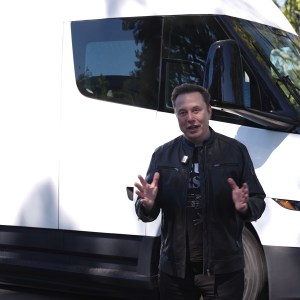
Tesla confirmed volume production of its Class 8 electric Semi (25,000-unit annual capacity) at its Nevada plant in Q3 2026, with U.S. commercial expansion and European deliveries targeting 2027. The truck claims 500-mile range and 1.7 kWh/mile efficiency — one-third the energy cost of diesel.
Electric freight adoption accelerates pressure on diesel-dependent logistics cost structures; sellers over-indexed on fuel surcharge pass-throughs in 3PL contracts may gain leverage in 2027 renegotiations.
Lower freight costs from electric semis won't hit marketplace sellers' P&Ls for at least 12-18 months, but carriers adopting Tesla Semis will eventually compete on cost-per-mile, potentially compressing spot freight rates. Sellers on long-term 3PL contracts should flag renegotiation windows now before carriers price in efficiency gains.
Operational Impact
This story may require teams to revisit workflows, monitoring, or platform assumptions.
Bottom Line
Tesla Semi volume production signals future freight cost shifts — not yet.
Source Lens
Industry Context
Useful background context, but lower-priority than direct platform, community, or operator intelligence.
Impact Level
low
Tesla Semi volume production signals future freight cost shifts — not yet.
Key Stat / Trigger
25,000 Semi units annual production capacity at Nevada facility
Focus on the operational implication, not just the headline.
Full Coverage
Tesla has begun volume production of its electric Class 8 Semi truck at its Nevada factory, a major milestone as the company prepares to expand commercial deliveries in the U. S. and enter the European market in 2027.
The Austin, Texas-based electric vehicle manufacturer confirmed the production milestone Wednesday in its third-quarter earnings report, listing installed annual manufacturing capacity of 25,000 Semis at its Nevada facility. Tesla CEO Elon Musk also highlighted the development during the company’s earnings call with analysts on Wednesday.
“We also began production of the Tesla semi-truck in Q3, our Class 8 heavy-duty truck,” Musk said during his opening remarks.
Tesla (Nasdaq: TSLA) provided updated performance figures for the Semi in its third-quarter earnings presentation, highlighting the truck’s range and energy efficiency and its high-volume production line at the company’s Nevada factory. “The top variant can go 500 miles at a full 82,000 lbs gross combination weight while achieving an efficiency of 1.
7 kWh/mile,” Musk said. “That efficiency allows the Tesla Semi to use a third of the energy used by a comparable diesel truck to haul the same payload. In a transportation market where energy is one of the largest components of total cost per mile, this will provide a meaningful advantage to Tesla Semi operators.”
However, Tesla did not disclose how many Semi trucks were produced or delivered during the quarter, and its reported manufacturing capacity does not necessarily reflect its current production rate. Tesla reported third-quarter revenue of $28. 05 billion, essentially unchanged from $28. 1 billion during the same period last year.
Tesla reported adjusted earnings of 48 cents per share in the third quarter, down 4% from 50 cents per share a year earlier. GAAP earnings fell 44% to 22 cents per share. GAAP net income attributable to common stockholders fell 43% year over year to $787 million, compared with $1. 37 billion in the third quarter of 2025.
Operating income declined 56% to $718 million, while operating expenses increased 39% to $4. 78 billion. Tesla reported $1. 53 billion in free cash flow and ended the quarter with approximately $45. 45 billion in cash, cash equivalents and short-term investments.
The company produced 464,391 passenger vehicles during the quarter and delivered 486,532, down approximately 2% from the same period in 2025. Tesla also revised its 2026 capital expenditure guidance to approximately $20 billion as it continues investing in manufacturing, artificial intelligence, robotics and energy infrastructure.
MetricQ3 2026Q3 2025ChangeAdjusted (non-GAAP) diluted EPS$0. 48$0. 50-4%GAAP diluted EPS$0. 22$0. 39-44% Tesla’s expansion plans extend beyond North America, with the company targeting its first European customer deliveries of the Semi by the end of 2027.
During the IAA Transportation conference in Hannover, Germany, in September, Dan Priestley, head of Tesla’s Semi program, said the company planned to begin European customer demonstrations during the first half of 2027. The initial European trucks will be manufactured at Tesla’s Nevada factory.
“What we’re working on right now is lining up customers that are highly interested in experiencing the truck through demonstrations in the first half of next year, with the opportunity then to take delivery, targeting by the end of next year,” Priestley said during the conference, according to FreightWaves’ earlier reporting.
Tesla has also outlined plans to begin deploying more than 100 Megacharger stalls in Europe in 2027, with a charging capacity of up to 1. 2 megawatts per stall. Priestley previously said the company had not made a decision on establishing a European Semi manufacturing plant, citing available capacity at its Nevada facility.
Tesla’s third-quarter earnings presentation did not provide a new European delivery schedule or disclose the number of trucks allocated to the market. Tesla’s manufacturing milestone follows its selection as the lead supplier for a 2,500-truck battery-electric Class 8 order announced in September.
The order is being coordinated through ZET SCALE, the Zero-Emission Truck Shipper-Carrier Alliance Leading Electrification, organized by Catalyst Mobility and Smart Freight Centre. Key figures from Tesla’s Q3 report MetricQ3 2026Semi installed annual capacity25,000 trucksSemi maximum stated range500 milesSemi stated energy consumption1.
7 kWh/mileTotal company revenue$28. 05 billionGAAP net income attributable to common stockholders$787 millionOperating income$718 millionFree cash flow$1.
53 billionPassenger vehicle deliveries486,532 Why it matters: Tesla’s transition from limited fleet deployments to volume manufacturing could reshape competition in the electric Class 8 market, although actual production and delivery volumes remain undisclosed.
The post Tesla Semi enters volume production as 2027 rollout approaches appeared first on FreightWaves.
Review your 3PL or freight contract renewal dates — if renewals fall in 2027+, add a fuel/energy cost adjustment clause to capture downside if diesel surcharges drop.
Monitor freight benchmark indexes (DAT, FreightWaves SONAR) in Q1 2027 for diesel surcharge compression signals before locking in annual shipping rates.
Original Source
This briefing is based on reporting from Freightwaves. Use the original post for full primary-source context.
Style
Audience