

The Driver remains the box truck’s Achilles heel
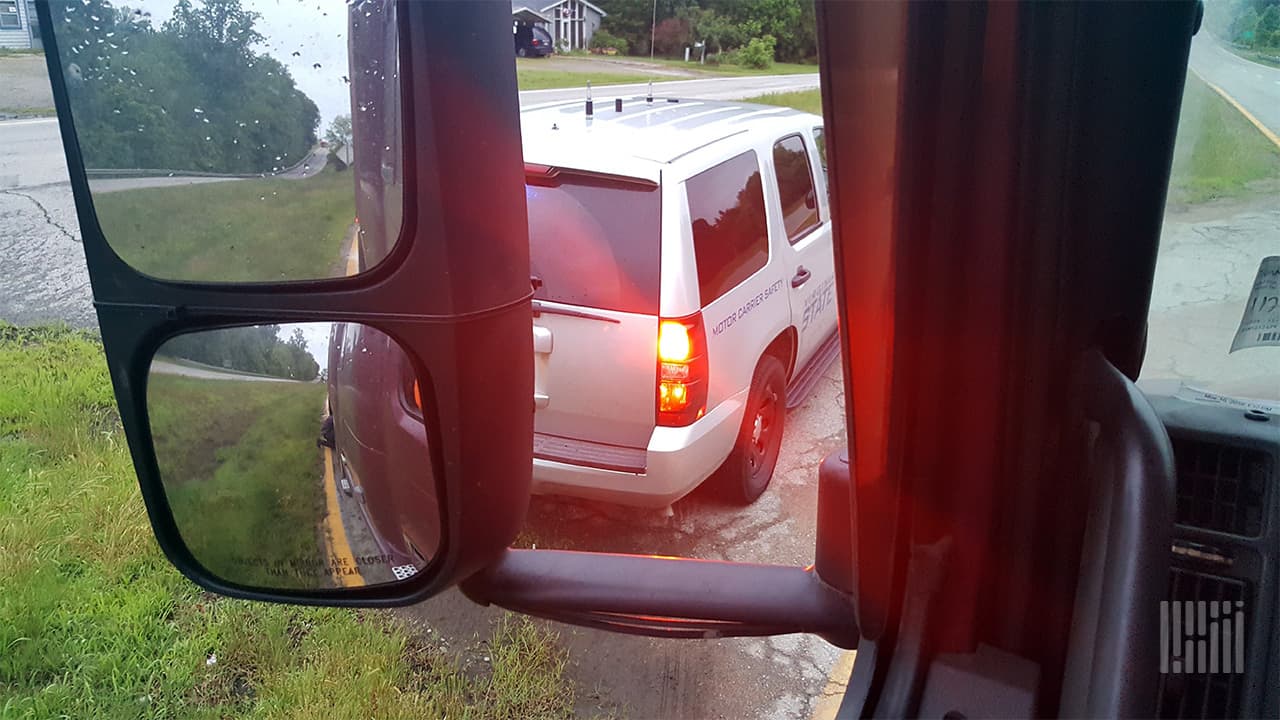
Federal safety rules attach to the truck, not the driver. Get under the weight, the seats, or the license class, and some screening lifts. Here's what the inspection data shows about who ends up behind the wheel of your delivery truck. The post The Driver remains the box truck’s Achilles heel appeared first on FreightWaves.
Source Lens
Industry Context
Useful background context, but lower-priority than direct platform, community, or operator intelligence.
Impact Level
medium
Use this briefing to decide whether your team needs an immediate workflow, policy, or reporting change.
Key Stat / Trigger
No single quantitative trigger surfaced in this report.
Focus on the operational implication, not just the headline.
Full Coverage
When people tell me the problem with the box truck business is cheap equipment, bald tires, bad brakes, and rentals run into the ground, I tell them they are looking at the wrong end of the truck. The problem is who we let drive it. The federal regulations are written in a way that all but guarantees it.
I pulled every roadside inspection from the FMCSA database and split the carriers by what they actually run: straight trucks versus tractor-trailers. The trucks themselves came back clean. Box truck fleets get a vehicle put out of service 17. 2 times per hundred inspections. Tractor fleets run 19. 4.
On vehicle maintenance, the broad measure of whether the equipment is roadworthy, the box trucks again came in lower than the big rigs. The iron is not the story here. The driver is. Box truck fleets get a driver pulled off the road 7. 6 times per hundred inspections. Tractor fleets, 4. 1.
That is nearly double on the same roads, with the same enforcement, under the same criteria. A driver-out-of-service order has nothing to do with the machine. It means the person behind the wheel had no business there, an invalid or missing license, a disqualification, a medical card that does not check out, or hours run past the legal limit.
Everyone wants to blame the truck. The data blames the man driving it. That number points to somewhere nobody in this business wants to look, so the rest of this is about why it happens and why it is not just a box-truck problem. The line for a commercial driver’s license is 26,001 pounds.
Almost every box truck on an American street is built to exactly 26,000, one pound under, which is why it is the most common commercial truck in the country. The line for federal safety regulation is lower, 10,001 pounds, and that one catches most box trucks. A 24,000-pound delivery truck is not unregulated.
It still owes a DOT number, hours of service, a medical card, driver qualification files, the works. What it does not require is drug testing or a CDL; the CDL is the hook the testing program hangs on. People hear “no CDL” and assume “no rules.” That’s the gap.
There is a third line on the passenger side, with 16 seats (counting the driver), and you need a commercial license with a passenger endorsement. Fifteen seats and you need nothing but an ordinary driver’s license, even when somebody is paying for the ride. None of these numbers describes a real change in danger.
A 26,000-pound truck does not stop any shorter than a 26,500-pound one. A fifteen-seat van full of people is no safer than a sixteen-seat van full of people. They are paperwork lines, and operators build their entire equipment strategy around landing under them.
The drivers are the problem When you break the inspection record into the federal safety categories, the box truck disadvantage shows up in exactly two places, and almost nowhere else. The first is Driver Fitness, which covers licensing, medical certification, and disqualification.
Box truck fleets have a violation rate two and a half times that of tractor fleets and an out-of-service rate more than three times that of tractor fleets. The second is Controlled Substances and Alcohol, where box truck fleets run more than two and a half times the rate of the tractor fleets.
A truck under 26,001 pounds is not in the federal drug and alcohol testing program. No random tests, no pre-employment screen, nothing. That does not make it legal to drive high or drunk; it just changes how you get caught.
I sorted these citations by code, and about three-quarters of them are roadside findings, an officer catching it at the window under 49 CFR 392. 4 and 392. 5, not a failed test. There is no test. The cop is the test, and it is not mostly drunk driving, as people assume.
The drug findings, operating while in possession or under the influence, outnumber the alcohol findings roughly four to one. The single largest category is a driver operating under the influence of drugs.
With no screening program in front of him, the only thing standing between an impaired box truck driver and your street is whether he happens to get stopped. Now look at the categories that are not about whether the driver should have been hired. On hours of service, the tractor fleets are worse.
This makes sense because these non-CDL CMVs are short-haul exempt. On unsafe driving, the two are about even. On maintenance, as I said, the tractors are worse. The box truck penalty is not spread across the board the way a general quality problem would be. It sits almost surgically in the two categories that measure fitness to hold the wheel.
That is not what cheap equipment looks like. That is what a hiring problem looks like. The passenger side proves the same point, and the gap there is even wider. Among passenger carriers in my data, the small van and limo operators, the tier that needs no commercial license, get a driver put out of service 2. 4 times per hundred inspections.
The big bus and motor coach fleets that do require a CDL
Original Source
This briefing is based on reporting from Freightwaves. Use the original post for full primary-source context.
Style
Audience