

He Walked Away From 28 Years Behind the Barber Chair for a $10,000 Box Truck With 500,000 Miles. Five Years Later, Here Is What He Wishes Someone Had Told Him.
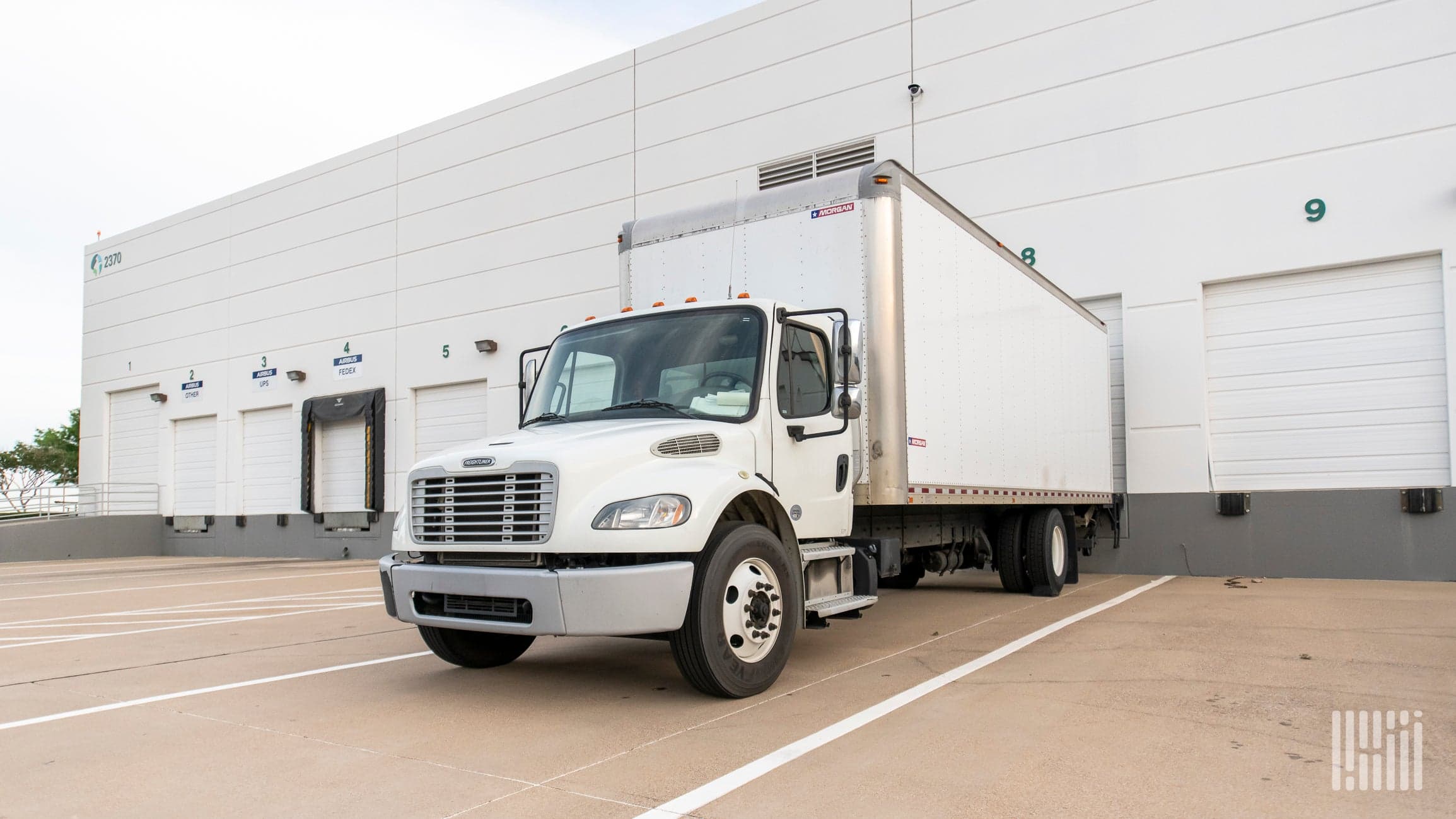
There is a version of trucking that lives on YouTube. Somebody stands next to a box truck and explains how they made six figures in their first year, and the comments fill up with people saying they are about to quit their jobs and do the same thing. Some of them actually do it. Victor […] The post He Walked Away From 28 Years Behind the Barber Chair for a $10,000 Box Truck With 500,000 Miles. Five Years Later, Here Is What He Wishes Someone Had Told Him. appeared first on FreightWaves.
Source Lens
Industry Context
Useful background context, but lower-priority than direct platform, community, or operator intelligence.
Impact Level
medium
Use this briefing to decide whether your team needs an immediate workflow, policy, or reporting change.
Key Stat / Trigger
No single quantitative trigger surfaced in this report.
Focus on the operational implication, not just the headline.
Full Coverage
There is a version of trucking that lives on YouTube. Somebody stands next to a box truck and explains how they made six figures in their first year, and the comments fill up with people saying they are about to quit their jobs and do the same thing. Some of them actually do it. Victor Newton did it. Except Victor did not walk away from a job he hated.
He walked away from 28 years as a barber, a career he built from the ground up, with a clientele that trusted him and a business that was real and stable. He just left it.
Five and a half years later, he is still in trucking, running box trucks, having absorbed the bad driver hires and the repair bills and the new-authority seasons where brokers treat you like you do not exist. He figured out what the industry actually costs when you are not watching someone else do it on a screen.
On a recent episode of The Long Haul, host Adam Wingfield sat down with the man his more than 100,000 YouTube subscribers know as “Bigg Vic” to ask the question those videos never answer.
Not whether trucking was worth it, but what it actually took, and what the people watching those videos do not understand about what is waiting for them on the other side of the decision. The YouTube Headline That Started It All Newton’s entry into trucking is, fittingly, a story that begins on YouTube.
It was during COVID, the barbershop was closed, and YouTube had become his television. Then a headline stopped him cold: a box truck owner-operator claiming he made $20,000 in a month. “Wait a minute,” Newton remembered thinking. “Say what again? $20,000 with a truck.”
The hook that made it real was the part that makes box trucks the great on-ramp into this industry: it did not require a CDL. Newton had spent years in barber school and had no interest in going back to a classroom for a commercial license. A box truck under 26,000 pounds did not require one.
Then a client sat down in his chair, a man who had quit his job to run Amazon Relay freight, and started showing Newton his invoices. “This is like taking candy from a baby,” the client told him. That was enough. Newton procrastinated, then took a trip home to Connecticut and could not stop noticing the box trucks passing him on the highway.
He told his wife he had to get one. Her response cut through the hesitation: stop talking about it and go get one. So he did. He spent $10,000 on his first box truck. It had 500,000 miles on it. He took it without a diesel mechanic looking it over, on the seller’s word, with no maintenance records that were promised and never produced.
It was a 2006 International with a Detroit engine, and he counted himself lucky only in hindsight that it was not a MaxxForce, because at the time he did not yet know enough to know the difference. He was, by his own description, winging all of it.
The First 90 Days That Fooled Him Here is the part of Newton’s story that he is careful to flag as a warning rather than a template. His first weeks were extraordinary, and not in a way most new operators should expect. He got approved for Amazon Relay the moment his insurance and authority went active. His first week brought in a couple thousand dollars.
His second week, a few grand more. He had no idea at the time that these were not normal freight rates. “I’m thinking this is what trucking is all about,” he said. “I’ve been waiting this long to make this type of money weekly?”
Then his Amazon account got dinged when he booked a 53-foot load by mistake and his performance score dropped, pushing him onto the load boards he had never used, dispatching himself, learning on the fly. He decided to run over the road for a week, sleeping in the truck, no hotels, and documented the whole thing for his channel.
He made $5,800 that week in a box truck. By his first 90 days he was already dreaming about a second, newer truck, doing the math in his head: if he could do this with one truck, imagine what he could do with two.
That early success was real, but Newton is the first to say it set a dangerous expectation, both for him and for the producers and music-industry contacts who watched his channel and started buying box trucks themselves. The market he started in was not the market that exists today, and the rates that made it look easy were a moment, not a baseline.
As he put it now, plainly: “It’s trucking. It fluctuates. It goes up and down.” The Line He Draws Between a Truck Owner and a Business Owner The heart of the conversation, and the reason Newton’s content resonates, is a distinction he returns to constantly.
There is a difference between owning a truck and owning a business, and most people who fail never understood which one they were doing. Wingfield put the failure rate on the table directly: somewhere around 90% of new carriers wash out in the first couple of years.
When he asked how much of that failure is actually a trucking problem versus a decision-making problem, Newton did not hesitate. “I think it’s about 70% the pers
Original Source
This briefing is based on reporting from Freightwaves. Use the original post for full primary-source context.
Style
Audience