Apple expands US supplier network for iPhone materials, components
The company added a new titanium supplier and expanded its partnership with an advanced film maker as part of a $600 billion commitment to U.S. manufacturing.
Source Lens
Industry Context
Useful background context, but lower-priority than direct platform, community, or operator intelligence.
Impact Level
medium
Use this briefing to decide whether your team needs an immediate workflow, policy, or reporting change.
Key Stat / Trigger
No single quantitative trigger surfaced in this report.
Focus on the operational implication, not just the headline.
Full Coverage
An article from Apple expands US supplier network for iPhone materials, components The company added a new titanium supplier and expanded its partnership with an advanced film maker as part of a $600 billion commitment to U. S. manufacturing. Published Oct.
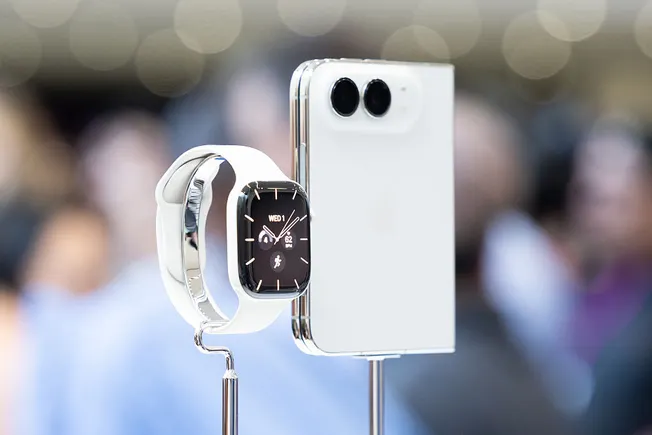
21, 2026 Antone Gonsalves Reporter Share Copy link Email / Print License Add us on Google An Apple Watch and iPhone Duo on display at the company's corporate headquarters on Sept. 9, 2026, in Cupertino, California. Apple uses domestic suppliers for both items and has recently added a titanium maker for product casings.
Benjamin Fanjoy via Getty Images Listen to the article 3 min This audio is auto-generated. Please let us know if you have feedback. Apple has partnered with a new U. S. supplier and expanded its alliance with another to provide critical materials and components for the iPhone Duo and iPhone 18 Pro, according to an Oct. 20 press release.
Apple’s new supplier is Perryman Company, a Pennsylvania-based titanium producer. The metal is used to make the casings of many Apple products. Apple will commit up to $100 million over the next three years with Perryman, which melts, forges and rolls titanium with at least 80% recycled content for iPhone Duo, according to the release.
Meanwhile, Apple expanded its supplier agreement with Delaware-based Qnity Electronics, which produces advanced films for the iPhone 18 Pro's new variable aperture camera system. The aperture assembly is at the heart of the new iPhone's 48-megapixel Fusion Main camera.
The partnerships are part of Apple's American Manufacturing Program, an effort launched last year as part of Apple's four-year, $600 billion commitment to U. S. manufacturing, the company said. Apple works with suppliers in all 50 states and supports more than 450,000 jobs, per the release.
The company’s global supply chain spans thousands of supplier facilities across more than 60 countries. "American ingenuity is vital to all our products, from the titanium crafted for iPhone Duo to breakthrough camera innovations in iPhone 18 Pro," Sabih Khan, Apple’s chief operating officer, said in the release. U. S.
companies manufacture nearly 100 components for the iPhone Duo and iPhone 18 Pro, including the chips that power the devices' key functions and wireless capabilities, according to Apple. Those suppliers are located across more than a dozen states. Apple has inked deals with other U. S. suppliers this year.
In July, chipmaker Broadcom said it would expand and modernize its Fort Collins, Colorado, facility under a $1. 5 billion capital investment to produce advanced radio frequency components for Apple products, per the release.
The renovation is part of a multiyear, $30 billion deal Apple announced with Broadcom, with the supplier agreeing to develop a range of custom silicon for use across multiple generations of the computer maker's products.
By the end of the year, Corning will produce all cover glass for iPhone products and the Apple Watch at its Harrodsburg, Kentucky, facility, Apple said. Also this year, Amkor Technology began construction of the main building of a high-volume silicon packaging and test facility in Peoria, Arizona.
Amkor broke ground on the facility in October 2025 and expects to create up to 3,000 jobs. Recommended Reading Apple adds $100B to manufacturing pledge, aims to draw suppliers to US By Sara Samora • Aug. 8, 2025 Add us on Google Share Copy link Email / Print License Filed Under: Risk and Resilience, Procurement, Manufacturing
Original Source
This briefing is based on reporting from Supply Chain Dive. Use the original post for full primary-source context.
Style
Audience