The Heartbeat of the American Supply Chain
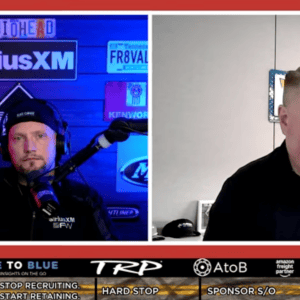
Trucking shouldn’t just offer somebody a seat. It should offer them a future, better skills, better opportunities, and more money and choices. That was the premise Werner Enterprises Senior Director of Driver Recruiting Ben Pile brought to his recent appearance on Brake Check with host Charles Gracey. Pile has spent 23 years in driver recruiting, […] The post The Heartbeat of the American Supply Chain appeared first on FreightWaves.
Source Lens
Industry Context
Useful background context, but lower-priority than direct platform, community, or operator intelligence.
Impact Level
medium
Use this briefing to decide whether your team needs an immediate workflow, policy, or reporting change.
Key Stat / Trigger
No single quantitative trigger surfaced in this report.
Focus on the operational implication, not just the headline.
Full Coverage
Trucking shouldn’t just offer somebody a seat. It should offer them a future, better skills, better opportunities, and more money and choices. That was the premise Werner Enterprises Senior Director of Driver Recruiting Ben Pile brought to his recent appearance on Brake Check with host Charles Gracey.
Pile has spent 23 years in driver recruiting, and his experience has ranged across nearly every pressure point carriers face in attracting and keeping drivers today: equipment quality, trust, the make-or-break first 90 days, and the different needs of rookie and veteran drivers.
According to Pile, recruiting only gets a carrier in the door, and it’s everything that happens after that determines whether a driver stays. What separates Werner’s genuine career path from a shallow recruiting pitch, Pile says, is the sheer range of directions a driver can take.
“There’s over 400 different driving opportunities here,” Pile said, citing multiple regions, local routes, dedicated lanes, and team driving as just a starting point. Drivers can also move into leadership roles mentoring the next generation, become driver ambassadors or Road Team Captains, or get behind the wheel of one of Werner’s Operation Freedom trucks.
Being a Marine Corps veteran himself, Pile says that program is near and dear to his heart. But opportunity only matters if the basics are covered first, and for Pile that starts with equipment. “Our tractor age is two and a half years. Not a lot of carriers can say that,” he said, adding that Werner’s trailer fleet averages five years old.
“That equipment is the baseline for your job. If you don’t have a good, safe piece of equipment, then you’re not rolling down the road making the money that you deserve.” Given Werner’s scale, Pile hears from a wide cross-section of drivers who’ve left other carriers, and he said the reasons tend to cluster around two issues.
“Most of it is equipment and not being treated with respect,” he said. “That’s what I hear the most.” Gracey pushed further, noting that recruiters across the industry often get an unfair reputation for overpromising, much of which stems from a disconnect between what recruiting sells and what the operation looks like in practice.
Pile said Werner works to close that gap by holding recruiters to the same standard drivers are promised.
“We are constantly monitoring driver profiles that the recruiters are selling, pay structures, things like that, giving those operation leaders a chance to look at those descriptions of accounts to make sure it matches the expectation of the fleet,” Pile said. “The last thing I want is recruiters selling something that isn’t reality.
So we do very good diligence on that every single quarter, if not weekly, at all times.” That diligence, Pile said, is what builds the trust drivers need to buy in.
“They’re trusting us, coming on board, knowing that we have the opportunity that we described for them — being honest with them about the home time, the pay, the equipment, and the opportunities that we have here,” Pile said.
If recruiting gets a driver in the seat, Gracey argued, retention is won or lost in the first 90 days, and that’s where the spotlight shifts from recruiter to operation. Pile said one of the most common mistakes carriers make is expecting new drivers to hit full productivity immediately.
“Some carriers have expectations that drivers are going to be very productive from day one,” Pile said. “That’s not always the case. They have to learn the ropes of that particular account. It does take time. We mentor, and we’re very patient with our drivers.
We provide a lot of coaching along the way on how they can get better, how they can earn that income.” When expectations and reality don’t line up right away, Pile said Werner treats it as a conversation rather than a dead end. “Maybe I came here with my expectation being X and Y, and now it’s A and B. Let’s figure it out.
Let’s see what other opportunities are available if this isn’t a good fit,” he said. “I’d hate for you to leave because of this kind of circumstance. Let’s try to find out what’s a better fit for you within the organization.”
Simply asking drivers for feedback already puts a carrier ahead of much of the industry, but what a company does with that feedback matters even more. Pile said Werner leans on direct, recurring outreach. “We want the feedback — reaching out to them, having calls, just checking in,” he said. “How’s it going? Tell me about your account. What’s good?
What’s bad? I think getting that real feedback from the drivers firsthand is vital in your organization.” Follow-through, in Pile’s view, is what separates a listening exercise from real retention work.
“As long as you get follow-up from them, I think they’re more engaged in what you’re doing day to day than they would be if they make a complaint and no one follows up with them. It falls on deaf ears,” he said. “Actions speak louder than words when it comes to that. You’re not goin
Original Source
This briefing is based on reporting from Freightwaves. Use the original post for full primary-source context.
Style
Audience