Maersk unfurls new sail power for container ship
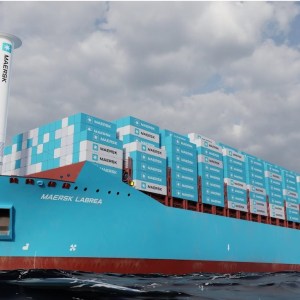
Maersk is retrofitting a rotor sail on one 8,700-TEU vessel for a North/South Atlantic pilot starting mid-2027 — its first wind-assisted propulsion experiment. This is a single-ship test with no confirmed fleet rollout or rate impact.
Carriers are investing in green tech ahead of tightening IMO emissions regulations, which could eventually surface as fuel surcharge restructuring or tiered pricing for compliant vs. non-compliant routes.
This is a long-horizon green initiative with no near-term freight rate or transit time implications for sellers. Watch for carriers using sustainability investments to justify rate premiums on 'green lanes' — that's the actual cost risk.
Operational Impact
This story may require teams to revisit workflows, monitoring, or platform assumptions.
Bottom Line
Maersk sail test is a 2027 experiment — zero seller impact today.
Source Lens
Industry Context
Useful background context, but lower-priority than direct platform, community, or operator intelligence.
Impact Level
low
Maersk sail test is a 2027 experiment — zero seller impact today.
Key Stat / Trigger
One rotor sail saves ~1 ton of fuel per day per unit
Focus on the operational implication, not just the headline.
Full Coverage
Maersk has signed an agreement to install a high-tech “rotor sail” on one of its container vessels, marking the company’s first foray into wind-assisted propulsion for its ocean fleet.
The 115-foot-tall sail, designed by London-based Anemoi Marine Technologies, will be retrofitted to a 984-foot, 8,700-TEU Lima-class ship and piloted during regular commercial service, with installation due in mid-2027. The vessel is expected to operate on Maersk (OTC: AMKBY) north and south Atlantic voyages while the sail is piloted.
The system will be tested in commercial service after that. Anemoi typically installs three to five rotor sails per vessel, with each unit saving roughly one ton of fuel per day and around three tons of CO₂ emissions, according to the company’s specifications. window. googletag = window. googletag || {cmd: []}; googletag. cmd.
push(function() {var gptSlot = googletag. defineSlot('/21776187881/FW-Responsive-Main_Content-Slot1', [[300, 100], [320, 50], [728, 90], [468, 60]], 'div-gpt-ad-1709668545404-0'). defineSizeMapping(gptSizeMaps. banner1). addService(googletag. pubads()); googletag. pubads(). enableSingleRequest(); googletag. pubads(). collapseEmptyDivs(); googletag.
enableServices(); setInterval(function() {if (! document. hidden) {googletag. pubads(). refresh([gptSlot]); } }, 30000); }); googletag. cmd. push(function() {googletag. display('div-gpt-ad-1709668545404-0'); }); Maersk says the rotor sail is part of a broader, fuel-agnostic approach to cutting greenhouse gas emissions across its ocean business.
The company’s current priorities center on scaling lower-GHG-emission fuels such as bio- and e-methanol, expanding its dual-fuel fleet, and improving network and vessel efficiency. Earlier this year, CMA CGM began rotations of the sail-assisted Neoliner Origin, a ro-ro vessel calling the Port of Baltimore.
In 2025, Maersk added 10 dual-fuel methanol vessels and completed fuel-saving retrofits on 230 owned ships and 150 time-chartered vessels, helping push its ocean Energy Efficiency Operational Indicator (EEOI) to a record low of 10. 8 gCO₂e per ton-nautical mile.
By 2027, the company expects 25 dual-fuel ships in service, eventually reaching 25% of its fleet capable of running on lower-emission fuels. The company has targeted net-zero emissions by 2040. Read more articles by Stuart Chirls here. window. googletag = window. googletag || {cmd: []}; googletag. cmd. push(function() {var gptSlot = googletag.
defineSlot('/21776187881/fw-responsive-main_content-slot3', [[728, 90], [468, 60], [320, 50], [300, 100]], 'div-gpt-ad-1665767553440-0'). defineSizeMapping(gptSizeMaps. banner1). addService(googletag. pubads()); googletag. pubads(). enableSingleRequest(); googletag. pubads(). collapseEmptyDivs(); googletag. enableServices(); setInterval(function() {if (!
document. hidden) {googletag. pubads(). refresh([gptSlot]); } }, 30000); }); googletag. cmd. push(function() {googletag.
display('div-gpt-ad-1665767553440-0'); }); Read more: New data shows on-time container shipping suffers biggest drop in 5 years Port inspection leads to $10M counterfeit Nike, Adidas seizure in California Northeast port breaks ground on $3. 2 million in new upgrades Trans-Pacific spot rates reach new highs on resilient demand, port congestion window.
googletag = window. googletag || {cmd: []}; googletag. cmd. push(function() {var gptSlot = googletag. defineSlot('/21776187881/fw-responsive-main_content-slot4', [[300, 100], [320, 50], [728, 90], [468, 60]], 'div-gpt-ad-1709668086344-0'). defineSizeMapping(gptSizeMaps. banner1). addService(googletag. pubads()); googletag. pubads().
enableSingleRequest(); googletag. pubads(). collapseEmptyDivs(); googletag. enableServices(); setInterval(function() {if (! document. hidden) {googletag. pubads(). refresh([gptSlot]); } }, 30000); }); googletag. cmd. push(function() {googletag.
display('div-gpt-ad-1709668086344-0'); }); Out of its depth: Why 52 feet could equal millions of dollars for this U. S. port The post Maersk unfurls new sail power for container ship appeared first on FreightWaves.
No action needed now — pilot installs mid-2027 on one vessel; monitor if Maersk introduces 'green surcharges' on Atlantic lanes and factor into landed cost models.
If you ship transatlantic, audit your freight contracts in 2026 for any eco-surcharge clauses before renewal.
Original Source
This briefing is based on reporting from Freightwaves. Use the original post for full primary-source context.
Style
Audience