Freight Procurement Is Always On Now — AI Speeds It Up
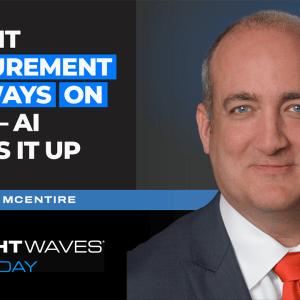
Emerge CEO says AI can compress freight bid cycles from 2 months to 2-3 weeks, signaling a shift from annual RFPs to continuous procurement. Shippers now must factor carrier fit, lane performance, and fraud risk — not just price — into every procurement decision.
AI-driven procurement compression is part of broader logistics tech disruption that will make freight costs more volatile and dynamic, pressuring sellers to build tighter, more responsive supply chain cost models rather than relying on static annual budgets.
Faster freight procurement cycles mean carriers can reprice more frequently, eroding the rate locks sellers have historically relied on for inventory cost planning. If you negotiate annual shipping contracts, expect those windows to shrink — start building quarterly freight review checkpoints into your ops calendar now.
Operational Impact
This story may require teams to revisit workflows, monitoring, or platform assumptions.
Bottom Line
Faster freight rebidding cycles mean carrier rates — and your shipping costs — shift more often.
Source Lens
Industry Context
Useful background context, but lower-priority than direct platform, community, or operator intelligence.
Impact Level
medium
Faster freight rebidding cycles mean carrier rates — and your shipping costs — shift more often.
Key Stat / Trigger
Bid events compressed from 2 months to 2-3 weeks via AI automation.
Focus on the operational implication, not just the headline.
Full Coverage
#fwtv_BXlnqoykCN4. fwtv-panel{border:1px solid #d0d0d0;padding:18px;border-radius:6px;line-height:1. 6}#fwtv_BXlnqoykCN4. fwtv-panel p{margin:0 0 12px}#fwtv_BXlnqoykCN4. fwtv-note{font-style:italic;color:#666;margin-top:16px;padding-top:12px;border-top:1px solid #e0e0e0}AI in freight procurement could cut bid events from months to just 2-3 weeks.
Emerge CEO Mark McEntire explains why shippers can’t treat procurement as a once-a-year event anymore. In this FreightWaves Today interview, McEntire breaks down the shift from annual RFPs to continuous procurement, why price alone is no longer enough, and how shippers are weighing capacity, carrier fit, risk and fraud in a tighter market.
If you manage transportation procurement, routing guides or carrier strategy, this one gets straight to the point. Emerge has installed a new CEO with more than three decades of experience on the shipper side of freight, signaling a strategic pivot toward closer customer alignment and product development rooted in operational reality.
The executive, who previously held a role at Emerge before returning, said he reintroduced himself to the organization roughly two weeks before the interview, describing himself as being on “day 15” with what he called “day one energy.” The most urgent message he brought to the role: the traditional annual freight procurement cycle is broken.
“Procurement always needs to be on,” he said. “You can’t just set it and forget it.” He described a market evolution he has watched firsthand, from shippers running a single annual RFP to two per year, then quarterly events, then continuous mini-bids — a trend he said technology is now accelerating further. “I don’t think price alone is enough anymore.
If you get a rate in a bid, but it doesn’t come with reliable capacity, it isn’t really a rate.” Beyond rate, he argued that carrier fit, lane fit, performance, and fraud risk must now be embedded in procurement platforms. He said Emerge helps shippers vet those factors, calling the outcome more resilient than traditional cost-and-service evaluations.
Risk and fraud, he noted, are being introduced into the procurement process in ways that were not common even a few years ago. On artificial intelligence, he drew a practical line between signal and noise: if AI helps make a better decision, eliminates waste, or eliminates work, it is valuable; if not, it is noise.
He said AI’s most concrete near-term impact in procurement is speed — compressing a bid event that can take two months just to gather data down to a two-to-three-week process. “Shippers sit on a mountain of data,” he said. “It’s impossible for a human to see all the patterns in that data, the anomalies with the rates, the routing guide deterioration.”
He stopped short of predicting AI would replace procurement professionals, but said it would deliver demonstrably better outcomes. Emerge recently added LTL procurement capability through ProcureOS, bringing truckload, LTL, intermodal, and rail procurement under a single platform.
The CEO said shippers do not view their networks in silos and that consolidating those modes under “one pane of glass” is central to the company’s growth thesis. He declined to detail what comes next on the product roadmap, saying the team would stay close to customers to identify gaps.
He outlined three priorities for his first year: getting company leaders talking to customers every day, driving growth through both new logos and expanded wallet share with existing accounts, and instilling organizational urgency.
He also pointed to a 16-member customer advisory board created during his previous tenure at Emerge as a key mechanism for distilling customer feedback into product decisions, noting that the strategic account management team he built then remains in place.
Emerge’s new CEO says AI can shrink a freight bid cycle from roughly two months to two to three weeks by automating data gathering and pattern recognition. He argues procurement must move from an annual ‘set it and forget it’ event to a continuous process, with carrier capacity reliability now as important as price.
Emerge has added LTL procurement via ProcureOS, putting truckload, LTL, intermodal, and rail sourcing on a single platform. This Summary is generated thanks to a transcription of the interview, for the full interview please enjoy the video above. The post Freight Procurement Is Always On Now — AI Speeds It Up appeared first on FreightWaves.
Audit your current carrier contracts quarterly, not annually — if your routing guide compliance drops below 80%, you're bleeding margin on spot rates that continuous procurement would catch faster.
In the next 30 days, ask your 3PL or freight broker whether they offer mini-bid or continuous procurement options — locking into annual-only RFPs in 2025-2026 will leave money on the table as rates fluctuate.
Original Source
This briefing is based on reporting from Freightwaves. Use the original post for full primary-source context.
Style
Audience