

When the safety net becomes the risk
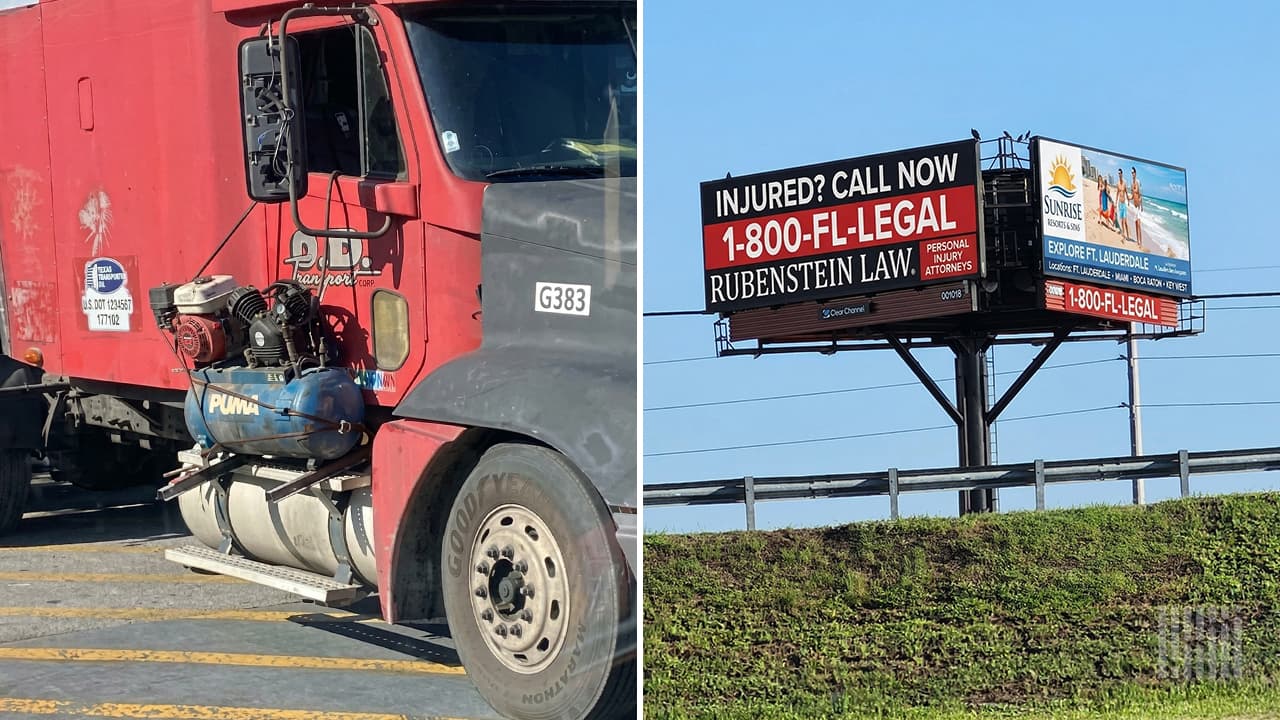
Investigation reveals 1,703 of 4,561 trucking carriers using Risk Retention Groups scored CRITICAL for safety, with RRG failures leaving crash victims without state guaranty fund protection. Unlike traditional insurers, RRG collapses make claimants unsecured creditors with potential zero recovery.
Sellers using small trucking companies for FBA shipments or direct-to-consumer fulfillment face cargo liability exposure if carriers use RRG insurance instead of traditional commercial coverage. Verify your logistics partners carry admitted insurance coverage, not RRG policies that lack state guaranty fund backing.
As logistics costs pressure small carriers toward cheaper RRG insurance, sellers face increased cargo loss exposure requiring stronger insurance verification in supply chain partnerships.
Request insurance certificates from freight partners - confirm coverage is through admitted carriers, not Risk Retention Groups that lack state protection
Add cargo insurance verification to your logistics partner vetting process within 30 days to avoid liability gaps
Bottom Line
Trucking insurance gaps mean cargo liability risk for sellers.
Source Lens
Industry Context
Useful background context, but lower-priority than direct platform, community, or operator intelligence.
Impact Level
medium
Trucking insurance gaps mean cargo liability risk for sellers.
Key Stat / Trigger
1,703 of 4,561 carriers scored CRITICAL safety ratings
Focus on the operational implication, not just the headline.
Full Coverage
A small trucking company you have never heard of is probably insured right now by an entity you have never heard of, financed through a trust and surviving on cash advances from a factoring company that holds a blanket lien on everything it will ever earn. That carrier may have a safety score in the gutter.
The officer listed on the FMCSA registration may control a dozen, even hundreds of other companies with the same profile. When it crashes, the person on the other end of that collision may discover there is nothing left to collect. This is what the data shows.
Cross-referencing FMCSA safety records, California Secretary of State UCC and other State UCC filings, and a dataset of more than 6,100 carrier records tied to 51 risk retention groups, I spent several weeks mapping the financial and safety architecture underneath a corner of the trucking market that almost nobody watches.
What I found goes well beyond bad carriers. It goes into the solvency of the insurers putting them on the road, the stability of the lenders financing their trucks, and the legal exposure of crash victims who believe they have coverage protecting them.
What is a Risk Retention Group and why should you care Most people in trucking understand commercial auto insurance at a basic level. You pay a premium, a licensed carrier stands behind the policy, the state regulates it and if the insurer collapses, the state guaranty fund covers the claims up to a limit.
A risk retention group, or RRG, works differently on every one of those points. An RRG is a member-owned liability insurer formed under the federal Liability Risk Retention Act of 1986. The law was written to help industries with limited insurance access, medical providers, architects, and other professionals pool their risks and self-insure collectively.
The structure lets an RRG form in a single state and operate across all 50 states without individual state licensing. That means lighter regulatory oversight, lower capital requirements and less transparency than a traditional insurer.
The trucking industry adopted the RRG model because traditional commercial auto insurers pulled back from small carriers or priced them out of coverage. RRGs filled the gap. Some are well-run and adequately capitalized. Others are not. Here is what every crash victim, plaintiff attorney and settlement claimant needs to know.
In most states, if an RRG goes broke, the state guaranty fund will not cover the claims. The same fund that protects policyholders when a traditional insurer fails explicitly excludes RRGs in most jurisdictions. Your settlement pending against an insolvent RRG makes you an unsecured creditor in a liquidation proceeding. You may collect nothing.
In 2003, Reciprocal of America, a Virginia-domiciled RRG that insured professional services, collapsed under claims it could not pay, leaving more than $1 billion in uncovered obligations and thousands of claimants without recourse. It was the largest RRG failure in history at that time.
The trucking segment has had its own smaller collapses since, each one leaving injured parties scrambling for recoveries that often do not exist. The RRG is also different from a risk purchasing group, or RPG, which is a buying cooperative that negotiates better rates from a traditional admitted insurer.
The RPG keeps all of the regulatory and guaranty fund protections of traditional insurance. The RRG replaces both with member capital and the assumption that claims do not cluster. When they do cluster, the math falls apart quickly. Someone else has to absorb that somewhere.
What the data shows The dataset analyzed for this investigation contained 6,167 records covering 4,561 unique carriers across 51 RRGs. Using a 0-to-100 carrier risk score, which incorporates crash rates, out-of-service rates, violations, revocations, authority age and insurer quality, the carriers were classified against FMCSA safety records.
Of the 4,561 unique carriers, 1,703 scored CRITICAL. That is 37% of a dataset that already skews toward smaller, newer operators. The single largest RRG in the dataset insures 740 unique carriers. Of those, 354 score CRITICAL. That is a 48% CRITICAL rate within one insurer’s portfolio.
At standard $750,000 BIPD coverage, the theoretical exposure across those 354 CRITICAL carriers alone is $265 million, before a single nuclear verdict multiplier is applied. The data also shows 288 carriers under two years old, with zero reported crashes, zero out-of-service violations, and $750,000 or more in active coverage. They exist in the FMCSA system.
They have insurance. They have never been inspected. They are completely unknown-risk entities absorbing premium capacity inside RRGs that are already stretched. If 20 percent of the 1,703 CRITICAL-scoring carriers across all RRGs have a major crash in the same policy year, that is 340 claims at $750,000 each, or $255 million in direct BIPD exposure.
If 10 percent of those reach nuclear verdict territory, and
Original Source
This briefing is based on reporting from Freightwaves. Use the original post for full primary-source context.
Style
Audience