CargoNet tracks $31.8M in Labor Day thefts as criminals breach trusted freight accounts
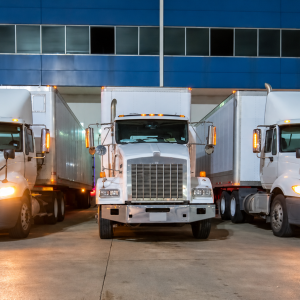
CargoNet recorded 273 cargo theft incidents worth $31.8M across Labor Day periods 2021–2025, with annual thefts up 70% and criminals increasingly using compromised carrier accounts and email systems to reroute freight after legitimate pickup. California, Texas, and Illinois account for 48% of cases; food/beverage, household goods, and electronics are top targets.
As organized cargo theft scales with identity-based fraud, sellers relying on broker networks face a supply chain security gap that traditional insurance and carrier vetting don't cover -- expect premium increases and stricter verification mandates from 3PLs in coming quarters.
Sellers shipping high-value inventory through 3PLs or brokers during holiday windows face elevated diversion risk even after carrier handoff — the attack vector is post-pickup instruction changes, not just fake carriers. Audit your 3PL's verification protocols now: confirm they require secondary authentication for any mid-transit delivery instruction changes.
Operational Impact
This story may require teams to revisit workflows, monitoring, or platform assumptions.
Bottom Line
Cargo fraud up 70% -- your freight can be rerouted after legitimate pickup.
Source Lens
Industry Context
Useful background context, but lower-priority than direct platform, community, or operator intelligence.
Impact Level
medium
Cargo fraud up 70% -- your freight can be rerouted after legitimate pickup.
Key Stat / Trigger
$31.8M in cargo stolen across Labor Day periods 2021–2025, up 70% annually
Focus on the operational implication, not just the headline.
Full Coverage
Criminals can enter trusted freight channels through compromised carrier accounts, email systems, business phones or compliance platforms. They may change delivery instructions after a legitimate trucking company takes possession. That move can bypass safeguards focused only on carrier selection.
Verisk CargoNet identifies this identity-based deception as an expanding holiday threat. The warning accompanies a five-year analysis covering Labor Day periods from 2021 through 2025. Verisk CargoNet recorded 273 incidents across the United States during those seven-day windows. Estimated commodity value reached approximately $31. 8 million.
Verisk released the findings Friday ahead of the 2026 holiday weekend. Labor Day thefts climbed 70% The annual count increased from 33 incidents in 2021 to 56 during 2025. That change represented a 70% jump. Activity reached a five-year high with 70 cases in 2024. CargoNet found that risk remained materially above levels recorded early within the period.
Friday led every weekday with 55 incidents. Tuesday followed with 49, while Thursday produced 46 and Wednesday recorded 44. Those four days generated 194 cases, representing 71% of the entire analysis. The holiday weekend produced significantly fewer reports. Saturday accounted for 24 incidents, while Sunday had 28 and Labor Day Monday recorded 27.
CargoNet connected this pattern with deceptive pickups and non-delivery schemes. Those crimes depend upon active phone lines, working employees and freight moving through normal channels. Such conditions decline during closures before returning around the weekend. CargoNet described two overlapping risks surrounding the holiday.
Physical exposure develops when loaded freight remains stationary during closures or schedule disruptions. Verification exposure emerges when limited staffing combines with time pressure. Those conditions help criminals impersonate carriers, alter instructions or introduce fraudulent contact information.
Three states accounted for nearly half California, Texas and Illinois accounted for 130 incidents, representing 48% of the five-year total. California led the country with 70 cases. Texas followed at 38, while Illinois recorded 22. Verisk connected this concentration with dense freight networks, large consumer markets and intermodal infrastructure.
Food and beverage shipments led all commodity categories with 49 incidents. Household goods ranked second with 27, followed by electronics at 25. Vehicles and accessories accounted for 20 cases, while metals produced 11. CargoNet noted that these products offer strong resale opportunities through numerous illicit channels.
The broader financial threat extends beyond Labor Day. CargoNet estimated cargo theft losses exceeded $359 million during 2026’s first six months. Average stolen commodity value reached approximately $341,518. Organized groups increasingly pursue expensive metals, enterprise technology components and other high-value freight.
Verisk did not identify individual victims, suspects, carriers or investigations within the Labor Day analysis. The report provided no breakdown separating physical thefts from identity-based schemes. CargoNet also withheld individual loss amounts and recovery outcomes. Those details remain unknown from Friday’s announcement.
Why It Matters Brokers, carriers and shippers face exposure before, during and after the holiday weekend. The findings show that routine business activity can give criminals more opportunities than complete closures. Click here for more articles on cargo theft and freight fraud by Phil Brink.
Port inspection leads to $10M counterfeit Nike, Adidas seizure in California – FreightWaves One complaint exposed $800K Texas grain theft spanning 176 loads – FreightWaves Florida AG calls semi-truck a ‘rolling dungeon’ after 4 children confined for 6 years – FreightWaves The post CargoNet tracks $31.
8M in Labor Day thefts as criminals breach trusted freight accounts appeared first on FreightWaves.
Contact your 3PL or freight broker before Labor Day weekend and ask specifically whether they have a protocol for verifying mid-shipment delivery instruction changes -- if they don't, hold high-value shipments or use a carrier with real-time GPS tracking.
Add cargo insurance riders for holiday-adjacent shipping windows (Fri–Tue surrounding major holidays) and confirm coverage applies to fraud-based diversion, not just physical theft.
Original Source
This briefing is based on reporting from Freightwaves. Use the original post for full primary-source context.
Style
Audience