How toy manufacturer PlayMonster helped engineer a Hacky Sack revival
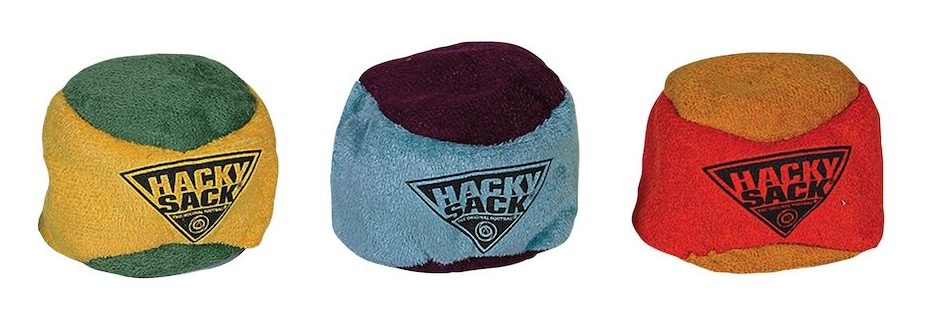
Encouraged by the resurgence of Hacky Sacks, toy company PlayMonster is developing about 10 new Hacky Sack styles. PlayMonster's CEO spoke with Modern Retail about keeping up with demand, and what the Hacky Sack revival says about the types of games and toys resonating with consumers right now.
Source Lens
Industry Context
Useful background context, but lower-priority than direct platform, community, or operator intelligence.
Impact Level
medium
Use this briefing to decide whether your team needs an immediate workflow, policy, or reporting change.
Key Stat / Trigger
No single quantitative trigger surfaced in this report.
Focus on the operational implication, not just the headline.
Full Coverage
New Wholesale Rules // July 16, 2026 How toy manufacturer PlayMonster helped engineer a Hacky Sack revival By Julia Waldow Hacky Sack Jonathan Berkowitz, a toy-industry veteran and CEO of PlayMonster, expected “a lot of success” after working with Wham-O — a toy company that also owns the Frisbee and the Hola-Hoop — to relaunch Hacky Sack in February.
What Berkowitz didn’t expect was how quickly, and just how much, the small, round bags would become the new “it” toy for today’s teens. This spring, as the school year wound down and the weather heated up, young people began buying the toys, officially called footbags, in droves. Kids and teenagers kicked around the products at recess and at the park.
They uploaded viral videos of themselves or classmates doing tricks on social media. They borrowed footbags from their teachers, in a manner similar to library books. Local toy stores sold out of inventory; other shops began limiting daily purchases.
While “Hacky Sack” is trademarked, many people use the lowercase term as a shorthand for the product category. One morning, in late May, Berkowitz logged onto his computer and was shocked by what he saw. “I remember looking at Google Trends and seeing ‘hacky sacks’ just take off,” Berkowitz told Modern Retail in an interview. “It just started to explode.”
Even today, from April 15 to July 15, Google searches for “hacky sack” in the U. S. are up 1,700% year over year. View this post on Instagram PlayMonster, a toy manufacturer that also makes Koosh balls, sold out of its branded Hacky Sacks online at the end of May, then began air-freighting in extra inventory as fast as it could.
“I would say we were at low stock levels for probably eight weeks,” Berkowitz said. PlayMonster knew it needed to make a move and “immediately jumped into action,” Berkowitz said.
The week after Berkowitz looked at Google Trends, PlayMonster got to work on a new product line of Hacky Sacks, including a light-up version and a version that audibly counts how many times it’s been kicked around. PlayMonster executives jumped on a plane to China to kickstart the manufacturing process.
Normally, Hacky Sacks are on a yearly development cycle; that was soon condensed into 90 days. “We’re getting [the products] to market in record time,” Berkowitz said. “We knew [that] to really capitalize on the trend and give consumers what they wanted, we needed a lot more innovation.” Today, PlayMonster is developing about 10 new Hacky Sack styles.
The line will roll out in late July through September and be branded as part of a larger “Hack to School” campaign. Hacky Sack is also bringing on new retail partners, some of whom got on board after seeing proof that footbags were back.
“All major retailers this fall are going to have [our] product,” Berkowitz said, mentioning Walmart, Target, Amazon and Dick’s Sporting Goods. “My belief is that back-to-school is going to be even bigger than May,” he said. “We’re in a much better stock position and getting much healthier.”
The return of the Hacky Sack The history of the footbag goes back more than 50 years to 1972, when two friends — Mike Marshall and John Stalberger — kicked around a handmade beanbag in an Oregon basement. The first packaged and branded Hacky Sacks hit stores in 1977.
The toys enjoyed mainstream popularity in the 1980s and 1990s, becoming a staple at the playground and the parking lot and earning a following among skaters and punk kids. But then, the Hacky Sack — and footbags, in general — faded from view as other toys and sports came onto the scene.
A few years ago, Berkowitz — who spent years at Hasbro, working on Nerf — saw an opportunity to bring the product back. Berkowitz started chatting with Wham-O, which had expressed interest in what he had done over the course of his career. In 2025, PlayMonster officially partnered with Wham-O to relaunch Hacky Sack.
PlayMonster now has the exclusive license for the product and does its branding, marketing and product development in the United States, Canada and Mexico. In order to pull off a successful retro relaunch, brands can’t “simply recreate an old product,” according to Americus Reed, professor of marketing at the Wharton School of the University of Pennsylvania.
Rather, they should aim to create an emotional experience. “The question isn’t, ‘Can we recreate 1995?'” Reed told Modern Retail. “The question is, ‘What identity did this brand allow people to perform then — and how can that identity be relevant today?'” For Hacky Sack and PlayMonster, that has meant making the footbags easier to kick around and even film.
The refreshed Hacky Sacks, which hit shelves in la
Original Source
This briefing is based on reporting from Modern Retail. Use the original post for full primary-source context.
Style
Audience