

Trucking fleets must adapt faster as regulations, AI reshape industry, experts say
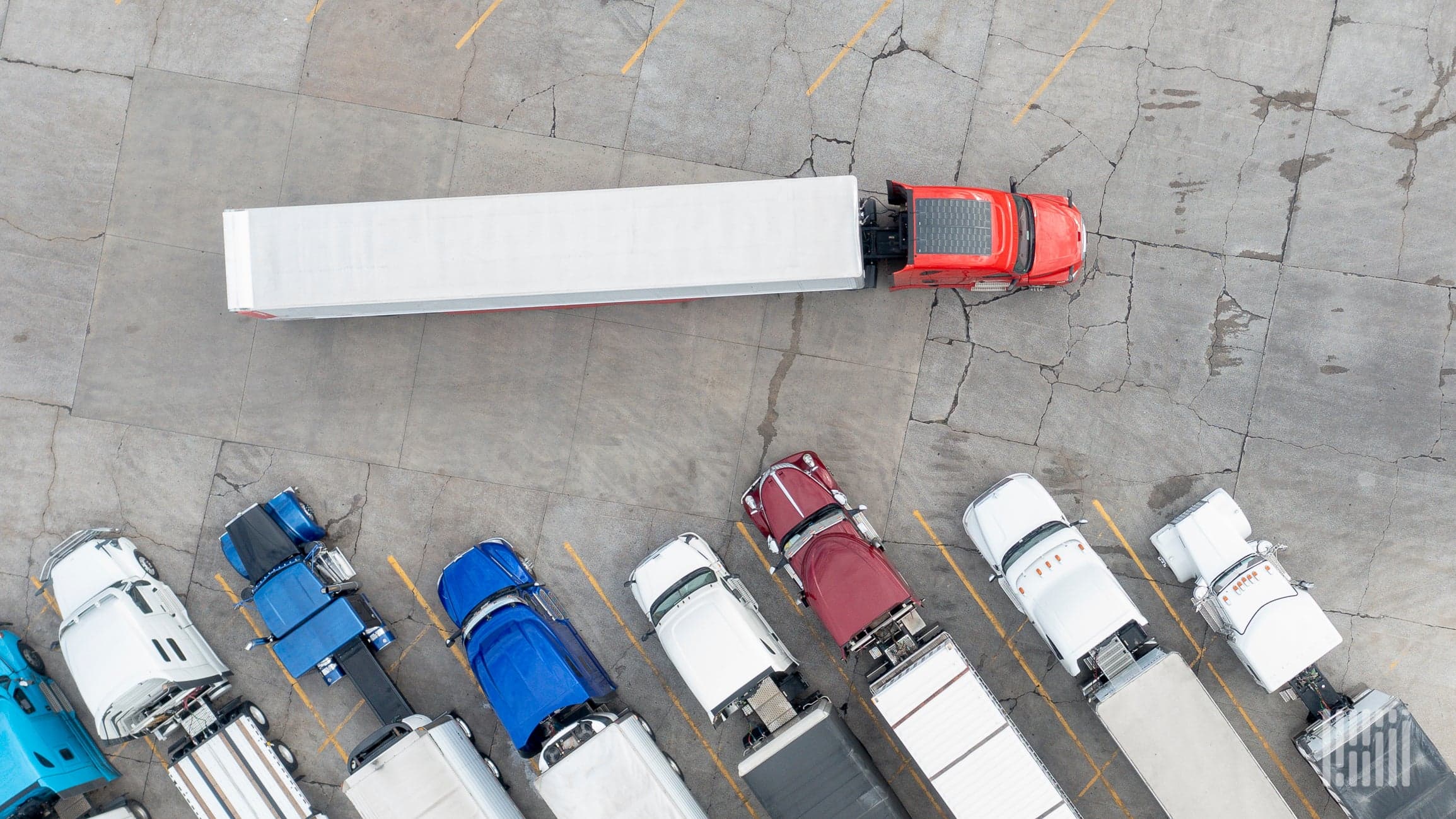
Executives from the Truckload Carriers Association, PepsiCo and Stevens Transport said fleets that embrace safety technology, AI will be best positioned to survive mounting operational pressures. The post Trucking fleets must adapt faster as regulations, AI reshape industry, experts say appeared first on FreightWaves.
Source Lens
Industry Context
Useful background context, but lower-priority than direct platform, community, or operator intelligence.
Impact Level
medium
Use this briefing to decide whether your team needs an immediate workflow, policy, or reporting change.
Key Stat / Trigger
No single quantitative trigger surfaced in this report.
Focus on the operational implication, not just the headline.
Full Coverage
AUSTIN, Texas — Trucking industry leaders said fleets are facing one of the fastest periods of operational and regulatory change in recent memory, forcing carriers to adapt quickly on issues ranging from English-language enforcement and non-domiciled commercial driver’s licenses to AI-powered fleet technologies and driver retention strategies.
The discussion took place during a trucking industry panel at Fleetworthy’s Roadshow 2026 conference in Austin on May 19. Panelists included David Heller, Michael Hayes and Ken Resta. Heller said fleets are struggling to keep pace with rapid changes in federal trucking enforcement and compliance policies.
“You have a rule on English language proficiency, you have a non-domiciled CDL rule that is coming out at the snap of a finger and it’s changing the way we truck virtually overnight,” Heller, senior vice president, safety & government affairs at the Truckload Carriers Association, said.
Heller said the accelerated pace of new enforcement actions marks a major departure from the traditional multiyear regulatory rollout process trucking companies were accustomed to in the past. “It comes quick, it comes fast, it’s very aggressive in its nature,” Heller said. “It’s changed the way the motor carriers do business.”
At the same time, Heller said the industry is moving toward stronger safety accountability, with safer carriers likely benefiting while less compliant operators struggle to survive increased scrutiny. “You can see them laying the groundwork for a more responsible, safer trucking industry,” Heller said. “The safe carriers are going to benefit.
It’s the ones that ignore safety [that] are certainly probably going to fall by the wayside.”
Driver retention remains a major challenge Resta, the senior director of safety at Stevens Transport, said driver retention continues to be one of the industry’s biggest operational headaches, particularly as fleets recruit newer workers with little long-term interest in trucking careers.
“We’re seeing true inexperience coming into the industry that don’t understand the backbone of why they’re even entering into the industry,” Resta said.
Dallas, Texas-based Stevens Transport operates one of the largest refrigerated fleets in North America with over 1,600, and specializes in temperature-controlled truckload, dedicated, and kosher-certified food-grade tanker services across the U. S. , Canada, and Mexico.
Resta added that fleets are also battling rising cargo theft, increasing fuel prices and growing compliance burdens, all while operating in a difficult freight environment. “Trucking is a tough job,” Resta said.
“We have to be more creative in the way that we approach our drivers, technology and all the things that we’ll continue to talk about here if we’re going to continue to be successful and make profit.”
Hayes said fleets also need to rethink how they view professional drivers, emphasizing training and long-term development instead of treating drivers as interchangeable labor.
Hayes is the senior national fleet asset manager at PepsiCo, which operates one of the largest private trucking fleets in North America at more than 80,000 diesel and delivery trucks across its beverage and Frito-Lay divisions. “We really have to get away from that and really focus on providing our drivers with the training from day one,” Hayes said.
“We’re driving computers these days rather than trucks.” AI adoption accelerates across trucking operations The panelists said AI is increasingly being integrated into maintenance operations, dispatch systems, safety monitoring and routing decisions.
Hayes pointed to PepsiCo’s use of virtual expert technicians that remotely assist mechanics with diagnostics and repairs. The company is now exploring AI integrations that could connect directly to trucks to speed troubleshooting and reduce unnecessary parts replacement. “Time savings is going to be tremendous,” Hayes said.
“Getting away from that process of throwing parts on a vehicle to try and see if they can understand what the problem has been.” Resta said AI is also being used in areas such as camera systems, machine-vision safety tools, dynamic weather-risk monitoring, pricing models and dispatch optimization. “AI is here to stay,” Resta said.
“How we leverage it and how we use it in our day-to-day is going to help us to become a little bit more efficient over time.” Still, panelists warned fleets against becoming overly dependent on automation at the expense of relationships with drivers and frontline managers. “People first is really where we need to continue to drive this industry,” Resta said.
“We don’t lose sight that that driver is an asset.” Heller echoed those concerns, arguing that professional drivers will remain central to trucking operations even as automation advances. “We, as an industry, are not giving up on the professional truck driver,” Heller said.
“What we are doing is we are helping to make his or her job better, make his or her job ea
Original Source
This briefing is based on reporting from Freightwaves. Use the original post for full primary-source context.
Style
Audience