

From Boxcars to a Billion-Dollar Network
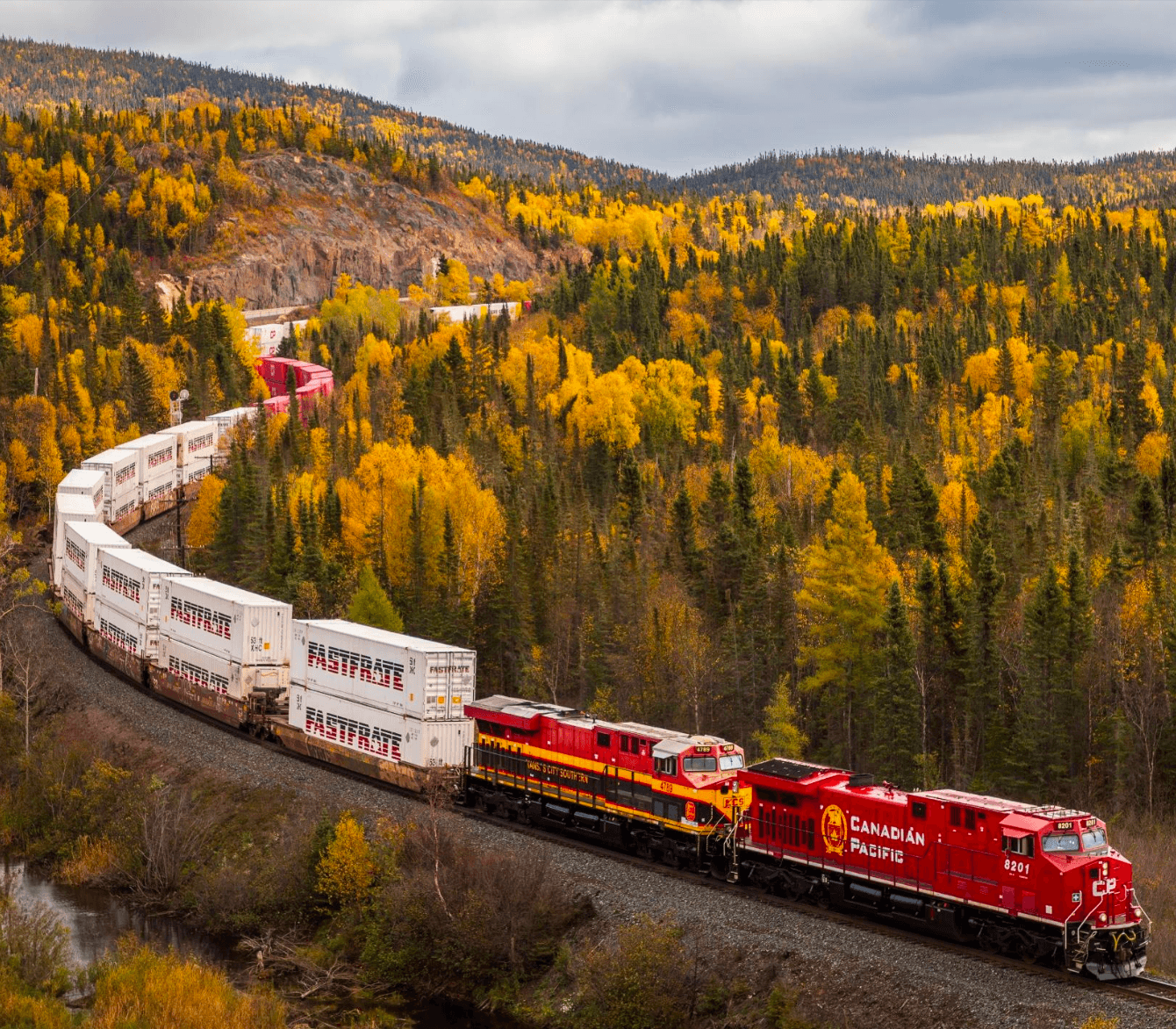
In 1966, Canadian Pacific Railway had a problem. Empty boxcars were piling up in Eastern Canada with no payload for the return trip west. The solution was a small freight company called Fastfrate, created specifically to fill those cars with less-than-truckload shipments bound for Western Canada. Six decades later, that single-service operation has become one […] The post From Boxcars to a Billion-Dollar Network appeared first on FreightWaves.
Source Lens
Industry Context
Useful background context, but lower-priority than direct platform, community, or operator intelligence.
Impact Level
medium
Use this briefing to decide whether your team needs an immediate workflow, policy, or reporting change.
Key Stat / Trigger
No single quantitative trigger surfaced in this report.
Focus on the operational implication, not just the headline.
Full Coverage
In 1966, Canadian Pacific Railway had a problem. Empty boxcars were piling up in Eastern Canada with no payload for the return trip west. The solution was a small freight company called Fastfrate, created specifically to fill those cars with less-than-truckload shipments bound for Western Canada.
Six decades later, that single-service operation has become one of North America’s largest privately held supply chain providers as a group of seven companies spanning intermodal, truckload, drayage, warehousing, e-commerce fulfillment, final-mile delivery, international freight forwarding, and customs brokerage, operating across more than 46 locations in Canada, the United States, and Mexico.
The transformation was orchestrated over a period of decades by Ron Tepper, the executive chairman who first acquired Fastfrate in 1994 and has guided every major inflection point since, including selling to private equity, buying the company back, and assembling an acquisition portfolio that has reshaped what the company can offer shippers across the continent.
“We’ve been a favored son of CP Rail since the beginning,” Tepper said in an interview with FreightWaves. “Our facilities began as a boxcar operation which provided one-way moves and no balance requirements.” [Credit: Fastfrate] The intermodal pivot The first major turning point came in the late 1990s.
As railways anticipated surging demand from China’s manufacturing boom, CP Rail’s leadership told Fastfrate it was time to move away from boxcars entirely. “In 1998, railways foresaw huge demand from China,” Tepper said.
“Senior execs who worked closely with China foresaw the effects the Chinese market would have on shipping, both east to west and west to east. It wasn’t a question. We were told to move away from the boxcars, to make ourselves an intermodal operation.” The mandate carried risk.
Fastfrate needed to build crossdock facilities across the country (Halifax, Winnipeg, Toronto, Calgary, Edmonton, Saskatoon, and Vancouver) and buy a facility in Montreal. At the time, the company wasn’t sure it could absorb the investment.
But Tepper made the bet, and it paid off in two ways: Fastfrate became the first major Canadian LTL carrier to convert fully to intermodal, capturing significant market share before competitors followed suit, and the real estate portfolio it built adjacent to CP Rail yards has appreciated dramatically as Canadian urban land values have climbed.
“We were the first major player in the LTL space to convert to intermodal from boxcar,” Tepper said. “Within two years, every other major Canadian carrier converted, but we gained a good market share and grew organically.” That intermodal conversion also created a new business line.
As Fastfrate moved from boxcars to containers, it needed trucks to haul those containers between rail yards and customers, so it built Canada Drayage Inc. (CDI) in 1999. “Today, we’re the only drayage provider that covers from Halifax to Vancouver,” Tepper said. “We have over 600 trucks doing OTR shipping to meet the needs of our shippers from end to end.
We didn’t buy that business, we built it, and we’re proud of that.” [Credit: Fastfrate] The buyback and the build-out Tepper sold 75% of Fastfrate to Fenway Equities in 2007. He retained a quarter of the company through a difficult stretch from 2009 to 2017, then bought back full ownership.
Since regaining control, he has executed a series of acquisitions that systematically filled gaps in Fastfrate’s service portfolio, each one adding a new layer to what has become a fully integrated supply chain network. In 2021, Fastfrate acquired ASL Distribution Services and Precision Parcel & Package Deliveries.
ASL, a 66-year-old company with more than 500,000 square feet of warehouse space, brought integrated warehousing, e-commerce fulfillment, and distribution capability. Precision added final-mile courier services for both B2B and B2C deliveries, handling everything from small parcels to oversized freight.
In 2022, Fastfrate acquired a majority stake in Challenger Motor Freight, one of Canada’s largest cross-border trucking companies, operating more than 1,200 trucks and 3,500 trailers with 500 to 700 border crossings daily. The deal gave Fastfrate full truckload capacity and a major U. S. footprint for the first time.
And in early 2026, Fastfrate closed on Omnitrans Inc. , a Montreal-based international freight forwarder and licensed customs broker with more than 230 established trade lanes and a direct operating presence in China. That acquisition extended Fastfrate’s reach all the way back to the point of origin, completing the end-to-end vision.
“We added companies and left them intact so that we could continue adding new services to our company,” Tepper said. “Every purchase has been to add to our services and synergize to become a full end-to-end provider.” [Credit: Fastfrate] The CPKC backbone Threading through the entire 60-year story is Fastfrate’s partnership with what is
Original Source
This briefing is based on reporting from Freightwaves. Use the original post for full primary-source context.
Style
Audience