Class 8 truck demand stays hot ahead of costly 2027 transition
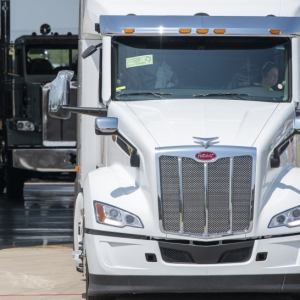
Class 8 truck orders hit 350,677 units over the past 12 months, up 111% YoY through August 2026, as fleets front-loaded purchases before EPA 2027 NOx rules add $8,000–$12,000 per compliant engine. The pre-buy cycle is now effectively over, with 2027 cost increases hitting fleets starting in September.
Regulatory-driven cost inflation in trucking is a slow-moving but certain margin headwind — sellers who don't proactively renegotiate freight terms or adjust COGS models will absorb the hit invisibly through eroding profitability.
Higher trucking costs in 2027 will compress carrier margins and flow directly into freight rate increases, squeezing seller shipping costs on both inbound and outbound lanes. Sellers using third-party carriers or negotiating annual freight contracts should lock in 2026 rates before Q1 2027 renewals.
Operational Impact
This story may require teams to revisit workflows, monitoring, or platform assumptions.
Bottom Line
Trucking costs rising $6K–$12K per unit in 2027 means higher freight rates for sellers.
Source Lens
Industry Context
Useful background context, but lower-priority than direct platform, community, or operator intelligence.
Impact Level
medium
Trucking costs rising $6K–$12K per unit in 2027 means higher freight rates for sellers.
Key Stat / Trigger
$8,000–$12,000 estimated upcharge per EPA 2027-compliant engine
Focus on the operational implication, not just the headline.
Full Coverage
North American Class 8 truck orders remained elevated in August, with fleets continuing to secure equipment ahead of changing emissions requirements even as the industry prepares for a new model-year ordering cycle.
FTR Transportation Intelligence reported preliminary Class 8 net orders of 18,200 units in August, down 19% from July but 42% higher than August 2025.
FTR said the sequential decline largely reflected normal summer seasonality, the end of the 2026 order season and the tail end of a pre-buy ahead of the Environmental Protection Agency’s 2027 nitrogen oxide emissions requirements. The results continue what has been an unusually strong year for new heavy-duty truck orders.
Through August, Class 8 orders were 111% higher than the same period of 2025, according to FTR. For the full 2026 order season — September 2025 through August — orders increased 39% from the previous order season. North American Class 8 orders totaled 350,677 units over the past 12 months.
FTR said August’s decline should not necessarily be interpreted as weakening underlying demand. Some truck manufacturers may have sold out their remaining 2026 production slots by early to mid-August, while their 2027 order books had not yet opened.
Most, if not all, surcharge-free 2026 engine build slots are likely filled, effectively bringing the EPA 2027 NOx pre-buy to an end, according to FTR. September should offer a clearer indication of underlying demand as the industry begins placing orders for 2027 equipment. The next question for fleets will increasingly revolve around price.
FTR estimates noncompliance penalties, which would allow transitional sales of engines exceeding the new NOx limit, could add approximately $6,000 to $7,000 per engine, costs that would likely be passed directly to fleets. Fully EPA 2027-compliant engines could carry an estimated $8,000 to $12,000 manufacturer upcharge.
Truck manufacturers are taking different approaches to the transition, according to Dan Moyer, FTR senior analyst for commercial vehicles. Some plan to offer both fully compliant engines and current-generation engines supported by noncompliance penalties, while at least one manufacturer plans to offer only the fully compliant option.
“Overall, August marks the close of the 2026 order season and the effective end of the EPA 2027 NOx pre-buy,” Moyer said in a statement. He said fleet purchasing decisions will increasingly be shaped by engine choices, pricing and build timing as manufacturers open their 2027 order books.
ACT Research’s preliminary August Class 8 order estimate also pointed to continued year-over-year strength. Class 8 orders remained well above year-ago levels in August despite a seasonal monthly decline, while FTR estimates 2027 engine changes could add $6,000 to $12,000 to fleet costs.
(Photo: Jim Allen/FreightWaves) Used Class 8 sales cool in July Meanwhile, the used-truck market showed signs of cooling during July, although sales remained considerably stronger than a year earlier. ACT Research reported that same-dealer used Class 8 retail sales declined 2. 5% from June, a larger decline than typically expected from seasonal trends.
Sales were nevertheless 45% above July 2025, underscoring the sharp year-over-year improvement in used equipment demand. Used Class 8 prices also retreated. The average retail selling price declined 4% from June to $60,986.
ACT’s July summary on page 2 shows year-to-date same-dealer sales up 10% from the comparable 2025 period, while average prices were up 3%. Average mileage and age were both lower year over year.
“The July slowdown in used Class 8 retail sales was directionally consistent with seasonal expectations, but the magnitude was greater than usual,” Steve Tam, vice president at ACT Research, said in a statement.
Tam said auction and wholesale channels also weakened during the month, reducing total market volumes, although year-to-date sales and values continued to demonstrate resilience amid uncertainty surrounding regulations and manufacturers’ product strategies.
Why it matters: Strong year-over-year new and used truck demand shows fleets remain willing to invest in equipment, but the end of the EPA 2027 pre-buy means September and the opening of 2027 order books could provide a much cleaner test of underlying Class 8 demand.
The post Class 8 truck demand stays hot ahead of costly 2027 transition appeared first on FreightWaves.
Audit your freight contracts now — if renewal dates fall in Q1 2027 or later, renegotiate before year-end to avoid absorbing $6,000–$12,000 per-truck cost pass-throughs from carriers.
Model a 5–15% inbound freight cost increase into your 2027 COGS projections and adjust minimum order quantities or supplier terms to offset margin compression.
Original Source
This briefing is based on reporting from Freightwaves. Use the original post for full primary-source context.
Style
Audience