How Highway Sees Fraud, Risk and Carrier Vetting
Highway's carrier fraud guarantee has paid out once in ~1M loads after fixing a California licensing identity bug; 82% of North American carriers qualify for its $100K performance guarantee tier. A 12-month fraud investigation flagged 150 fake carrier profiles tied to a Kentucky ID ring, contributing to an arrest in Armenia.
As freight fraud sophistication grows, brands relying on unvetted capacity face compounding supply chain risk — this fits a broader pattern of logistics infrastructure consolidation where data-backed compliance tools become table stakes for procurement.
Freight fraud directly inflates COGS for brands using 3PLs or managing their own freight — cargo theft averaging $250K per incident means your logistics partners' carrier vetting protocols are a hidden margin risk. Ask your 3PL or freight broker whether they use Highway or equivalent guarantee-backed vetting before your next contract renewal.
Operational Impact
This story may require teams to revisit workflows, monitoring, or platform assumptions.
Bottom Line
Freight fraud averages $250K per theft — your 3PL's carrier vetting is a margin risk.
Source Lens
Industry Context
Useful background context, but lower-priority than direct platform, community, or operator intelligence.
Impact Level
low
Freight fraud averages $250K per theft — your 3PL's carrier vetting is a margin risk.
Key Stat / Trigger
Average cargo theft value of $250,000 per incident
Focus on the operational implication, not just the headline.
Full Coverage
#fwtv_KFTgxvb86ec. fwtv-panel{border:1px solid #d0d0d0;padding:18px;border-radius:6px;line-height:1. 6}#fwtv_KFTgxvb86ec. fwtv-panel p{margin:0 0 12px}#fwtv_KFTgxvb86ec.
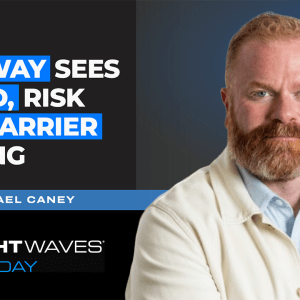
fwtv-note{font-style:italic;color:#666;margin-top:16px;padding-top:12px;border-top:1px solid #e0e0e0}Freight fraud risks and carrier vetting are the focus as Highway Chief Commercial Officer Michael Caney joins FreightWaves Today. He breaks down what brokers, carriers and shippers need to watch right now when onboarding and monitoring capacity.
If you work fraud prevention, carrier compliance or network procurement, this conversation gets straight to the operational takeaway without the fluff.
#FreightFraud #CarrierVetting #SupplyChainCarrier-vetting platform Highway is putting its balance sheet behind its fraud-detection product: if a broker moves freight using Highway’s guarantee standard and loses a load, Highway writes a check for $100,000.
The company’s chief commercial officer said the program covers the vast majority of carrier capacity in North America — and has paid out only once across roughly one million loads. Of the approximately 175,000 carriers that move freight for freight brokers, Highway says more than 82% qualify for the guarantee tier.
“What I would tell you is the industry keeps trying to solve for the bottom 18% of the market,” the CCO said. “And what we’re saying is if you will just move your freight to this cohort of carriers, which is the majority of capacity in North America, not only will you be fine, but Highway will stand behind it with a performance guarantee.”
“The average cargo theft is not the $100,000, it’s $250,000. This idea that a motor carrier can just show up and say, hey man, I’m gonna need this cargo, it’s $250 grand, I’m good for it, is bananas.” The single payout to date stemmed from an identity-design flaw tied to California’s non-domiciled limited-term licensing rules.
A fraudulent carrier obtained a new license through California’s process, resubmitted in Highway’s system, and the alert dropped off before the bug was caught and fixed — costing Highway $100,000.
The CCO described theft events as a “Swiss cheese” of compounding decisions rather than a single failure point, and said Highway continuously monitors for ownership changes, inbox compromises, and cyber anomalies within the guarantee framework.
The announcement follows a high-profile, roughly 24-hour standoff between Highway and telematics provider Motive over data access. Highway had notified broker customers it was being throttled by Motive; by the time FreightWaves finished covering it on air the following morning, the dispute was resolved.
The CCO argued that carrier ELD data belongs to the motor carrier, not the telematics provider, and that any party standing between a carrier and its ability to get paid is overstepping. “You can’t get in the way of the way a motor carrier gets paid,” he said. The data-ownership debate extends beyond telematics.
Highway’s CCO and the host noted that DAT’s default agreements include language prohibiting customers from sharing their data with other providers — terms that larger customers can negotiate away but smaller ones typically cannot.
The broader argument, the CCO said, is that freight brokers want transparency and automation, carriers want access to freight, and intermediaries should not obstruct that flow.
Highway also disclosed it flagged 150 unique fraudulent profiles as part of a 12-month investigation into a fake ID ring in Kentucky, work the company kept quiet while the case was active. That investigation contributed to a major arrest in Armenia.
The CCO said the episode illustrates why legitimate carriers benefit from operating transparently on the platform: bad actors become statistical anomalies that are easier to identify when the overall data set is clean.
Highway’s $100,000 performance guarantee has paid out once in approximately one million loads, the result of a since-fixed identity-verification bug tied to California licensing rules.
More than 82% of the roughly 175,000 carriers moving freight for brokers qualify for Highway’s guarantee tier, which the company says represents the majority of North American capacity.
A 12-month Highway investigation into a fake ID ring in Kentucky — involving 150 flagged profiles — contributed to a major arrest in Armenia, highlighting the platform’s law-enforcement role. This Summary is generated thanks to a transcription of the interview, for the full interview please enjoy the video above.
The post How Highway Sees Fraud, Risk and Carrier Vetting appeared first on FreightWaves.
Ask your freight broker or 3PL: 'Do you use Highway's guarantee tier or equivalent identity-verified carrier pool?' If not, request their fraud incident history in writing before renewing contracts.
In the next 30 days, audit your inbound freight provider agreements for cargo liability caps — if your carrier agreement caps liability below your average shipment value, you are self-insuring the gap.
Original Source
This briefing is based on reporting from Freightwaves. Use the original post for full primary-source context.
Style
Audience