USMCA Deadlock, Canada Bans: What It Means for Trucking
Canada has imposed tariffs up to 50% on 700+ U.S. products plus outright bans on motorcycles and select dairy; USMCA renegotiation with Mexico is deadlocked over auto-content thresholds as of September 2026. Cross-border freight lanes are already shrinking, driving pull-forward volume spikes followed by empty carrier capacity.
This accelerates supply chain regionalization pressure on marketplace sellers, compressing margins for any brand relying on cross-border North American sourcing — a structural shift, not a short-term disruption, with policy volatility locked in through 2036.
Sellers sourcing from Canadian or Mexican suppliers in metals, auto parts, or dairy-adjacent categories face imminent cost shocks and stock gaps — the pull-forward spike masks an incoming inventory cliff. Lock in dedicated freight contracts now and audit your top 10 SKUs for cross-border supply chain exposure before the next USMCA round in late September.
Operational Impact
This story may require teams to revisit workflows, monitoring, or platform assumptions.
Bottom Line
Canada bans + USMCA deadlock create inventory gaps and freight cost spikes for cross-border sellers.
Source Lens
Industry Context
Useful background context, but lower-priority than direct platform, community, or operator intelligence.
Impact Level
medium
Canada bans + USMCA deadlock create inventory gaps and freight cost spikes for cross-border sellers.
Key Stat / Trigger
50% tariffs on 700+ U.S. products exported to Canada
Focus on the operational implication, not just the headline.
Full Coverage
#fwtv_UOLInElBWN8. fwtv-panel{border:1px solid #d0d0d0;padding:18px;border-radius:6px;line-height:1. 6}#fwtv_UOLInElBWN8. fwtv-panel p{margin:0 0 12px}#fwtv_UOLInElBWN8. fwtv-note{font-style:italic;color:#666;margin-top:16px;padding-top:12px;border-top:1px solid #e0e0e0}Canada tariffs are now hitting 700+ U. S.
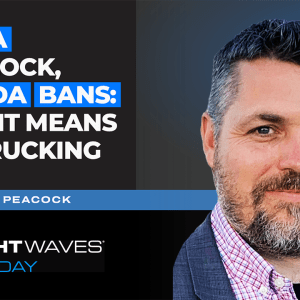
products, and some trade flows are moving from tariffs to outright bans. Kyle Peacock of Peacock Tariff Consulting breaks down what the U. S. -Canada breakdown and USMCA deadlock with Mexico mean for cross-border freight, trucking lanes, auto, steel, aluminum and shipper planning.
The big takeaway: freight is already being pulled forward, lanes are shifting, and long-term decisions are getting harder.
#CrossBorderFreight #Tariffs #USMCACanada has slapped tariffs of up to 50% on more than 700 American products and moved beyond tariff retaliation to outright import bans on select goods — including motorcycles and certain dairy products — marking a sharp escalation in the U. S. -Canada trade standoff. Meanwhile, a fourth round of U. S.
-Mexico USMCA renegotiation talks wrapped in Washington this week without resolution, deadlocked over auto-content thresholds that Mexican officials say are unworkable within the proposed timeline. The practical fallout for freight is already visible.
Canadian manufacturers facing bans are pulling shipments forward to beat deadlines, driving short-term volume spikes that will leave carriers with empty lanes once the bans take effect. On the U. S. side, motorcycle dealers are placing early orders to avoid inventory shortfalls.
“The trade routes will change and/or disappear based on these bans,” said Kyle Peacock, principal at Peacock Tariff Consulting. “Tariff rates [are] driving the trucking lanes to a different geographical area — north, the northern borders, and the south and southern borders between Mexico and the U. S. as well.
We’re seeing less freight crossing, and it’s based on these additional tariffs.” — Kyle Peacock, Peacock Tariff Consulting The most immediate shift in freight geography is north-south lanes giving way to east-west corridors inside Canada. Peacock noted that traditional cross-border hauls between the northern U. S.
states and southern Canada are shrinking, while intra-Canadian east-west moves are growing. Carriers that built networks around U. S. -Canada backhaul loops are losing the return legs, reducing asset utilization across legacy supply chains.
Sectors feeling it first, Peacock said, are metals, aluminum, and automotive — industries built on just-in-time replenishment that leaves little buffer against tariff-driven disruptions. Mexico faces a different pressure. The Mexican government initially aligned with U. S.
policy by adding its own tariffs on Chinese goods, expecting relief from American levies in return. That concession has not produced a reprieve. Peacock said Mexico has essentially walked away from the auto-content negotiation, arguing that hitting the thresholds Washington is demanding “just doesn’t work in the timeframe that they’re giving.”
The next scheduled round of U. S. -Mexico talks is set for the end of September in Washington. USMCA is subject to annual review through 2036, creating a decade of potential policy swings that shippers and carriers must now plan around. For businesses caught in what Peacock called “decision paralysis,” his firm’s advice is to lock in capacity now.
Spot-rate strategies that worked in calmer markets are giving way to dedicated long-term contracts as both shippers and carriers seek cost certainty. “For those that would have lived on the spot rate for years, now it’s okay, let’s get a dedicated rate for this customer, for this client, and ingrained in the long term,” Peacock said.
Manufacturers considering new production lines or facilities in the U. S. , Canada, or Mexico are largely in a wait-and-see posture, which Peacock warned is itself costly given the infrastructure investment needed. Looking ahead, Peacock drew on precedent from other trade disputes, saying tariffs historically “go up in the elevator and take the stairs down.”
He does not expect a swift return to tariff-free USMCA conditions, predicting that a new trilateral agreement signed by all three parties would be required to fully reset terms. He placed Canada as the more likely near-term deal, citing the progress made by U. S.
Trade Representative Jameson Greer and Canadian Minister Dominic LeBlanc before talks broke down, while flagging significant additional U. S. -Canada tariffs scheduled to take effect January 1 as a hard deadline that could force movement. Canada has imposed tariffs up to 50% on 700-plus U. S.
products and added import bans on goods including motorcycles and dairy, prompting Canadian manufacturers to rush shipments before deadlines. North-south cross-border freight lanes between the U. S. and Canada are shrinking as trade shifts to east-west Canadian corridors, disrupting legacy carrier networks and reducing asset utilization. With
Audit your supplier list for Canadian or Mexican origin goods — if any SKU crosses a U.S.-Canada or U.S.-Mexico border, check landed cost now vs. 50% tariff scenario and reprice or source-switch before bans take effect.
Contact your 3PL or freight broker this week to convert spot-rate agreements to dedicated contracts — carriers are actively offering long-term rates to offset lane uncertainty, and spot rates will spike when pull-forward volume dries up.
Original Source
This briefing is based on reporting from Freightwaves. Use the original post for full primary-source context.
Style
Audience