

U.S. ‘monitoring’ China retaliation against Panama ships
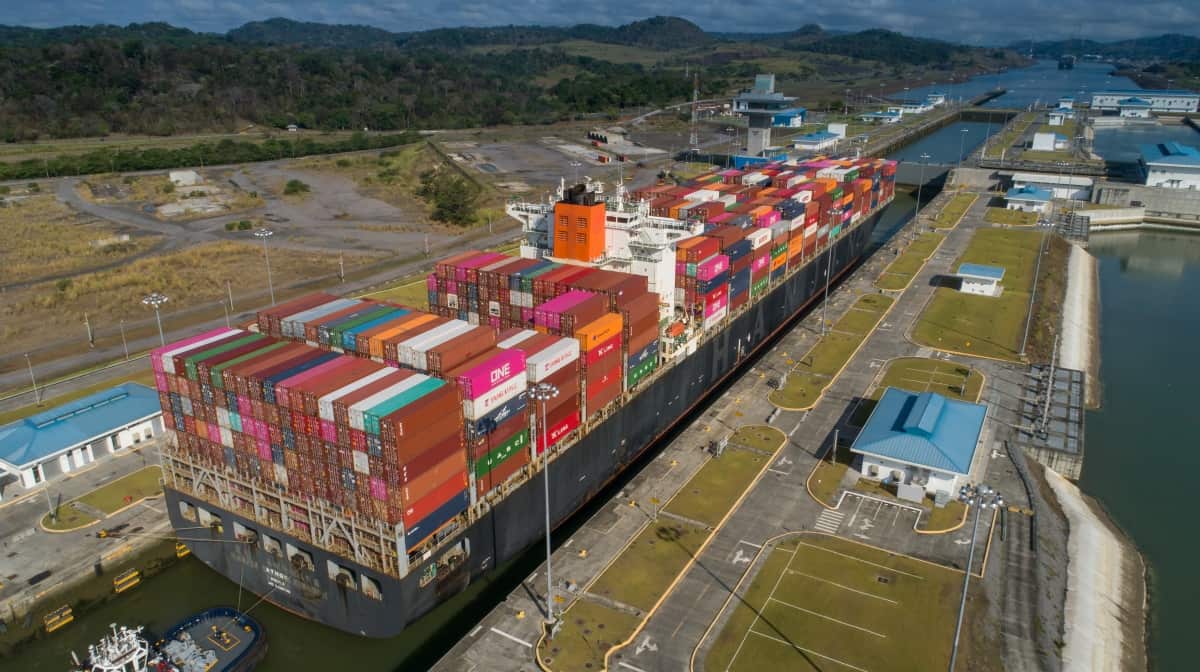
China is detaining Panama-flagged vessels in Chinese ports at abnormal rates following Panama's seizure of CK Hutchison's canal terminals. Panama's registry covers ~15% of global tonnage, and disruptions could materially impact U.S. containerized import flows.
This is an early-stage supply chain friction event — not yet a crisis, but Panama-flagged vessels carrying trans-Pacific cargo could face delays that ripple into Q2/Q3 inventory timelines. Sellers sourcing from China should flag this with freight forwarders now and check current transit time buffers before placing summer inventory orders.
This is another node in the ongoing U.S.-China trade friction pattern — geopolitical moves are increasingly translating into physical supply chain delays, compounding tariff-driven margin pressure for marketplace sellers dependent on China-sourced goods.
Contact your freight forwarder this week -- ask if your inbound shipments use Panama-flagged vessels and whether any delays are being quoted on China-origin lanes.
Build 2-3 extra weeks of lead time buffer into any China-origin POs placed between now and June, especially for Q3 peak season restocks.
Bottom Line
China detaining Panama ships could delay China-origin imports into Q3.
Source Lens
Industry Context
Useful background context, but lower-priority than direct platform, community, or operator intelligence.
Impact Level
medium
China detaining Panama ships could delay China-origin imports into Q3.
Key Stat / Trigger
15% of global shipping tonnage is Panama-flagged
Focus on the operational implication, not just the headline.
Full Coverage
The U. S. Federal Maritime Commission said it is monitoring possible retaliation by China against Panama-flagged vessels for its effect on global shipping. Published reports said China has detained Panamanian ships in its ports after Panama earlier this year seized terminals managed by Hong Kong’s CK Hutchison at ports near the Panama Canal.
“China has now imposed a surge in detentions of Panama‑flagged vessels in Chinese ports under the guise of port state control, far exceeding historical norms,” said FMC Chair Laura DiBella, in a statement.
“These intensified inspections were carried out under informal directives and appear intended to punish Panama after the transfer of Hutchison’s port assets.”
DiBella, who was confirmed to the shipping regulator in December and appointed chair by President Donald Trump in January, said the FMC is “closely monitoring” the situation, and its effects on global shipping conditions. window. googletag = window. googletag || {cmd: []}; googletag. cmd. push(function() {googletag.
defineSlot('/21776187881/FW-Responsive-Main_Content-Slot1', [[300, 100], [320, 50], [728, 90], [468, 60]], 'div-gpt-ad-1709668545404-0'). defineSizeMapping(gptSizeMaps. banner1). addService(googletag. pubads()); googletag. pubads(). enableSingleRequest(); googletag. pubads(). collapseEmptyDivs(); googletag. enableServices(); }); googletag. cmd.
push(function() {googletag. display('div-gpt-ad-1709668545404-0'); }); In January, Panama’s Supreme Court following an investigation ruled that Hong Kong-based CK Hutchison’s concession to operate the Balboa and Cristobal terminals on the Pacific and Atlantic sides of the Canal were unconstitutional.
Panama then awa`rded 18-month interim operating agreements to Maersk’s APM Terminals (MAERSK-B. CO) and Mediterranean Shipping Company’s Terminal Investment Limited subsidiary. Hutchison has filed for arbitration against Panama, seeking more than $2 billion in damages.
The Panama court ruling came a year after Trump declared the United States would take back what he said was control of the Canal from China.
After the court ruling, the Chinese Ministry of Transport had high-level discussions with Maersk and MSC, DiBella said, after which state-owned liner Cosco, the world’s fourth-largest container carrier, suspended its services to Balboa and rerouted operations. “Given that Panama‑flagged ships carry a meaningful share of U. S.
containerized trade, these actions could result in significant commercial and strategic consequences to U. S. shipping.” Panama is the world’s largest ship registry, with more than 4,700 bulk and container vessels accounting for about 15% of global tonnage. Actions by foreign governments that detain or delay vessels in U. S.
commerce, said DiBella, “are inconsistent with the Commission’s mandate to protect the reliability and integrity of America’s global supply chain.” window. googletag = window. googletag || {cmd: []}; googletag. cmd. push(function() {googletag.
defineSlot('/21776187881/fw-responsive-main_content-slot3', [[728, 90], [468, 60], [320, 50], [300, 100]], 'div-gpt-ad-1665767553440-0'). defineSizeMapping(gptSizeMaps. banner1). addService(googletag. pubads()); googletag. pubads(). enableSingleRequest(); googletag. pubads(). collapseEmptyDivs(); googletag. enableServices(); }); googletag. cmd.
push(function() {googletag. display('div-gpt-ad-1665767553440-0'); }); DiBella did not say what measures the U. S. might take to counteract China’s retaliation. FreightWaves has reached out to the FMC for comment. Read more articles by Stuart Chirls here.
Original Source
This briefing is based on reporting from Freightwaves. Use the original post for full primary-source context.
Style
Audience