Inflated AI product expectations risk 45% of UK shoppers making returns
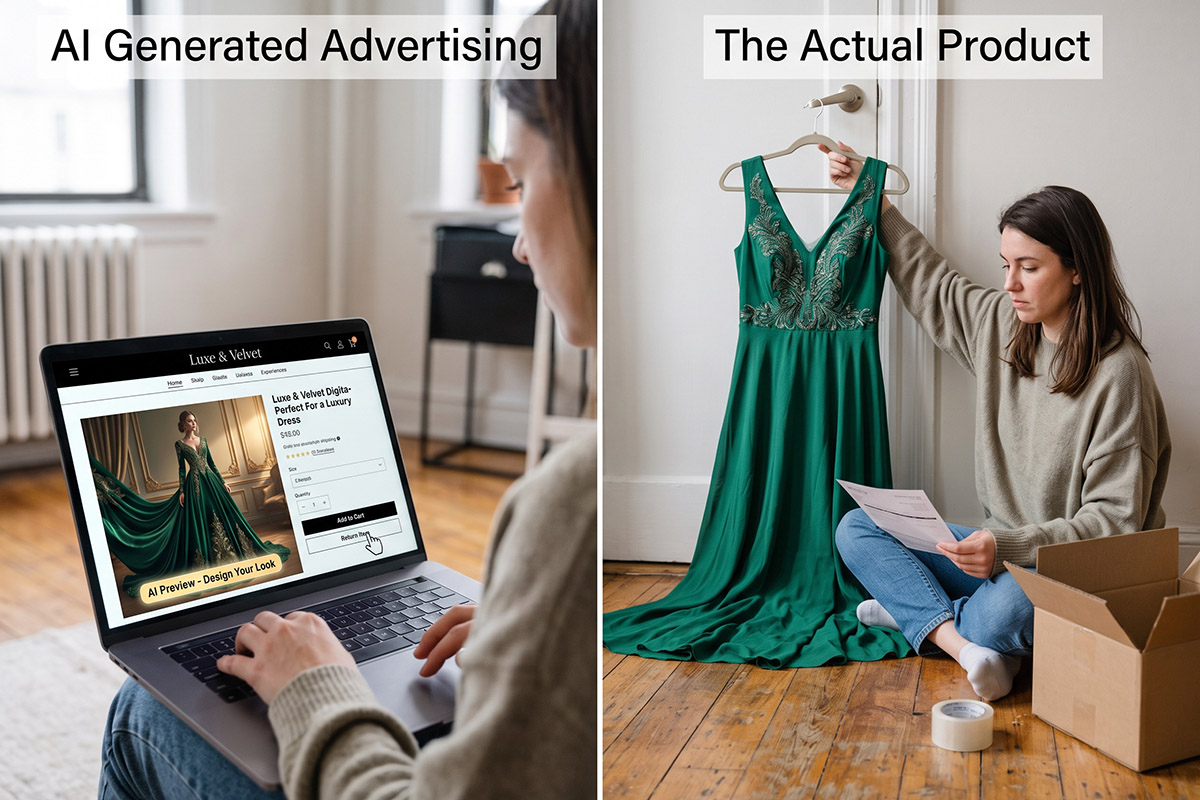
MACH Alliance survey of 1,000+ UK shoppers finds 45% say AI-inflated product expectations make them more likely to return purchases. 56% say AI overhypes products, and 68% say AI imagery doesn't reflect reality on arrival.
As AI reshapes discovery across Amazon, TikTok Shop, and social commerce, the returns problem becomes a margin compression problem — reverse logistics costs eat conversion gains if product representation isn't grounded in reality.
AI-driven discovery is quietly fattening your return rate — the gap isn't in conversion, it's in post-purchase reality. Audit your AI-generated imagery and product descriptions against your actual return reasons in Seller Central or Walmart Seller Center to find the mismatch.
Operational Impact
This story may require teams to revisit workflows, monitoring, or platform assumptions.
Bottom Line
AI-boosted discovery is quietly driving returns sellers haven't connected to the cause.
Source Lens
Industry Context
Useful background context, but lower-priority than direct platform, community, or operator intelligence.
Impact Level
medium
AI-boosted discovery is quietly driving returns sellers haven't connected to the cause.
Key Stat / Trigger
45% of UK shoppers say AI-created unrealistic expectations make them more likely to return a product
Focus on the operational implication, not just the headline.
Full Coverage
As AI use extends across greater parts of consumers’ buying journeys, expectations set by AI within search and discovery could risk creating a new wave of retail returns, new data from the MACH Alliance, the global, vendor-neutral industry body that sets the standards for open, composable and connected agentic enterprise, reveals.
Original research of over 1,000 UK consumers by the MACH Alliance showed that, without a connected tech ecosystem in place, retailers deploying AI to drive conversions on the front end could risk creating unrealistic product expectations that drive returns.
Its poll revealed that 42% of shoppers’ digital spend is already influenced by AI search, rising to almost half (48%) of Millennials’ purchases, while 41% of ecommerce purchases are influenced directly by agents. The role of AI is even more influential in social commerce spend, with AI having a direct role in shaping 45% of spending.
However, even as AI plays a greater role in driving discoverability and conversions, over half (56%) of shoppers think AI overhypes their product expectations before they check out.
Six in ten say AI creates unrealistic beliefs about how products will look, fit or perform, while 44% feel AI sets their expectations too high before they buy, leaving them disappointed when the item arrives, increasing to almost half (47%) of Gen Z.
Over two-thirds (68%) agree that AI imagery that looks too perfect often doesn’t reflect the reality of the product when it arrives. Meanwhile a further 60% think AI-generated styling or visualisations actually make it more difficult to imagine how products will look in real life, creating an AI expectations gap.
And this risks causing a new wave of returns, with 45% saying unrealistic expectations created by AI discovery would make them more likely to return a product. Over half (53%) of Gen Z think AI makes them more likely to return products, while 51% said using AI increases the likelihood that they will experience buyer’s remorse post-purchase.
AI is already driving real gains in discovery, inspiration and conversion. Retailers also need to recognise it can come with an unintended consequence: returns. When the product that arrives doesn’t live up to what AI promised, that sale quickly becomes a return. Good outcomes for customers and businesses don’t come from AI and agents working in isolation.
Agents need to be grounded in accurate, real-time product information and connected to the wider commerce ecosystem, from inventory and availability to fulfilment and post-purchase. No single vendor or agent can solve for every part of that journey. Connected ecosystems are how retailers close the AI expectations gap.
When agents, data and best-of-breed technologies work together, what shoppers see during discovery is much closer to what arrives at their door. – Jason Cottrell, President of the MACH Alliance
Pull your Return Reason report in Seller Central (Orders > Returns > Return Insights) -- if 'not as described' or 'didn't match expectations' exceed 15% of returns, your AI-enhanced listings or search placements may be the culprit.
In the next 30 days, replace AI-generated lifestyle renders with real product photography for your top 10 ASINs by return rate to test whether expectation-setting improves post-purchase satisfaction.
Original Source
This briefing is based on reporting from Tamebay. Use the original post for full primary-source context.
Style
Audience