Trump eschews tariffs for trade talks on wind turbine imports
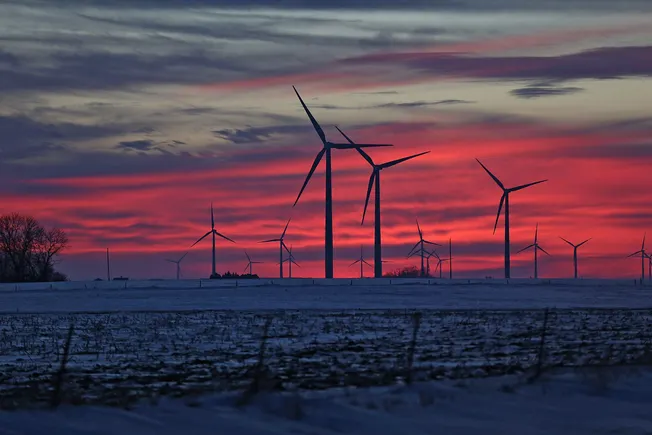
Following a Section 232 probe, the president tasked cabinet officials to engage in negotiations and report on their progress within 180 days.
Source Lens
Industry Context
Useful background context, but lower-priority than direct platform, community, or operator intelligence.
Impact Level
medium
Use this briefing to decide whether your team needs an immediate workflow, policy, or reporting change.
Key Stat / Trigger
No single quantitative trigger surfaced in this report.
Focus on the operational implication, not just the headline.
Full Coverage
An article from Trump eschews tariffs for trade talks on wind turbine imports Following a Section 232 probe, the president tasked cabinet officials to engage in negotiations and report on their progress within 180 days. Published Oct.
23, 2026 Phil Neuffer Lead Editor Share Copy link Email / Print License Add us on Google The sun sets behind wind turbines on Jan. 29, 2016, in Fenton, Iowa. The U. S. launched a Section 232 investigation into wind turbine imports in August 2025. Joe Raedle via Getty Images Listen to the article 2 min This audio is auto-generated.
Please let us know if you have feedback. The United States will pursue trade negotiations rather than implementing fresh tariffs following a Section 232 investigation into wind turbine imports, according to a proclamation President Donald Trump signed Thursday.
Based on the results of the probe, which was launched in August 2025 by the Commerce Department, Trump directed Commerce Secretary Howard Lutnick and U. S. Trade Representative Jamieson Greer to jointly open or continue discussions with trading partners to address concerns tied to imports of wind turbines and their components.
Trump directed the officials to report to him on the progress of talks within 180 days. According to the proclamation, the U. S. “is reliant” on wind turbine and part imports, which have increased over the last decade. Based on the results of the probe, Trump also said foreign-made wind turbines and parts “present unique cybersecurity risks.”
The president specifically called out inverters, saying “the vast majority” of the components are made outside the U. S. Many of the Trump administration’s previous Section 232 investigations have resulted in tariffs, including those on drones and components, furniture imports and some semiconductors.
Trump’s latest order stops short of implementing category-specific tariffs, but some wind turbines and parts face levies on steel, copper and aluminum. Those tariffs are unaffected by the order. However, Trump also said in Thursday’s missive that he would consider alternative remedies based on the results of negotiations.
Although he has installed a bevy of new tariffs since returning to the Oval Office, Trump’s decision on wind turbines and parts is not without precedent in his second term. In July, the president signed a similar order following a Section 232 investigation into imports of commercial aircraft, jet engines and parts.
Trump’s latest actions come as his administration continues to take aim at the wind energy sector, including by attempting to revoke offshore wind permits and pay developers to terminate offshore wind leases.
In Thursday’s order, Trump labeled wind energy as “unreliable” and “burdensome” on the domestic power grid, citing findings from the Section 232 investigation.
Recommended Reading Trump’s tariffs: Tracking the status of US trade actions By Phil Neuffer, Edwin Lopez • Updated 6 hours ago Add us on Google Share Copy link Email / Print License Filed Under: Procurement, Regulation
Original Source
This briefing is based on reporting from Supply Chain Dive. Use the original post for full primary-source context.
Style
Audience