

How legislators and insurers built a trucking crisis
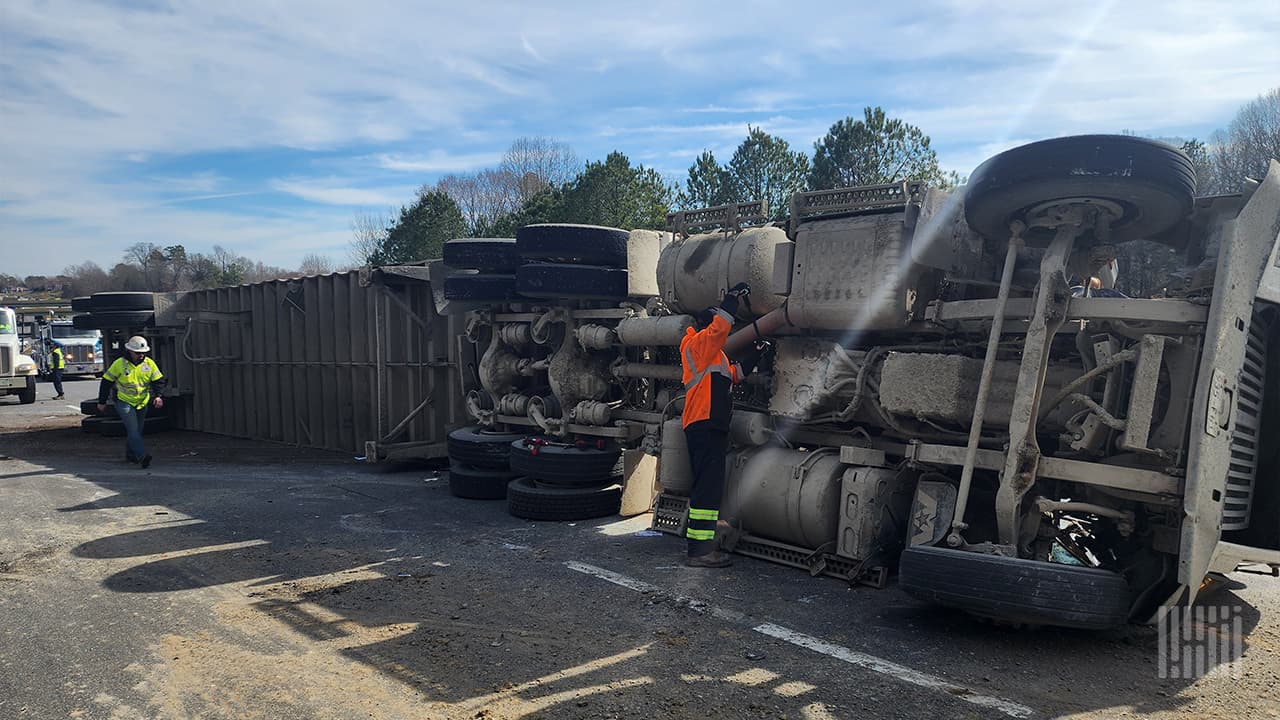
Commercial auto has lost $4.9 billion in a single year. Fourteen consecutive years of underwriting losses. Crash rates are actually falling. So why is the industry bleeding? It stopped doing the one thing insurance was designed to do. The post How legislators and insurers built a trucking crisis appeared first on FreightWaves.
Source Lens
Industry Context
Useful background context, but lower-priority than direct platform, community, or operator intelligence.
Impact Level
medium
Use this briefing to decide whether your team needs an immediate workflow, policy, or reporting change.
Key Stat / Trigger
No single quantitative trigger surfaced in this report.
Focus on the operational implication, not just the headline.
Full Coverage
Commercial auto insurance posted a $4. 9 billion underwriting loss in 2024. That is the fourteenth consecutive year of losses. The combined ratio finished at 107. 2, meaning insurers paid out $1. 07 in claims and expenses for every $1. 00 they collected in premiums.
AM Best says the line has accumulated more than $10 billion in net underwriting losses in the last two years alone. Among the top 20 commercial auto insurers, 14 posted combined ratios above 100 in 2024. Fourteen of twenty. The majority of the country’s largest writers are losing money on the product they sell.
The industry’s response has been to raise rates. Trucking insurance premiums surged an average of 8. 3 percent annually between 2017 and 2025, more than double the general inflation rate. ATRI’s latest data shows liability premiums climbed nearly 38 percent between 2015 and 2024, reaching a record 10. 2 cents per mile.
From 2021 to 2024, per-mile costs in the $5 million to $10 million excess layer rose 34 percent. In the $10 million to $15 million layer, they rose 45 percent. During that same 2021 to 2024 window, heavy-duty truck crash rates fell 2. 6 percent industry-wide. Crashes went down. Premiums went up. Losses kept compounding.
The industry wants you to believe this is a nuclear verdict problem. A social inflation problem. A third-party litigation funding problem. Those are real, but they are not the whole story. The whole story starts with the insurance industry itself, with the decisions it made over the past decade that created the risk pool it is now drowning in. window.
googletag = window. googletag || {cmd: []}; googletag. cmd. push(function() {googletag. defineSlot('/21776187881/FW-Responsive-Main_Content-Slot1', [[300, 100], [320, 50], [728, 90], [468, 60]], 'div-gpt-ad-1709668545404-0'). defineSizeMapping(gptSizeMaps. banner1). addService(googletag. pubads()); googletag. pubads(). enableSingleRequest(); googletag.
pubads(). collapseEmptyDivs(); googletag. enableServices(); }); googletag. cmd. push(function() {googletag.
display('div-gpt-ad-1709668545404-0'); }); This is a story about what happens when an industry abandons underwriting, floods its own market with unvetted risk, collects premiums on self-certified applications, and then acts surprised when the losses show up.
The one thing in the entire new entrant process that you could not fake your way past when starting your trucking company was insurance. You could get a DOT number for free, file a BOC-3 for pocket change, and lease a truck for a thousand dollars a week.
You could not get past an underwriter without proving your operation was real, your drivers were qualified, your maintenance program existed, and your safety management controls functioned. That gate is gone. GEICO entered the commercial trucking market, advertising quick purchase options and instant pricing.
Progressive has been running the same playbook for years. Enter your data, self-attest to your qualifications, pay up, and you are covered. No risk control review. No underwriter puts their hands on the file. No one verifies that the three trucks you declared are the thirty trucks you are running.
A non-domiciled individual with no license, no office, and no policies can go online, enter someone else’s information, and get instantly underwritten for less than what legitimate insurance actually costs. That is happening right now, every day, across every instant issue platform in the market. The result is predictable.
During the freight boom, over 109,000 new trucking companies opened for business in 2021 alone. Most were single-truck operations with no credit history, no safety record, and no business experience. The instant issue market wrote them all. No questions asked. Premiums flowed in. Authority activated. Trucks rolled. Then the freight market turned.
Spot rates collapsed. Small carriers could not make truck payments, premium payments, or generate revenue. They started crashing at higher rates because they were running harder, sleeping less, and maintaining equipment with money they did not have.
The carriers who entered the market with zero scrutiny started producing the losses that zero scrutiny was always going to produce. The industry is now $4. 9 billion in the hole for a single year. The question is how anyone expected a different outcome.
When an insurer issues a policy based on a self-certified application, the carrier declares how many trucks it operates, how many drivers it employs, what cargo it hauls, and what its safety record is. Nobody checks. Nobody verifies. The carrier says three trucks. The insurer writes a policy for three trucks. The carrier actually runs twenty. window.
googletag = window. googletag || {cmd: []}; googletag. cmd. push(function() {googletag. defineSlot('/21776187881/fw-responsive-main_content-slot3', [[728, 90], [468, 60], [320, 50], [300, 100]], 'div-gpt-ad-1665767553440-0'). defineSizeMapping(gptSizeMaps. banner1). addService(googletag. pubads()); googletag. pubads(). enableSingleReque
Original Source
This briefing is based on reporting from Freightwaves. Use the original post for full primary-source context.
Style
Audience