

Why Caraa sees a future in niche sports like fencing
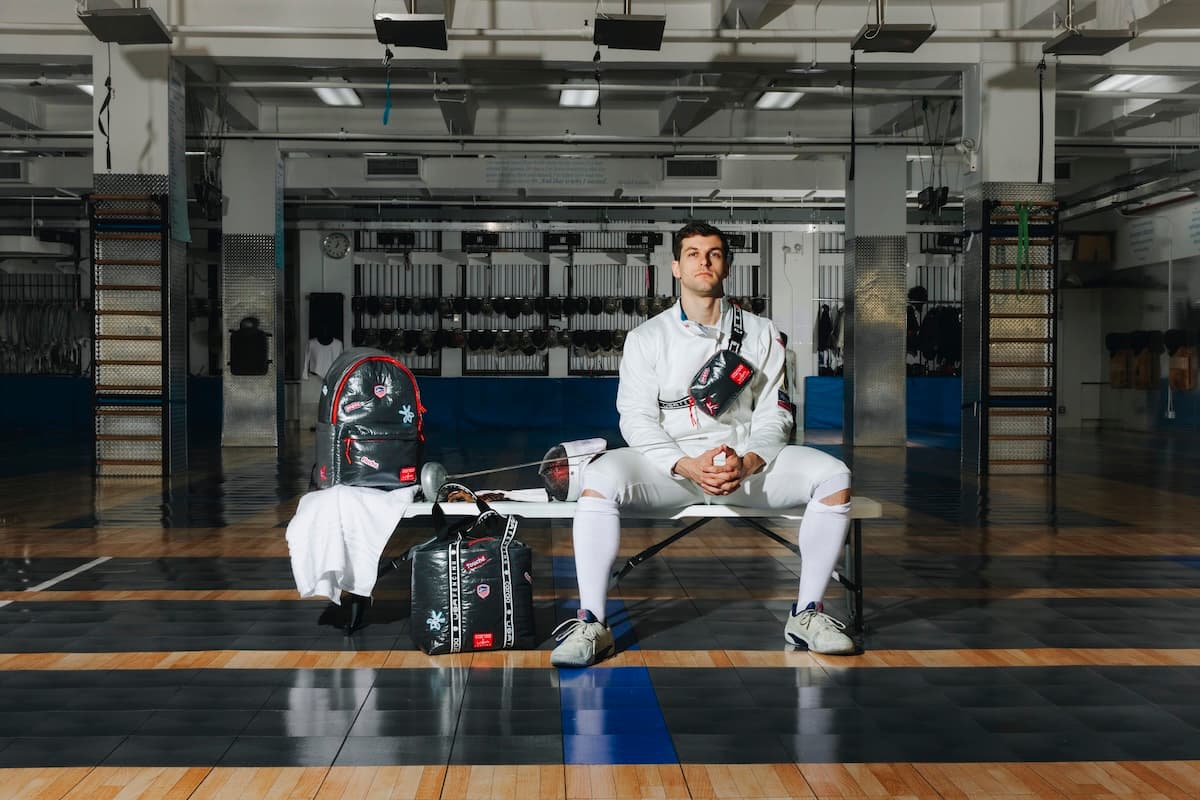
On the heels of its new collaboration with USA Fencing, bag brand Caraa sees a larger opportunity to work with National Governing Bodies for other sports like judo, water polo or squash.
Source Lens
Industry Context
Useful background context, but lower-priority than direct platform, community, or operator intelligence.
Impact Level
medium
Use this briefing to decide whether your team needs an immediate workflow, policy, or reporting change.
Key Stat / Trigger
No single quantitative trigger surfaced in this report.
Focus on the operational implication, not just the headline.
Full Coverage
New DTC toolkit // July 8, 2026 Why Caraa sees a future in niche sports like fencing By Julia Waldow Caraa When Aaron Luo, the co-founder and CEO of bag brand Caraa, isn’t thinking about retail, he’s thinking about fencing. Luo first took up the sport in high school and continues to fence competitively.
His two sons fence, too, and since 2023, Luo has served as an adviser to the CEO of USA Fencing. “We’re very much a fencing family,” Luo told Modern Retail. So, when it came time to develop a Caraa x USA Fencing collaboration, Luo jumped at the chance to make products for fencers, by a fencer.
The collection, released earlier this summer, includes three pieces (a backpack, insulated tote and sling), with a unique Pearl colorway for Olympians and Paralympians. The bags retail for $100-$315 and made their in-person debut at the Summer Nationals in Oregon from June 27-July 6.
For Caraa, the new products are an opportunity to prove there’s adequate demand for higher-end accessories for niche sports. While plenty of fashion brands work with athletes or sponsor sports teams, many stick to mainstream sports like basketball, soccer, baseball or football.
It’s less common for a high-end, more premium fashion brand to venture into sports like fencing, judo, water polo or squash, Luo explained. That leaves plenty of white space for brands like Caraa to step in, especially when it comes to working directly with NGBs, or National Governing Bodies for sports.
“Brands often aren’t interested in that kind of partnership, because the audience is pretty niche, and it’s pretty small,” Luo said. “If you look at a lot of these [NGB] organizations, the products are very much viewed almost just like merch — [there’s] a lot of coffee mugs, printed T-shirts and printed hoodies.
There’s nothing ‘fashion,’ in the sense that there’s nothing bespoke, nothing custom-made, nothing custom-designed.” Caraa, which Luo co-founded in 2015, is now trying to make a name for itself in that field. “We’ve had these organizations approaching us and asking, ‘Do you want to do a collaboration?'” Luo said.
As the Team USA community is small, NGB CEOs are “sharing notes on what’s working and what’s not,” Luo said. Since the fencing collection debuted, “I’ve been introduced to a few organizations already, as far as, ‘Hey, this is really cool, what you guys are doing. Can we get [in] on that?'” Luo shared.
While the audiences for these sports may be smaller, they’re also loyal. “When you present a product that’s unique and special — and not just label-slapping — they recognize it, and they want to support it,” said Luo, who also oversees the charcuterie brand Mercado Famous.
Fencers, in particular, tend to have higher household incomes, making them ideal customers for the higher-end fashion market, Luo said. And many are “ready to spend” at events like tournaments, he shared. “People, I think, are very much in that mentality when they go to sports events to support the organization,” he said.
More apparel companies, in general, are getting into sports to reach new audiences, especially as tentpole events like the World Cup continue to influence culture. Athleisure brands like Outdoor Voices, FP Movement and Vuori are rolling out collections specifically for sports like tennis, hiking and horseback riding.
Meanwhile, Adidas, Fila and Marks & Spencer have gotten into pickleball products. When it comes to fashion brands working with niche sports, “There is a clear commercial opportunity,” said Neil Saunders, managing director of GlobalData Retail.
“The potential market size is nowhere near the scale of the big national sports, but the audiences are very engaged and receptive,” he told Modern Retail. “The trick is to have authentic connections to the sport and to engage with the community. That can be hard for bigger brands to justify, but smaller brands can do this in a way that feels genuine.”
Similarly, Greg Portell, lead partner in global markets at strategy and management consulting firm Kearney, told Modern Retail that focusing on niche sports “allows smaller brands to be the proverbial big fish in a small pond.” Still, inking a partnership with a sports body doesn’t automatically translate to sales, he explained.
“Brands still need to have thoughtful design, meaningful messaging and strong execution,” Portell added. To that end, Luo wanted Caraa’s new bags to fit fencers’ needs. The insulated tote, for instance, can carry fencers’ snacks and drinks at four-hour tournaments.
Also, while fencers must wear white, the Caraa x USA Fencing bags have pops of color, as well as fencing-inspired p
Original Source
This briefing is based on reporting from Modern Retail. Use the original post for full primary-source context.
Style
Audience