

New Georgia inland port poised to take 26,000 truckloads off the road
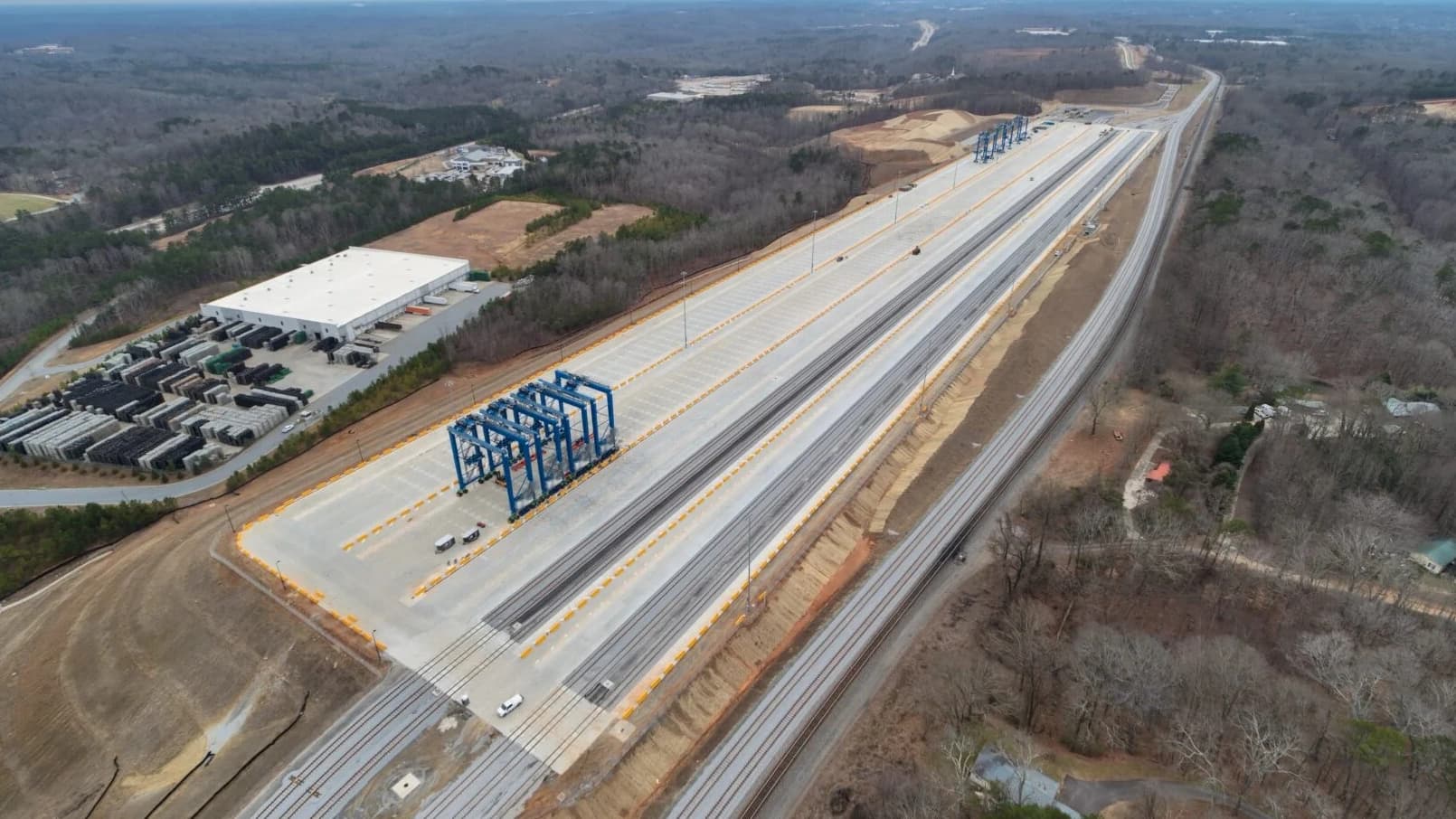
Georgia's new Gainesville Inland Port opened May 4, 2026, offering rail service to Port of Savannah that removes 26,000 annual truckloads from highways. The $134 million facility provides an alternative to 600-mile truck routes for northeast Georgia shippers.
Sellers using Savannah for imports should evaluate rail transit times versus trucking costs, as this could reduce shipping expenses from northeast Georgia distribution centers. Check your 3PL's proximity to Gainesville to capture potential cost savings on inbound freight.
East Coast ports are building inland rail capacity to compete with West Coast efficiency, potentially shifting import cost dynamics for sellers choosing entry points.
Ask your 3PL or freight forwarder if they can route Savannah imports through Gainesville rail service to reduce trucking costs.
Map your current trucking routes from northeast Georgia -- if over 300 miles roundtrip, evaluate rail alternatives in next 30 days.
Bottom Line
New Georgia rail hub cuts trucking costs for Savannah imports.
Source Lens
Industry Context
Useful background context, but lower-priority than direct platform, community, or operator intelligence.
Impact Level
medium
New Georgia rail hub cuts trucking costs for Savannah imports.
Key Stat / Trigger
26,000 truckloads removed annually
Focus on the operational implication, not just the headline.
Full Coverage
The Georgia Ports Authority has officially opened an inland rail hub it estimates will take 26,000 truckloads of freight off highways annually. The Gainesville Inland Port opened May 4, with direct rail service provided by Norfolk Southern (NYSE: NSC) five days a week between northeast Georgia and the Port of Savannah.
The authority in a release said that the new service gives shippers an alternative to a 600-mile roundtrip truck route, and will reduce truck traffic in the Atlanta region and wider state highway system. At full build-out, the $134 million former Blue Ridge Connector will have an annual capacity of 200,000 containers. window. googletag = window.
googletag || {cmd: []}; googletag. cmd. push(function() {googletag. defineSlot('/21776187881/FW-Responsive-Main_Content-Slot1', [[300, 100], [320, 50], [728, 90], [468, 60]], 'div-gpt-ad-1709668545404-0'). defineSizeMapping(gptSizeMaps. banner1). addService(googletag. pubads()); googletag. pubads(). enableSingleRequest(); googletag. pubads().
collapseEmptyDivs(); googletag. enableServices(); }); googletag. cmd. push(function() {googletag. display('div-gpt-ad-1709668545404-0'); }); Gainesville is the latest inland port to open on the East Coast. It joins the Virginia Inland Port serving the Port of Virginia; and South Carolina’s Greer and Dillon handling traffic out of the Port of Charleston.
“Our new inland rail facility in Gainesville, Georgia, will significantly offset truck traffic congestion in Atlanta and improve air quality by replacing an estimated 26,000 truck roundtrips in the first year alone.
We’re already seeing positive customer engagement and Norfolk Southern will bring an excellent level of service working together with GPA,” said Georgia Ports President and Chief Executive Griff Lynch at the March GPA board meeting. The authority also funded $4. 8 million for county projects to mitigate the facility’s impact on local communities.
Those included the elimination of a rail grade crossing, and rerouting of a key access road. Subscribe to FreightWaves’ Rail e-newsletter and get the latest insights on rail freight right in your inbox. Read more articles by Stuart Chirls here. window. googletag = window. googletag || {cmd: []}; googletag. cmd. push(function() {googletag.
defineSlot('/21776187881/fw-responsive-main_content-slot3', [[728, 90], [468, 60], [320, 50], [300, 100]], 'div-gpt-ad-1665767553440-0'). defineSizeMapping(gptSizeMaps. banner1). addService(googletag. pubads()); googletag. pubads(). enableSingleRequest(); googletag. pubads(). collapseEmptyDivs(); googletag. enableServices(); }); googletag. cmd.
push(function() {googletag. display('div-gpt-ad-1665767553440-0'); });
Original Source
This briefing is based on reporting from Freightwaves. Use the original post for full primary-source context.
Style
Audience