

After a long gap, Uber Freight’s revenue turns higher from year earlier
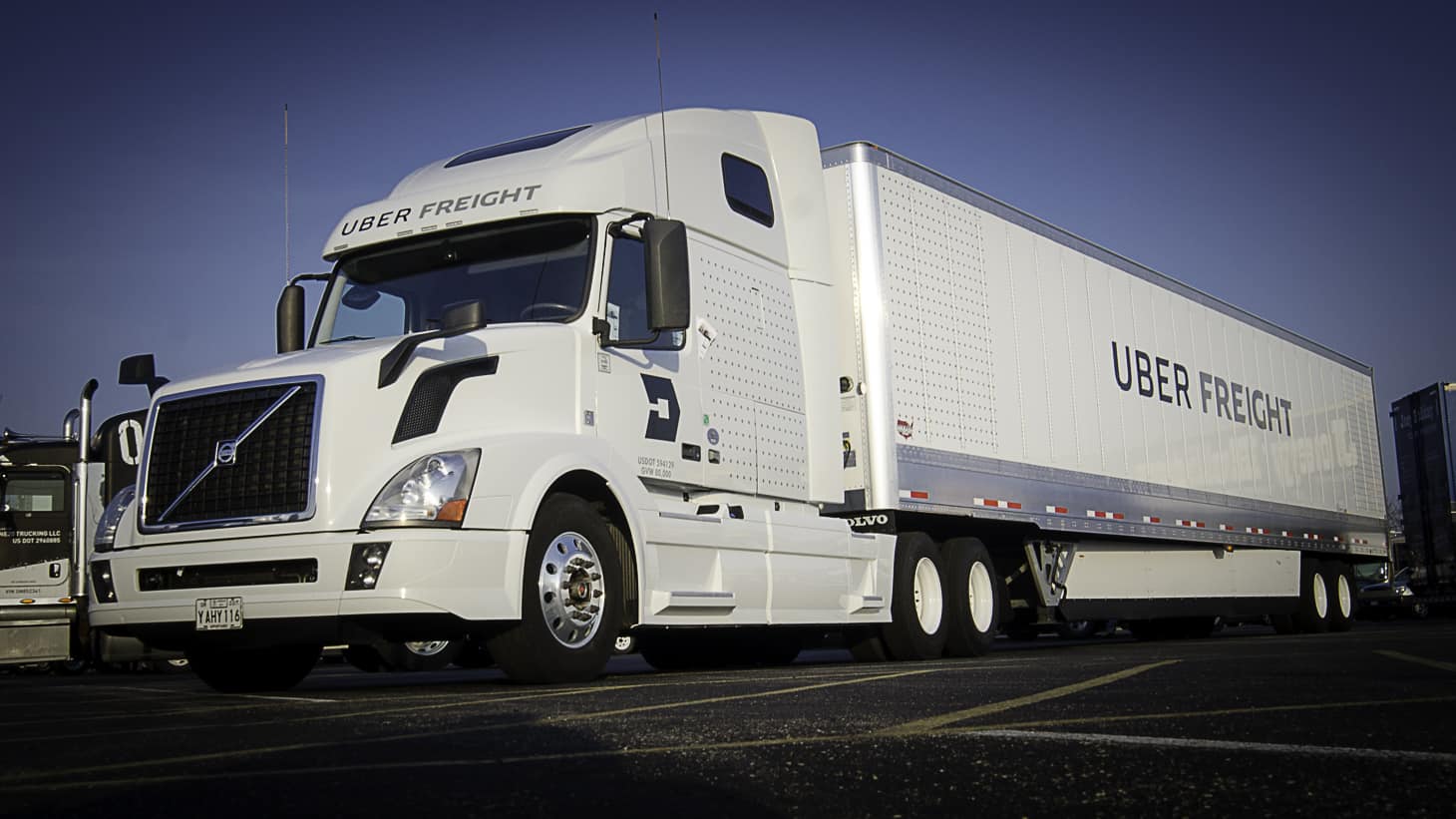
Uber Freight reported Q1 2026 revenue of $1.34 billion, up from $1.26 billion year-over-year - its first revenue increase in two years. The company added $165 million in new enterprise customer spend, roughly equal to all new customer additions in 2025.
Uber Freight's revenue recovery signals freight market stabilization after a brutal downturn that crushed shipping rates. Sellers should expect gradual freight cost increases as digital brokers regain pricing power and capacity tightens.
Digital freight brokers are emerging from a brutal shakeout period, suggesting the logistics market is stabilizing but at higher cost structures that will flow through to ecommerce shipping rates.
Review your Q2-Q3 shipping contracts now - freight rates may increase as Uber Freight and competitors rebuild margins after two years of losses.
Diversify logistics partners beyond single freight brokers to avoid rate spikes as the market consolidates around profitable players.
Bottom Line
Uber Freight's first revenue growth in two years signals higher shipping costs ahead.
Source Lens
Industry Context
Useful background context, but lower-priority than direct platform, community, or operator intelligence.
Impact Level
medium
Uber Freight's first revenue growth in two years signals higher shipping costs ahead.
Key Stat / Trigger
$1.34 billion Q1 2026 revenue, up from $1.26 billion year-over-year
Focus on the operational implication, not just the headline.
Full Coverage
Uber Freight reported its financial performance on the basis of operating income rather than EBITDA for the first time, but the negative numbers came as revenue turned up after a long stretch of lower numbers. The operating loss for the first quarter at the company known primarily as a digital broker was $30 million.
While this quarter was the first time where Uber’s three segments–Mobility, Delivery and Freight–were reported on the basis of operating income rather than EBITDA, the company’s earnings statement did report operating income at Uber Freight for the first quarter of 2025 as a loss of $25 million.
In the company’s supplemental information released with the earnings, the operating loss for the second, third and fourth quarters of last year at Uber Freight was $26 million, $40 million and $18 million, respectively.
When Uber Freight (NYSE: UBER) reported income on an EBITDA basis, it only squeaked out a positive number in the third and fourth quarters of 2022, and was breakeven on an EBITDA basis in the fourth quarter of last year. Otherwise, it was negative each quarter since its inception. But revenue rose to $1. 34 billion from $1. 26 billion a year ago.
Freight revenue in the fourth quarter was $1. 27 billion. Not since the third quarter of 2024 could Uber Freight do a year-on-year quarterly comparison and see revenue more than what it was four quarters earlier. Between the third quarter of 2023 and 3Q 2024, Uber Freight eked out a gain in revenue of $25 million.
But in the first quarter of 2026, the year-on-year revenue gain was $47 million. At $UBER Freight, they are touting their first y-o-y increase in revenue since 2024. It's a positive sign. But when you chart the revenue over the past few years, it's pretty shocking. Even more shocking: quarterly revenue was $1. 832 billion in the second quarter of 2022. pic.
twitter. com/B8oviEqPag— John Kingston (@JohnHKingston) May 6, 2026 In a post on LinkedIn, Uber Freight CEO Rebecca Tinucci was upbeat about Uber Freight’s prospects, noting that the year-on-year increase in revenue was the first for the group in two years.
(Uber DEO Dara Khosrowshahi, who rarely mentions Uber Freight in the company’s earnings calls with analysts, also cited the revenue increase in this quarter’s session).
“At a high level, Freight delivered strong topline performance, driven by continued strength in enterprise demand and Managed Transportation — even as the market tightened in ways we haven’t seen in some time,” Tinucci said. “The team continued to lean in with customers through the tightening — maintaining service while others pulled back.”
Tinucci added that new enterprise customers came with about $165 million in “new addressable spend.” That figure was roughly equal to all new customer spend from 2025, Tinucci said. The Managed Transportation group at Uber Freight has its roots in the legacy Transplace acquisition from 2021.
Transplace is known primarily as a provider of transportation management systems to shippers. Tinucci said Uber Freight has been seeing “a more unified approach across the business — bringing together Managed Transportation and brokerage in a way that’s driving growth across both and reinforcing the value of a more integrated model for enterprise customers.”
More articles by John Kingston Motus steps up: what carriers need to know about new FMCSA ystem After CBS report, C. H. Robinson seeks to deflect safety responsibility to FMCSA ORBCOMM pulls in new financing, replaces all publicly-traded debt The post After a long gap, Uber Freight’s revenue turns higher from year earlier appeared first on FreightWaves.
Original Source
This briefing is based on reporting from Freightwaves. Use the original post for full primary-source context.
Style
Audience