DoorDash launches retail returns service, self-designed drones
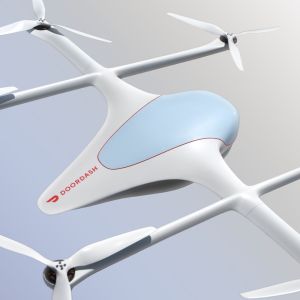
DoorDash launched a $7.99 flat-fee retail returns service (Dasher Returns, nationwide rollout November 2026) and unveiled self-designed drones via DoorDash Labs, expanding its last-mile and reverse logistics network to compete with FedEx, UPS, and Uber Eats.
DoorDash is accelerating platform consolidation in last-mile logistics, directly pressuring Amazon's same-day and returns infrastructure while giving wholesale-dependent brands a new off-marketplace demand and visibility layer.
DoorDash's 'Mall-in-Pocket' retail integrations with Macy's, Costco, and Skims signal a growing off-Amazon discovery channel that brands should monitor for incremental demand. If DoorDash's Brand Center inventory visibility tools expand, brands selling through these partner retailers need to audit shelf-level data gaps before competitors do.
Operational Impact
This story may require teams to revisit workflows, monitoring, or platform assumptions.
Bottom Line
DoorDash entering returns and drones adds a new last-mile competitor brands can't ignore.
Source Lens
Industry Context
Useful background context, but lower-priority than direct platform, community, or operator intelligence.
Impact Level
low
DoorDash entering returns and drones adds a new last-mile competitor brands can't ignore.
Key Stat / Trigger
$7.99 flat fee for DoorDash retail returns launching nationwide November 2026
Focus on the operational implication, not just the headline.
Full Coverage
DoorDash is entering the reverse logistics market and leaning heavily into drone delivery, announcing on Wednesday that it has launched a new retail returns service and a custom-built drone delivery system for time-sensitive orders in another modal expansion of its last-mile logistics network.
They were among a series of product releases and enhancements, unveiled at a big user event, aimed at making shopping and ordering food, grocery and retail items more convenient.
The returns program is live in select cities and is expected to roll out nationwide in November using the same gig driver pool that delivers from stores to homes, the tech platform said. Consumers pay a flat $7. 99 for Dasher Returns — no box or label required.
DoorDash (NASDAQ: DASH) said drivers will pick up return orders in as fast as 30 minutes and return them to the store, which will process the return and issue a refund within days.
By offering returns, DoorDash is moving into a space that offers higher margins than store-to-door delivery and taking on parcel shipping incumbents like FedEx and UPS that are focusing more on returns than short-distance delivery in the B2C e-commerce market.
FedEx last year began offering a lower cost version of its no-box, no-label returns to make it easier for customers to return unwanted merchandise, but the service requires consumers to drop off the goods at outlets such as FedEx Office and Kohl’s store locations.
Earlier this year, Uber Eats introduced a service that allows customers to return goods ordered through its app for a fee. But it’s an open question whether consumers are willing to pay for returns when there is less urgency than with an inbound order and they can wait to drop it off at a store themselves for free.
“For retailers, it means turning the stores they already have into a growth channel, not a warehouse three states away,” said Chief Revenue Officer Shanna Prevé in a news release. Meanwhile, DoorDash has added to the growing number of retailers who have linked their product catalogs to its marketplace.
Shoppers can now use the DoorDash app to order goods from Macy’s, Anthropologie, The North Face, Vans and Timberland and receive fast delivery. Costco and Skims began delivery partnerships with DoorDash earlier this month.
DoorDash calls its retail product “Mall-in-Your-Pocket” because consumers can shop for apparel, beauty and home goods with fast delivery from hundreds of stores nationwide on one platform. DoorDash also recently introduced new ways for retailers and brands to grow.
Brand Center gives participating brands real-time visibility into inventory on store shelves and shopper substitution trends, helping them understand how their products are showing up in stores and what shoppers choose when an item is unavailable.
DoorDash takes to the skies DoorDash also said it is investing in its own drone delivery operation, offering customers a faster delivery option from local restaurants and convenience stores. The delivery platform’s in-house robotics and automation division, DoorDash Labs, made the six-rotor drones on its own.
Until now, DoorDash has relied on outside drone operators like Alphabet’s Wing and Flytrex to conduct the actual aerial deliveries. Lowe’s, for example, this month began a pilot program for drone delivery in North Carolina enabled by the DoorDash marketplace and Wing’s small, unmanned aerial vehicles.
“We’ll continue our partnership with third parties like Wing and Flytrex, but in the same way we use multiple delivery methods, having multiple drone delivery options adds resilience to our network and helps us better serve merchants and bring the benefits of drone delivery to more communities faster,” said spokesman Eli Scheinholtz in an email exchange.
DoorDash said it closely consulted with businesses to design everything from packaging, to loading systems and ground handoffs. It is building an array of loading options designed to fit into existing business operations and make drone delivery feasible for local businesses of all sizes.
About 80% of typical DoorDash restaurant orders are light and small enough for the aircraft to carry safely. “Any local business should be able to reach consumers by air. We built the whole system so that they can deliver by air without being disruptive to how they run their business,” said Harrison Shih, head of DoorDash Air, in the announcement.
Trial flights are underway in Northern California with national brands Chipotle and Popeyes, and local restaurants. Delivery times have averaged less than five minutes so far, DoorDash said. Customers can choose on the app whether their order is delivered by a driver, its self-designed small robot or a drone.
An autonomous system uses smart routing, incorporating factors like weather, flight range, and ground traffic to narrow down which orders actually make sense to send by air. Using the app, customers can select whether a driver, a Dot robot or a drone is the best delivery option.
If your brand sells wholesale to Macy's, North Face, Vans, Costco, or Skims, check DoorDash's Brand Center (once available) for substitution trends -- high substitution rates signal shelf availability problems hurting your retail velocity.
In the next 30 days, evaluate whether the $7.99 Dasher Returns model pressures your own return cost assumptions -- if DoorDash normalizes paid consumer returns, it could shift customer expectations away from free retailer returns on Amazon and Walmart.
Original Source
This briefing is based on reporting from Freightwaves. Use the original post for full primary-source context.
Style
Audience