

Ghost Agents running America’s trucking legal infrastructure
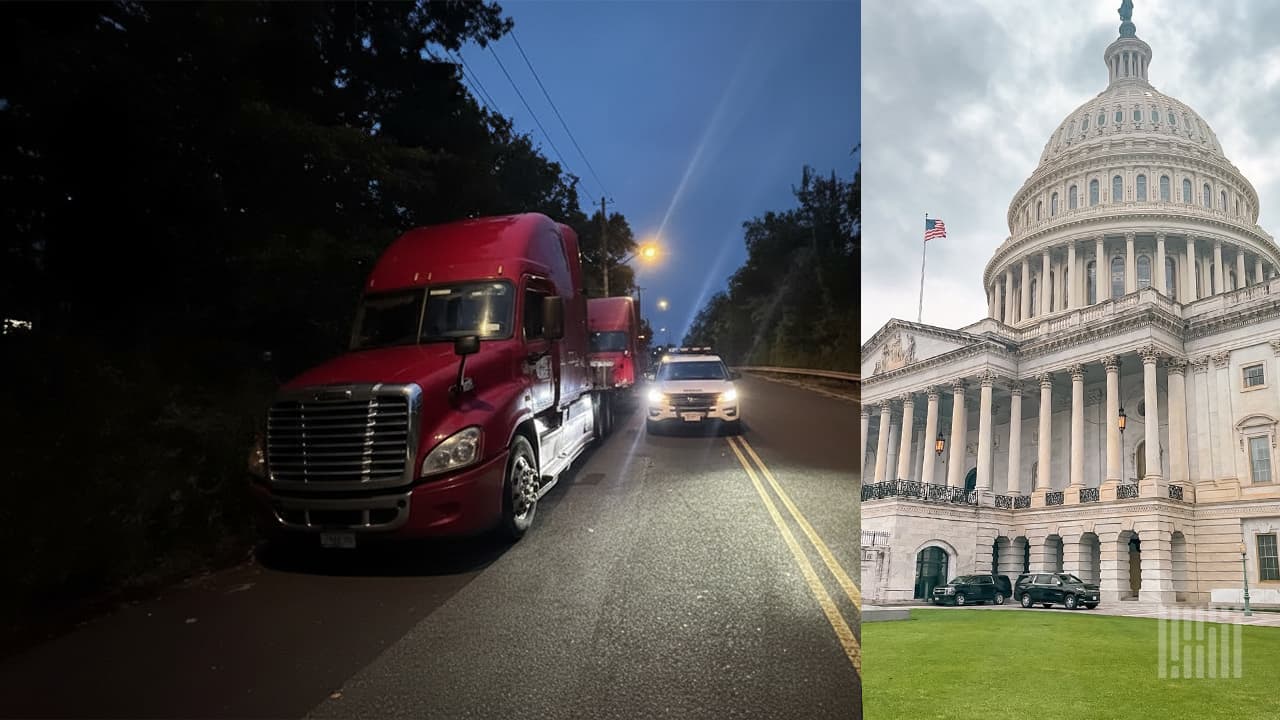
89 process agents control legal service for 1.67 million trucking companies, with several agents operating from PO boxes and unverifiable as legitimate businesses. FMCSA enforcement reports inability to serve legal documents when agents refuse to answer, creating accountability gaps in trucking litigation.
Sellers relying on trucking for FBA shipments or direct fulfillment face potential liability gaps if carriers can't be served legal papers after accidents or cargo damage. Review your logistics partners' insurance coverage and consider requiring proof of legitimate process agents for high-value shipments.
This reflects broader regulatory gaps in logistics infrastructure that sellers depend on, potentially increasing shipping costs as legitimate carriers face higher insurance and compliance burdens.
Check your 3PL and freight partners' BOC-3 filings through FMCSA database to verify they use legitimate process agents, not PO box operations.
Increase cargo insurance coverage for shipments using smaller trucking companies that may have questionable legal accountability structures.
Bottom Line
Trucking legal loopholes mean higher liability risk for seller shipments.
Source Lens
Industry Context
Useful background context, but lower-priority than direct platform, community, or operator intelligence.
Impact Level
medium
Trucking legal loopholes mean higher liability risk for seller shipments.
Key Stat / Trigger
89 agents control process relationships for 1.67 million carriers
Focus on the operational implication, not just the headline.
Full Coverage
There is a federal regulation whose entire purpose is to make sure you can sue a trucking company after one of its trucks kills your family member.
The regulation requires every interstate motor carrier, freight broker, and freight forwarder in America to designate a process agent in each state where they operate before FMCSA will grant them operating authority. The form is called the BOC-3. BOC stands for Blanket of Coverage.
The theory is that if a carrier’s truck runs a red light in Georgia and kills a pedestrian, the victim’s family can find a designated legal representative in Georgia who is required to accept service of process on the carrier’s behalf and forward the lawsuit to the carrier. That is the entire point. Legal accountability. Accessible justice.
After encountering issues with litigation in which we were unable to serve defendant trucking entities, we analyzed the complete BOC-3 dataset published by the FMCSA, which contains 1. 69 million filing records covering every carrier, broker, and freight forwarder with active federal operating authority in America.
What emerged from that analysis tells you a great deal about how the system actually functions, versus how it is supposed to. Eighty-nine unique agent entities control process agent relationships for 1. 67 million American transportation companies.
The top ten agents among the 89 collectively control process agent relationships for 942,962 carriers, representing 56. 5 percent of the entire carrier population in the United States. That concentration is not, in itself, evidence of fraud. National blanket agents have existed for decades and legitimate operations do serve enormous carrier books.
Process Agent Service Company, based in Sioux Falls, South Dakota, serves 123,594 carriers. All-American Agents of Process, also based in Sioux Falls, serves 107,623 carriers. Truck Process Agents of America, out of Fargo, North Dakota, serves 128,038 carriers.
These are volume operations, they are real businesses, and they exist precisely because the BOC-3 market rewards scale. A carrier getting started needs a $19 or $20 or $35 annual BOC-3 filing and the industry has built itself around delivering that at the cheapest possible price point. The problem starts when you look at what happens at the margins. window.
googletag = window. googletag || {cmd: []}; googletag. cmd. push(function() {googletag. defineSlot('/21776187881/FW-Responsive-Main_Content-Slot1', [[300, 100], [320, 50], [728, 90], [468, 60]], 'div-gpt-ad-1709668545404-0'). defineSizeMapping(gptSizeMaps. banner1). addService(googletag. pubads()); googletag. pubads(). enableSingleRequest(); googletag.
pubads(). collapseEmptyDivs(); googletag. enableServices(); }); googletag. cmd. push(function() {googletag. display('div-gpt-ad-1709668545404-0'); }); Federal regulations under 49 CFR Part 366 define what a process agent must be. The agent must have a physical address, not a post office box, in every state of designation.
The agent must be available at that address during normal business hours. The agent must be in a position to actually receive legal documents and forward them to the carrier in a timely manner. Those are the rules. They exist because a PO box cannot accept a summons. A ghost company cannot appear in court.
A discount mill with no physical office and no one answering the phone cannot provide the accountability that the regulation was designed to create. THE TEA data shows that among the 89 agents covering 1. 67 million carriers, at least two operate from PO Box 5627 in Norman, Oklahoma. Agents of Process Services and 35 Dollar Process Agent Service, Inc.
share that single mailbox. Neither entity could be verified as a legally incorporated business in any state through OpenCorporates or state Secretary of State searches. Combined, they carry 1,193 carriers on their books. For context, the national carrier population averages in the upper 60s.
These are carriers that rank in the bottom 15 percent of American trucking, as determined by a model that incorporates crashes, out-of-service rates, violation history, and authority stability. The discount agent and the worst carriers found each other.
The result is that FMCSA is unable to enforce, and Plaintiffs and their litigation Attorneys are unable to effect proper service of process. Litigation following catastrophic claims is unsuccessful simply because the defendant, a bad actor trucking company, can’t be served.
In Edmond, Oklahoma, 15 miles up the road, two more agents share a single address at 2524 North Broadway. Permits and Process Agents and Permits C and Process Agents LLC are nearly identical names operating from the same office with combined coverage of 6,059 carriers. The same carrier can appear under both registrations simultaneously.
FMCSA itself acknowledged in 2019 that it was getting reports from enforcement personnel about the inability to complete service of process in cases where the contractual relationship between a carrier and
Original Source
This briefing is based on reporting from Freightwaves. Use the original post for full primary-source context.
Style
Audience