

Montgomery broker case before SCOTUS featured topic in Robinson’s earnings call
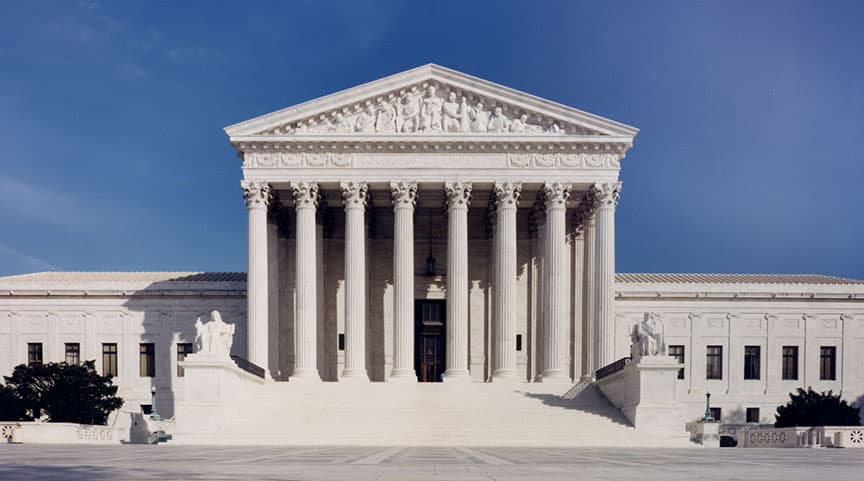
C.H. Robinson's CEO discussed the pending Supreme Court case Montgomery vs. Caribe II during earnings call, which could determine if freight brokers face state liability lawsuits. Decision expected before end of June 2026.
This affects ecommerce sellers indirectly through potential freight cost increases if brokers lose legal protections and face higher insurance costs. Sellers using 3PL services should monitor shipping rate changes in Q3 2026.
Part of broader regulatory shifts affecting logistics costs that could compress seller margins if freight brokers face increased liability and pass costs downstream.
Review your 3PL contracts for freight brokerage clauses and potential rate adjustment terms before June 2026.
Monitor shipping cost trends in July-August 2026 if Supreme Court rules against brokers.
Bottom Line
Freight broker liability case could increase shipping costs for sellers.
Source Lens
Industry Context
Useful background context, but lower-priority than direct platform, community, or operator intelligence.
Impact Level
medium
Freight broker liability case could increase shipping costs for sellers.
Key Stat / Trigger
Decision expected before end of June 2026
Focus on the operational implication, not just the headline.
Full Coverage
(A first look at C. H. Robinson’s earnings can be found here.) With a Supreme Court decision looming on broker liability that could have a huge impact on the 3PL industry, the brokerage that led the charge at the nation’s highest court had its opportunity Wednesday to tell the world what it thinks might happen on the outcome of the case. window.
googletag = window. googletag || {cmd: []}; googletag. cmd. push(function() {googletag. defineSlot('/21776187881/FW-Responsive-Main_Content-Slot1', [[300, 100], [320, 50], [728, 90], [468, 60]], 'div-gpt-ad-1709668545404-0'). defineSizeMapping(gptSizeMaps. banner1). addService(googletag. pubads()); googletag. pubads(). enableSingleRequest(); googletag.
pubads(). collapseEmptyDivs(); googletag. enableServices(); }); googletag. cmd. push(function() {googletag. display('div-gpt-ad-1709668545404-0'); }); In an earnings call with analysts after the release of its first quarter earnings, C. H.
Robinson CEO Dave Bozeman was immediately questioned by Tom Wadewitz of UBS when the discussion was opened up to analysts about what would happen if C. H. Robinson were to lose Montgomery vs. Caribe II. The case was argued before the court in early March, but C. H.
Robinson (NASDAQ: CHRW) is effectively the defendant as it was the brokerage that hired Caribe Transport, whose truck in 2017 hit Montgomery, a truck driver, on the side of a road in Illinois. C. H. Robinson was tossed out as a defendant in a lower court.
But if a decision before the Supreme Court finds that dismissal was improper due to the nine justices’ interpretation of federal law, the company could find itself back in if the case is sent back to the Seventh Circuit. A decision on the case is expected before the end of June. “I want to be really clear about this,” Bozeman said.
“The Montgomery case is a case that we expect to win. We have argued a really good case to the Supreme Court.” Safety is key concern: CEO At issue is the interpretation of the so-called safety exception to the Federal Aviation Administration Authorization Act (F4A).
While F4A in general blocks state action against companies engaged in transportation if it would affect what the law described as a “price, route or service,” the safety exception says such action can proceed if it is “with respect to motor vehicles.”
The question before the court, and where circuit courts have failed to agree, is whether that definition pulls in brokerages, who are not mentioned in the safety exception.
(There are other sections in F4A where brokerages are specifically referred to, and one of the brokerage industry’s arguments was that if Congress wanted 3PLs in the safety exception, it would have explicitly done so as it did in other parts of the law).
And although the issue has been described as one impacting broker liability, Bozeman pushed back against that definition. window. googletag = window. googletag || {cmd: []}; googletag. cmd. push(function() {googletag. defineSlot('/21776187881/fw-responsive-main_content-slot3', [[728, 90], [468, 60], [320, 50], [300, 100]], 'div-gpt-ad-1665767553440-0').
defineSizeMapping(gptSizeMaps. banner1). addService(googletag. pubads()); googletag. pubads(). enableSingleRequest(); googletag. pubads(). collapseEmptyDivs(); googletag. enableServices(); }); googletag. cmd. push(function() {googletag. display('div-gpt-ad-1665767553440-0'); }); “This case is not really about immunity for brokers,” he said.
“This is about safety and not having 50 different state rules.” There are circuit courts with an interpretation of the safety exception that exclude brokers; there are circuits that have found differently. The Supreme Court is expected to clarify that inconsistency. Regardless of whether the decision is favorable, Bozeman said C. H.
Robinson “has a playbook.” If the case goes against the brokerage industry–which would be a finding by the Supreme Court that “with respect to motor vehicles” can mean the broker that booked the truck involved in a crash–”that would bring some headwinds to the industry.”
It’s on FMCSA Bozeman came back briefly to an argument that was made in briefs and in the Court’s oral arguments: “FMCSA should really be the ones driving the safety of carriers.”
The gist of the argument is that it is FMCSA’s job to see that carriers are qualified to be on the road, and brokers can not be expected to be responsible for a second layer of safety vetting. One acknowledged fact about regulatory or legal costs: bigger companies, regardless of the industry, are better suited to handle those burdens than smaller ones.
In the case of 3PLs, there are none bigger than C. H. Robinson. window. googletag = window. googletag || {cmd: []}; googletag. cmd. push(function() {googletag. defineSlot('/21776187881/fw-responsive-main_content-slot4', [[300, 100], [320, 50], [728, 90], [468, 60]], 'div-gpt-ad-1709668086344-0'). defineSizeMapping(gptSizeMaps. banner1). addService(googletag.
pubads()); googletag. pubads(). enableSingleRequest(); googletag. pubads(). collapseEmptyDivs(); goog
Original Source
This briefing is based on reporting from Freightwaves. Use the original post for full primary-source context.
Style
Audience