

Cassandra Gaines expands transport risk framework with BAVRA Standard for shippers
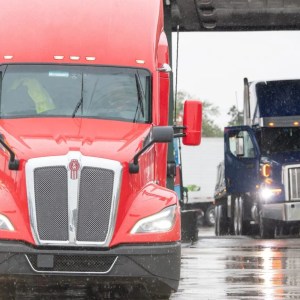
Carrier Assure CEO Cassandra Gaines says shippers need practical standards for evaluating brokers before freight is tendered—not just after something goes wrong. The post Cassandra Gaines expands transport risk framework with BAVRA Standard for shippers appeared first on FreightWaves.
Source Lens
Industry Context
Useful background context, but lower-priority than direct platform, community, or operator intelligence.
Impact Level
medium
Use this briefing to decide whether your team needs an immediate workflow, policy, or reporting change.
Key Stat / Trigger
No single quantitative trigger surfaced in this report.
Focus on the operational implication, not just the headline.
Full Coverage
Just months after introducing a framework for carrier vetting, Carrier Assure founder and CEO Cassandra Gaines has released a companion standard aimed at another link in the transportation chain: how shippers select and oversee freight brokers.
The new BAVRA Standard — short for Broker Assessment, Verification, Risk and Accountability — is a 34-page framework designed to help shippers establish a “reasonable and defensible” process for selecting and monitoring brokers, freight forwarders, managed transportation providers and motor carriers that also hold brokerage authority.
Gaines describes it as a companion to the CAVRA Standard, which focuses on reasonable motor carrier selection. Unlike CAVRA, which asks whether a broker reasonably selected a motor carrier, BAVRA examines whether a shipper reasonably selected the transportation intermediary responsible for arranging freight.
Transportation decisions begin before freight moves Gaines said the framework was developed to address what she views as a growing blind spot in transportation risk management: many shippers carefully vet suppliers across their business but perform only limited due diligence before entrusting freight to a broker.
“Transportation responsibility begins before a motor carrier arrives at a facility,” Gaines wrote in the introduction to the framework. She said that the initial decision to select a broker can influence public safety, cargo security, insurance recovery, customer service and ultimately which carrier and driver are placed on the highway.
According to Gaines, many shippers still rely primarily on confirming a broker’s operating authority, bond, insurance coverage and contract.
While those are important baseline requirements, she said they do not answer a more important question: whether the broker has written carrier-vetting standards, operational controls, trained personnel and risk-management procedures appropriate for the freight being moved. “The BAVRA Standard is intentionally specific,” Gaines wrote.
“A shipper should not be told merely to hire a reputable broker, confirm authority, or rely on a contract.” Defining the “reasonable middle ground” A recurring theme throughout the BAVRA Standard is that shippers should neither completely outsource transportation judgment nor become directly involved in managing brokers’ day-to-day operations.
Gaines describes BAVRA as defining “the reasonable middle ground between passive outsourcing and excessive operational control.”
Under the framework, shippers are encouraged to establish written qualification standards, ask meaningful questions, monitor performance, investigate warning signs and audit broker practices while allowing brokers to remain independently responsible for selecting and managing motor carriers.
The BAVRA framework repeatedly emphasizes that companies should evaluate broker-selection decisions based on information reasonably available at the time rather than judging them solely by the outcome of an accident or cargo claim.
At the center of the framework is what Gaines calls the “central BAVRA question:” “Based on the information available at the time, did the shipper reasonably select and monitor a transportation provider capable of arranging the freight under written, risk-based and accountable procedures, or did the shipper ignore warning signs that a sophisticated shipper should have addressed?”
Broker selection and dock operations Gaines has also expanded the discussion beyond broker qualification to include pickup verification at shipping facilities.
In promoting a recent webinar on shipper liability, she said many companies focus on selecting safe motor carriers but overlook risks that arise when freight is released to the wrong truck, driver or carrier at the loading dock.
“Pickup verification is not just a cargo theft issue, it becomes a public safety liability issue,” Gaines said, adding that mismatched carrier, driver, equipment or USDOT information can expose shippers to unnecessary legal risk.
Building on the CAVRA framework The release of BAVRA follows Gaines’ publication in June of the CAVRA Standard, which established a framework for brokers, freight forwarders and shippers that directly hire motor carriers to evaluate carrier safety, fraud risks, identity verification and operational controls.
Gaines says the two standards are intentionally connected. Under BAVRA, sophisticated shippers should evaluate whether prospective brokers maintain carrier-qualification programs that align with CAVRA or an equivalent written standard.
However, she stresses that shippers should not independently repeat every carrier review performed by the broker or assume responsibility for daily carrier-selection decisions.
The BAVRA framework encourages companies to adopt written broker-qualification policies, establish audit procedures, define escalation triggers and document why transportation providers were selected in the first place. Gaines said her goal is not to e
Original Source
This briefing is based on reporting from Freightwaves. Use the original post for full primary-source context.
Style
Audience