

Federal probe into diversion of F-35 parts to Hong Kong
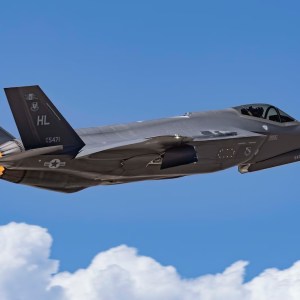
U.S. lawmakers and the Pentagon are investigating how sensitive F-35 components bound from Australia to the United States for repair were diverted to Hong Kong and are now unaccounted for. The post Federal probe into diversion of F-35 parts to Hong Kong appeared first on FreightWaves.
Source Lens
Industry Context
Useful background context, but lower-priority than direct platform, community, or operator intelligence.
Impact Level
medium
Use this briefing to decide whether your team needs an immediate workflow, policy, or reporting change.
Key Stat / Trigger
No single quantitative trigger surfaced in this report.
Focus on the operational implication, not just the headline.
Full Coverage
U. S. lawmakers and the Pentagon are investigating the diversion of a shipment of unserviceable F-35 Lightning II fighter jet components from Australia to Hong Kong, an incident that has raised concerns about potential exposure of sensitive U. S. stealth-aircraft technology.
The shipment was intended to travel from Australia to the United States for repair but was rerouted while crossing the Pacific, Politico reported Friday, citing three people familiar with the matter.
The components were being transported by an intermediary for F-35 prime contractor Lockheed Martin, but it remains unclear why the shipment was diverted, whether it was a mistake or an unauthorized act, and who now possesses the parts. The mode of shipment was not immediately identified.
Fighter parts are typically shipped as controlled aerospace cargo, often by military or contracted commercial airlift for urgent items, and by truck, sea freight or a combination of modes for less time-sensitive components. F-35 supply movements, for example, have used both military airlift and commercial carriers under U. S.
Transportation Command arrangements, according to the Defense Logistics Agency. window. googletag = window. googletag || {cmd: []}; googletag. cmd. push(function() {var gptSlot = googletag. defineSlot('/21776187881/FW-Responsive-Main_Content-Slot1', [[300, 100], [320, 50], [728, 90], [468, 60]], 'div-gpt-ad-1709668545404-0'). defineSizeMapping(gptSizeMaps.
banner1). addService(googletag. pubads()); googletag. pubads(). enableSingleRequest(); googletag. pubads(). collapseEmptyDivs(); googletag. enableServices(); setInterval(function() {if (! document. hidden) {googletag. pubads(). refresh([gptSlot]); } }, 30000); }); googletag. cmd. push(function() {googletag.
display('div-gpt-ad-1709668545404-0'); }); The Pentagon’s F-35 Joint Program Office confirmed that it was aware of what it characterized as “a shipment issue of unserviceable F-35 Lightning II components.” The office said it is working with U. S.
authorities and industry partners to recover the components, investigate the incident and establish safeguards against another occurrence. Canopy raises stakes Among the diverted equipment was reportedly an F-35 canopy, the cockpit enclosure that incorporates technology associated with the aircraft’s low-observable design.
That detail elevates the security implications beyond a routine loss of repairable spares, because adversaries could potentially examine physical components for clues to the F-35’s stealth characteristics and manufacturing methods.
Hong Kong’s status as a Chinese special administrative region has amplified congressional concern that Beijing could gain access to the equipment. There is no public indication that Chinese authorities or the Chinese military have obtained the parts, and the current location and custody of the shipment were not known Friday.
State Department and Pentagon officials began briefing congressional staff working on key national-security committees in June, according to Politico, with additional briefings expected in coming weeks. The incident was not previously public. window. googletag = window. googletag || {cmd: []}; googletag. cmd. push(function() {var gptSlot = googletag.
defineSlot('/21776187881/fw-responsive-main_content-slot3', [[728, 90], [468, 60], [320, 50], [300, 100]], 'div-gpt-ad-1665767553440-0'). defineSizeMapping(gptSizeMaps. banner1). addService(googletag. pubads()); googletag. pubads(). enableSingleRequest(); googletag. pubads(). collapseEmptyDivs(); googletag. enableServices(); setInterval(function() {if (!
document. hidden) {googletag. pubads(). refresh([gptSlot]); } }, 30000); }); googletag. cmd. push(function() {googletag. display('div-gpt-ad-1665767553440-0'); }); Supply-chain controls in focus The apparent breakdown is likely to renew scrutiny of the F-35 program’s global sustainment and repair network.
The fighter is operated by the United States and numerous allied customers, making the movement of repairable components across borders a routine part of fleet support.
But the program’s reliance on outside logistics providers and multinational maintenance flows also creates a demanding chain-of-custody challenge for hardware tied to highly classified aircraft capabilities. The issue comes against the backdrop of earlier criticism of the Pentagon’s F-35 spare-parts inventory controls.
A 2023 Government Accountability Office review found that the Defense Department had not established sufficient accountable-property records to track real-time changes in F-35 spare-parts inventory. GAO said the program had reported more than 1 million parts missing over the preceding five years.
The watchdog also said the department could not review losses valued in the tens of millions of dollars because Lockheed Martin controlled relevant data. window. googletag = window. googletag || {cmd: []}; googletag. cmd. push(function() {var gptSlot = googletag. defineSlot('/21776187881/fw-responsive-main_content-slot4', [[300, 100], [320, 50
Original Source
This briefing is based on reporting from Freightwaves. Use the original post for full primary-source context.
Style
Audience