

Supreme Court Decision Strengthens President’s Power to Fire STB Member Robert Primus
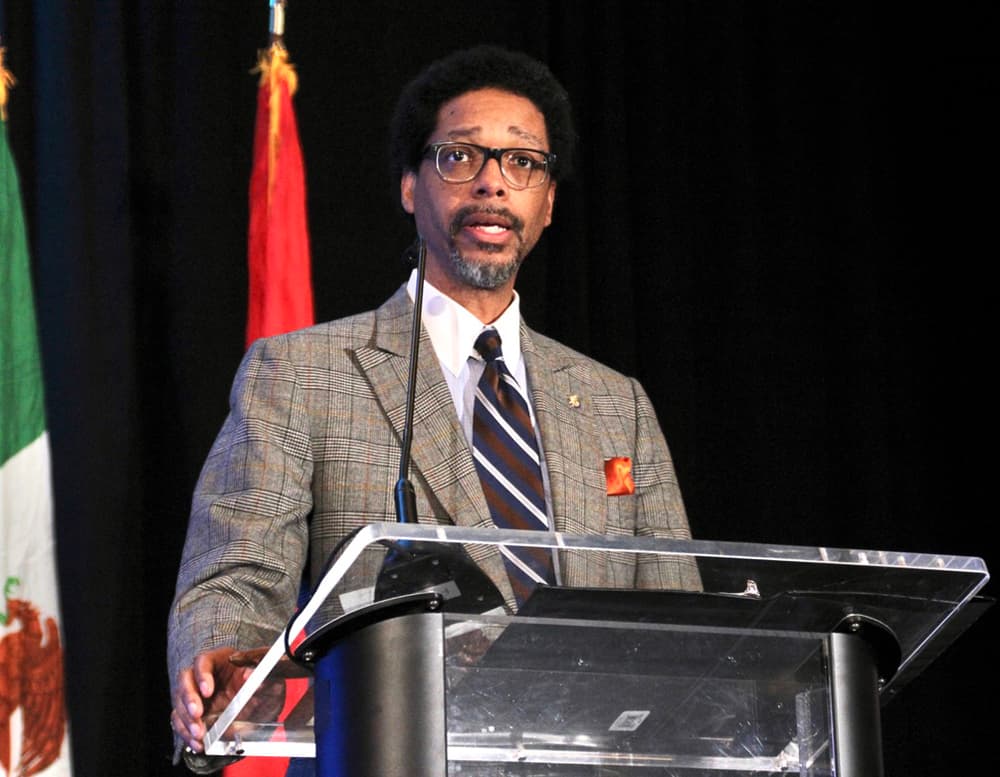
(The views expressed here are solely those of the author and do not necessarily represent the views of FreightWaves or its affiliates.) In a major ruling issued yesterday, the U.S. Supreme Court said President Trump can remove members of the Federal Trade Commission (FTC) without having to show “cause,” such as poor performance or misconduct. […] The post Supreme Court Decision Strengthens President’s Power to Fire STB Member Robert Primus appeared first on FreightWaves.
Source Lens
Industry Context
Useful background context, but lower-priority than direct platform, community, or operator intelligence.
Impact Level
medium
Use this briefing to decide whether your team needs an immediate workflow, policy, or reporting change.
Key Stat / Trigger
No single quantitative trigger surfaced in this report.
Focus on the operational implication, not just the headline.
Full Coverage
(The views expressed here are solely those of the author and do not necessarily represent the views of FreightWaves or its affiliates.) In a major ruling issued yesterday, the U. S. Supreme Court said President Trump can remove members of the Federal Trade Commission (FTC) without having to show “cause,” such as poor performance or misconduct.
The 6-3 decision in Trump v. Slaughter overturns a 1935 precedent and gives the president much broader control over leaders of independent agencies. This ruling is likely to decide the fate of Robert E. Primus, the longtime Democratic member of the Surface Transportation Board (STB) whom Trump fired last August without citing any specific reason.
What the Supreme Court Decided The Constitution gives the president the power to run the executive branch and “take Care that the Laws be faithfully executed.” For most of U. S. history, that has meant the president can fire executive-branch officials at will. In 1935, the Court carved out an exception in Humphrey’s Executor v. United States.
It said Congress could protect certain “independent” agency leaders from being fired except for “inefficiency, neglect of duty, or malfeasance in office.” The FTC was the main example. Yesterday’s opinion says that the old rule no longer fits. The FTC now makes rules with the force of law, investigates companies, holds hearings, and sues in court.
Those are core executive powers. The Court ruled that the president must be able to remove people who exercise those powers so they stay accountable to him, and ultimately to voters. Chief Justice Roberts wrote that the old Humphrey’s framework “has not withstood the test of time.” So the Court overruled it.
How This Affects Robert Primus and the STB Robert E. Primus has served on the STB since 2021 and was its chairman for part of that time. The five-member board regulates the nation’s freight railroads. It approves mergers, sets some rates, and resolves disputes between railroads and shippers.
Its decisions directly affect how goods move across the country and what companies pay to ship them. On August 27, 2025, the White House emailed Primus saying his position was terminated because his views did not align with the administration’s priorities. No claim was made that he was inefficient or had neglected his duties.
The STB’s governing law contains almost the exact same “for cause” language as the old FTC statute: the president may remove a member only for “inefficiency, neglect of duty, or malfeasance in office.” Primus sued, arguing the firing was illegal. Yesterday’s Supreme Court decision makes his lawsuit very difficult to win.
The Court’s reasoning, that agencies performing executive functions cannot be shielded from presidential removal, applies directly to the STB. Like the FTC, the STB makes rules, adjudicates cases, and enforces transportation laws. Lower courts are expected to follow the new precedent.
Primus’s lawyers have argued that the STB is different because it does less “executive” work than the FTC. The Supreme Court’s opinion leaves little room for that distinction. It focused on whether an agency exercises real power over the economy and private parties, not on narrow labels like “quasi-judicial.”
What This Means for the Freight Industry The STB is currently short-handed and facing a huge proposed merger between Union Pacific and Norfolk Southern, the largest rail merger ever. With Primus removed, the board’s makeup shifts. President Trump can now appoint replacements more easily aligned with his policies.
This change could speed up merger reviews or shift how the board weighs competition, service quality, and shipper protections. Railroads and shippers have long complained that the STB moves too slowly. Greater presidential control might make decisions faster, but it could also make them far more political. The ruling fits a broader pattern.
Trump has removed or tried to remove members of several independent boards, including the FTC, NLRB, and others. Yesterday’s decision gives him stronger legal ground to do so. The Bigger Picture For nearly 90 years, “independent agencies” were designed to be somewhat insulated from day-to-day politics.
Congress gave their members fixed terms and limited removal to protect expertise and stability. The Supreme Court has now said that insulation conflicts with the Constitution’s design of a single president in charge of the executive branch.
As a law professor who studies regulatory agencies, I see this as a major shift in power from Congress to the White House. It does not mean every agency loses all independence overnight. The Court left open questions about bodies like the Federal Reserve that have unique historical roots.
But for agencies like the STB that regulate major industries, the old protections are gone. Primus’s case will likely be resolved quickly in light of the ruling. Unless he can show the STB is fundamentally different from the FTC, and that argument faces long odds, the
Original Source
This briefing is based on reporting from Freightwaves. Use the original post for full primary-source context.
Style
Audience