

Why the Best LTL Carriers Are Built, Not Bought
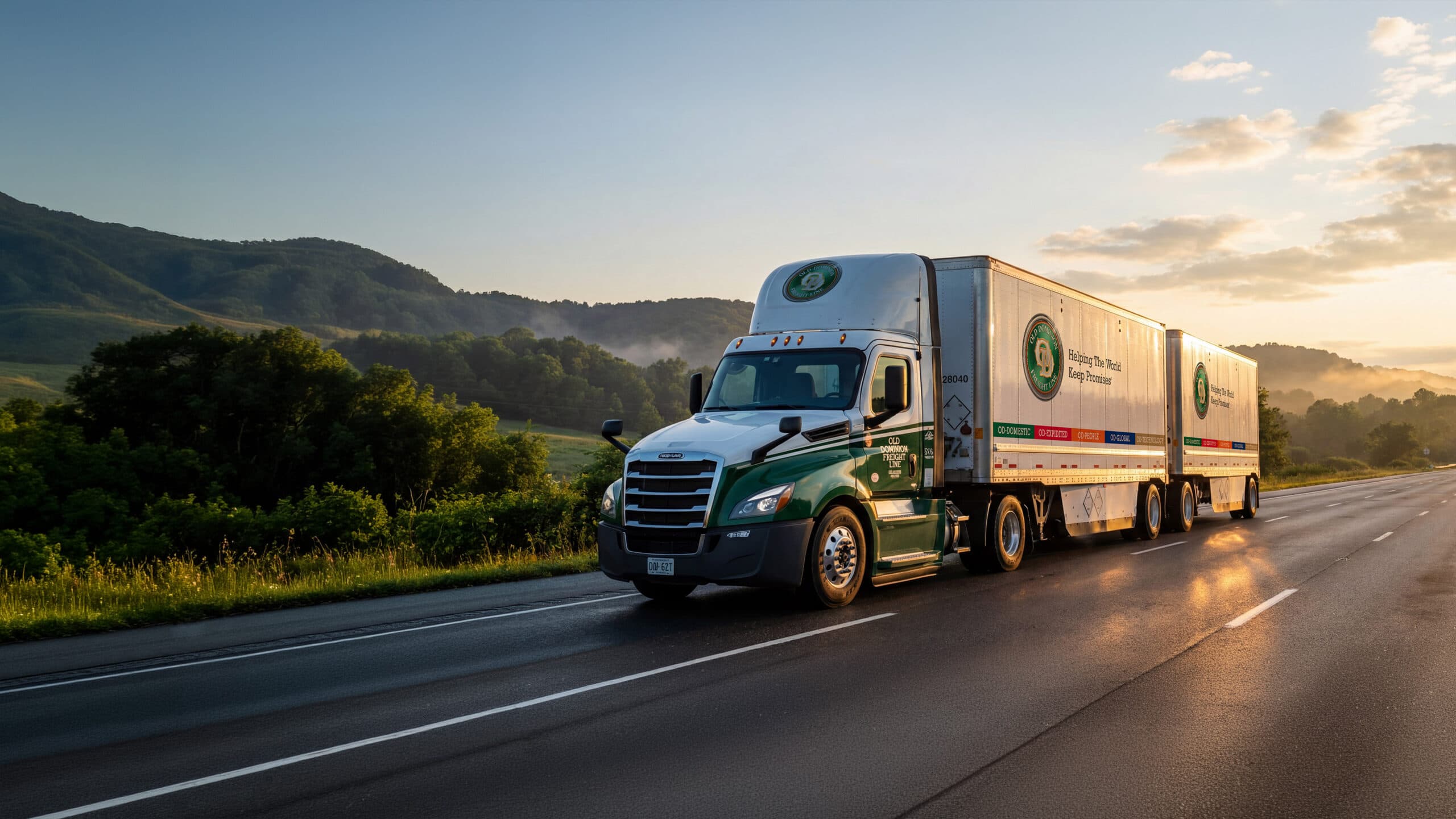
Old Dominion Freight Line's sixteen consecutive years as the #1 National LTL Carrier for Quality reflect a deliberate strategy built on proactive fleet maintenance, advanced load planning, and a workforce development model that fills most job openings from within. The post Why the Best LTL Carriers Are Built, Not Bought appeared first on FreightWaves.
Source Lens
Industry Context
Useful background context, but lower-priority than direct platform, community, or operator intelligence.
Impact Level
medium
Use this briefing to decide whether your team needs an immediate workflow, policy, or reporting change.
Key Stat / Trigger
No single quantitative trigger surfaced in this report.
Focus on the operational implication, not just the headline.
Full Coverage
In an industry where shippers increasingly treat carriers as interchangeable line items on a rate sheet, the LTL operators pulling ahead are the ones who’ve figured out that price is only one variable in a much larger equation.
The real differentiator is execution, which should be consistent, measurable, and repeatable across every touchpoint in the freight lifecycle. Old Dominion Freight Line has been proving that case for years, and the market keeps agreeing.
Sixteen consecutive years as the #1 National LTL Carrier for Quality, as ranked by Mastio & Company, doesn’t happen by accident. It happens because of a set of deliberate, compounding investments in fleet management, digital infrastructure, and workforce development that most competitors talk about in earnings calls but struggle to operationalize at scale.
Understanding what’s behind those numbers matters more than the numbers themselves if you’re trying to protect your own service commitments downstream. The Hidden Cost of “Good Enough” Fleet Management Every LTL shipper has felt the sting of a damage claim or a missed delivery window.
What’s harder to see is the operational architecture that causes those failures in the first place. Inconsistent maintenance cycles, overloaded trailers, and poor load sequencing are the silent killers of on-time, damage-free performance. They don’t show up on a rate quote, but they show up in your customers’ inboxes when something goes wrong.
Old Dominion’s approach to fleet management is built around eliminating those failure modes before freight ever leaves the dock.
Every truck in the OD fleet undergoes a proactive inspection every 90 days or 50,000 miles (whichever comes first) supplemented by annual multi-point inspections covering the full tractor, including trailers, axles, brakes, and tires. Roughly 10% of the fleet is replaced each year, which means OD’s equipment is among the youngest on the road.
Maintenance alone doesn’t protect freight, of course. The loading process is where cargo claims are won or lost, and OD has invested heavily in technology that governs how trailers are packed. Load planning tools verify density, dimensional fit, and packaging integrity before a trailer rolls out. Those same tools optimize the network-level haul plan.
In practice, this translates to tighter transit times for shippers. There’s also a sequencing discipline at play that’s easy to overlook: OD plans trailer loads not just for what goes on, but for what comes off and where.
Items are positioned so the right freight reaches the next service center in the right order, in the optimal configuration for the next leg. Planning discipline is a major contributor to OD’s cargo claims ratio, which sits at just 0. 5%. “It’s not one thing,” is how OD’s operational leadership frames it.
“It’s how maintenance, load planning, and dock execution all feed into each other.” The dock workers, drivers, and local service center managers are trained not just for their own roles, but for how their work sets up the next stage of the process.
When a local service center manager notices that a customer’s packaging isn’t holding up, they reach out directly with solutions. Proactive, relationship-driven problem-solving is the norm at OD, but it remains remarkably rare across the broader LTL landscape.
Route Intelligence and the Driver Advantage Routing in LTL freight is often treated as a math problem. You’re typically looking for the shortest distance, fewest stops, and lowest fuel cost. Old Dominion treats it as a service problem.
Advanced inbound route planning maps the ideal travel sequence across a shipper’s pickup and delivery requirements, balancing fuel economy against service-time commitments instead of just an A to B route. The network architecture behind those routes has been refined over decades.
OD’s hub-and-spoke model positions service centers to serve key geographies strategically, and the downstream benefit for shippers is that OD drivers work local pickup and delivery routes. They’re not long-haul operators passing through unfamiliar territory.
They know the docks, the receiving managers, and the specific handling requirements of the businesses on their routes. Local familiarity, Old Dominion leadership says, breeds a kind of operational intelligence that’s difficult to replicate with technology alone. OD drivers are trained to ask the right questions at both pickup and delivery.
That flags potential issues before they become claims or service failures. Because they work local routes, they return home at the end of every shift. It’s a quality-of-life commitment that OD makes deliberately, understanding that driver well-being and freight care are directly connected.
A driver who’s rested, stable, and invested in their local community brings a different level of attention to every stop. The cumulative result is an industry-leading 99% on-time delivery rate that wouldn’t be possible with software tools alone. Digital Tools That Meet
Original Source
This briefing is based on reporting from Freightwaves. Use the original post for full primary-source context.
Style
Audience