

Your Truck Is Getting More Expensive to Fix. Here Is the Data on Why — and What to Do Before It Gets Worse.
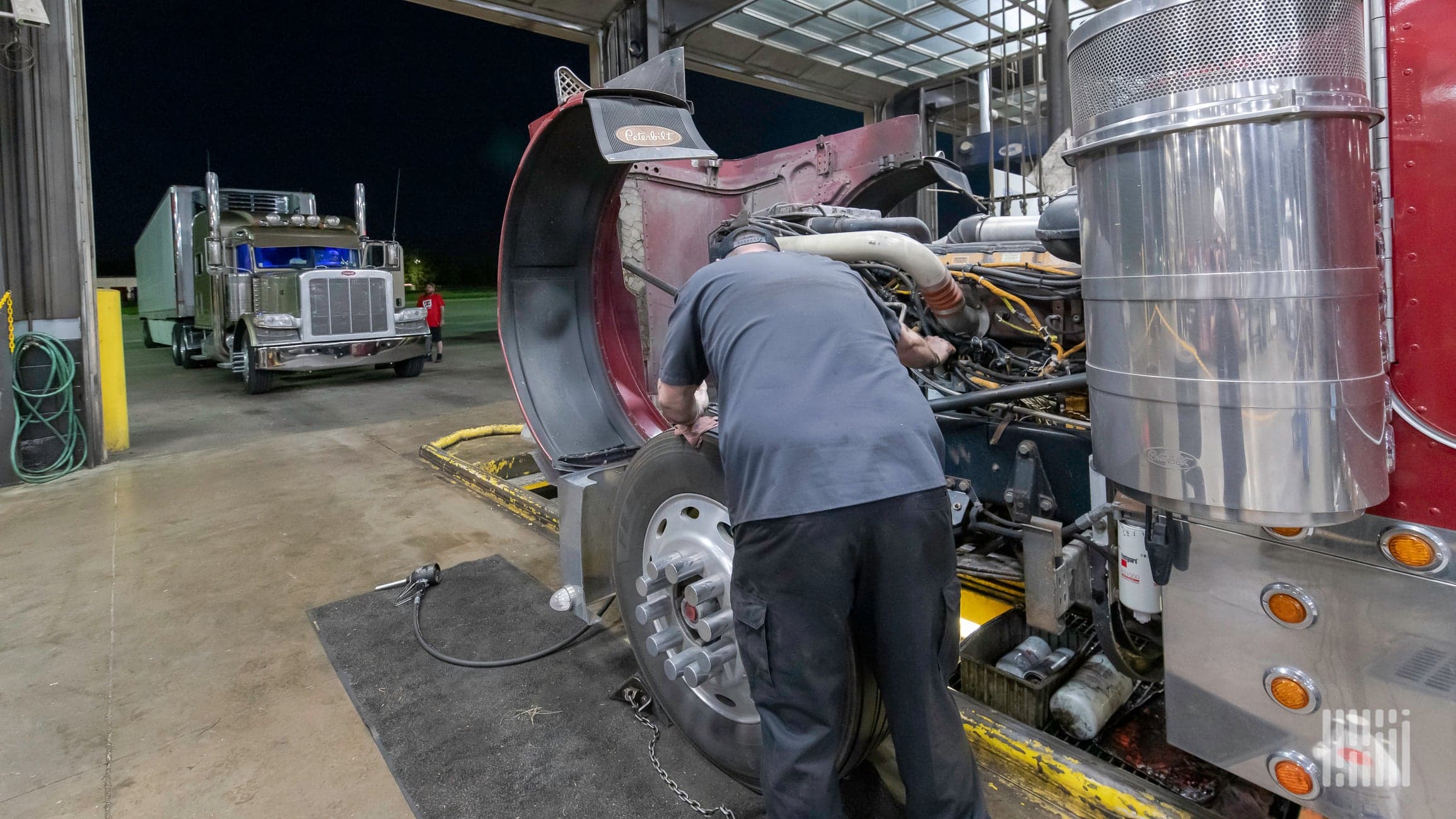
The maintenance cost story in trucking has been quietly telling the truth about the freight recession in a way that spot rates and load volumes never fully captured. When freight slows down, trucks run fewer miles, which means fewer service events per truck per month. The Q4 2025 Decisiv/TMC Parts and Labor Service Benchmark Report […] The post Your Truck Is Getting More Expensive to Fix. Here Is the Data on Why — and What to Do Before It Gets Worse. appeared first on FreightWaves.
Source Lens
Industry Context
Useful background context, but lower-priority than direct platform, community, or operator intelligence.
Impact Level
medium
Use this briefing to decide whether your team needs an immediate workflow, policy, or reporting change.
Key Stat / Trigger
No single quantitative trigger surfaced in this report.
Focus on the operational implication, not just the headline.
Full Coverage
The maintenance cost story in trucking has been quietly telling the truth about the freight recession in a way that spot rates and load volumes never fully captured. When freight slows down, trucks run fewer miles, which means fewer service events per truck per month. The Q4 2025 Decisiv/TMC Parts and Labor Service Benchmark Report showed a 1.
3% dip in combined parts and labor costs — and some corners of the industry treated that as a positive signal. It is not. Decisiv CEO Tim Hardin was direct about what the data actually shows: “The moderation in costs seen in the current report illustrates how this is being addressed at shops using effective management practices.”
In plain language — costs dipped because trucks ran less, not because maintaining a truck got cheaper. The five-year trend is the number that matters. Since early 2020, combined parts and labor costs for heavy-duty trucks have risen 27. 4%. Parts specifically are up 23. 8%. Labor is up 33. 5%.
To translate that into operational terms: if your shop costs were running $1,000 per month per truck in 2020, the same maintenance workload now runs approximately $1,274. And that is before the tariff environment adds its next layer.
What the Tariffs Are Actually Doing to Equipment Costs The Section 232 tariff on imported medium and heavy-duty trucks — 25% on Class 3 through 8 vehicles and many truck parts, effective November 1, 2025 — is the most significant structural cost change in the equipment market in years.
The American Trucking Associations estimated the tariff adds up to $35,000 to the delivered price of an imported Class 8, bringing total new truck acquisition cost to approximately $238,000 including federal excise tax. That headline number matters for the purchase decision. What matters more for day-to-day operations is what the tariff does to parts prices.
Hardin acknowledged that raw material costs — steel and aluminum specifically — began increasing around the time tariffs were introduced, and that these increases are showing up in component prices even before direct tariff impact can be isolated in the data.
The Richmond Fed’s CFO Survey found that firms attribute close to 40% of total unit cost growth in 2025 and 2026 to tariffs and tariff-related uncertainty. The mechanism matters: supply chain anxiety pricing.
When distributors and parts manufacturers believe tariff-driven supply disruptions are coming, they adjust pricing preemptively — before any physical shortage materializes. Hardin was specific about this: “Typically what I’ve seen is it gets priced into the supply chain regardless of whether there’s a physical impact or not.”
For an owner-operator buying a water pump, a set of injectors, or a turbocharger, the distinction between actual tariff impact and preemptive pricing adjustment is irrelevant. The invoice is higher either way. Parts costs rose in 19 of the 25 VMRS vehicle systems tracked in the Decisiv benchmark, and year over year showed increases in 16 of those systems.
The shift from labor-driven to parts-driven maintenance inflation is not a technicality — it changes where cost management attention should be focused. In the previous cycle, negotiating better labor rates with your shop or optimizing your PM intervals to reduce labor time was the lever.
In the current environment, parts sourcing strategy — who you buy from, what quality tier, and at what price point — is increasingly where the real money is. The Age of Your Fleet Is Now a Bigger Variable Than It Used to Be The most consequential equipment decision a small carrier makes right now is not whether to buy a new truck.
It is how aggressively to maintain the trucks already on the road. Fleetio’s analysis of 1. 2 million commercial vehicles released in February 2026 found that older assets drive outsized service spend — a finding that is intuitive but whose magnitude matters for planning purposes.
A truck with 600,000 miles in the current parts cost environment is a materially different maintenance liability than the same truck was two years ago. The components that wear at high mileage — injectors, turbochargers, EGR systems, DPF systems, transmissions — are now 20% to 30% more expensive to replace than they were when you bought that truck.
The economic calculus on keeping an aging asset running versus replacing it has shifted, and not in the direction that favors running it longer.
The counter-argument is that new truck acquisition costs have also shifted significantly upward — up to $35,000 per unit in tariff impact on imported Class 8 trucks, with used truck prices still elevated and financing rates not having returned to pre-2022 levels. So the choice is not between cheap maintenance and cheap acquisition.
It is between expensive maintenance and expensive acquisition, and the right answer depends on specific mileage, condition, and freight type for each unit in your fleet. What this environment does argue for clearly is a condition-based assessment of every truck
Original Source
This briefing is based on reporting from Freightwaves. Use the original post for full primary-source context.
Style
Audience