

First look: Covenant flags March rebound after soft Q1 earnings
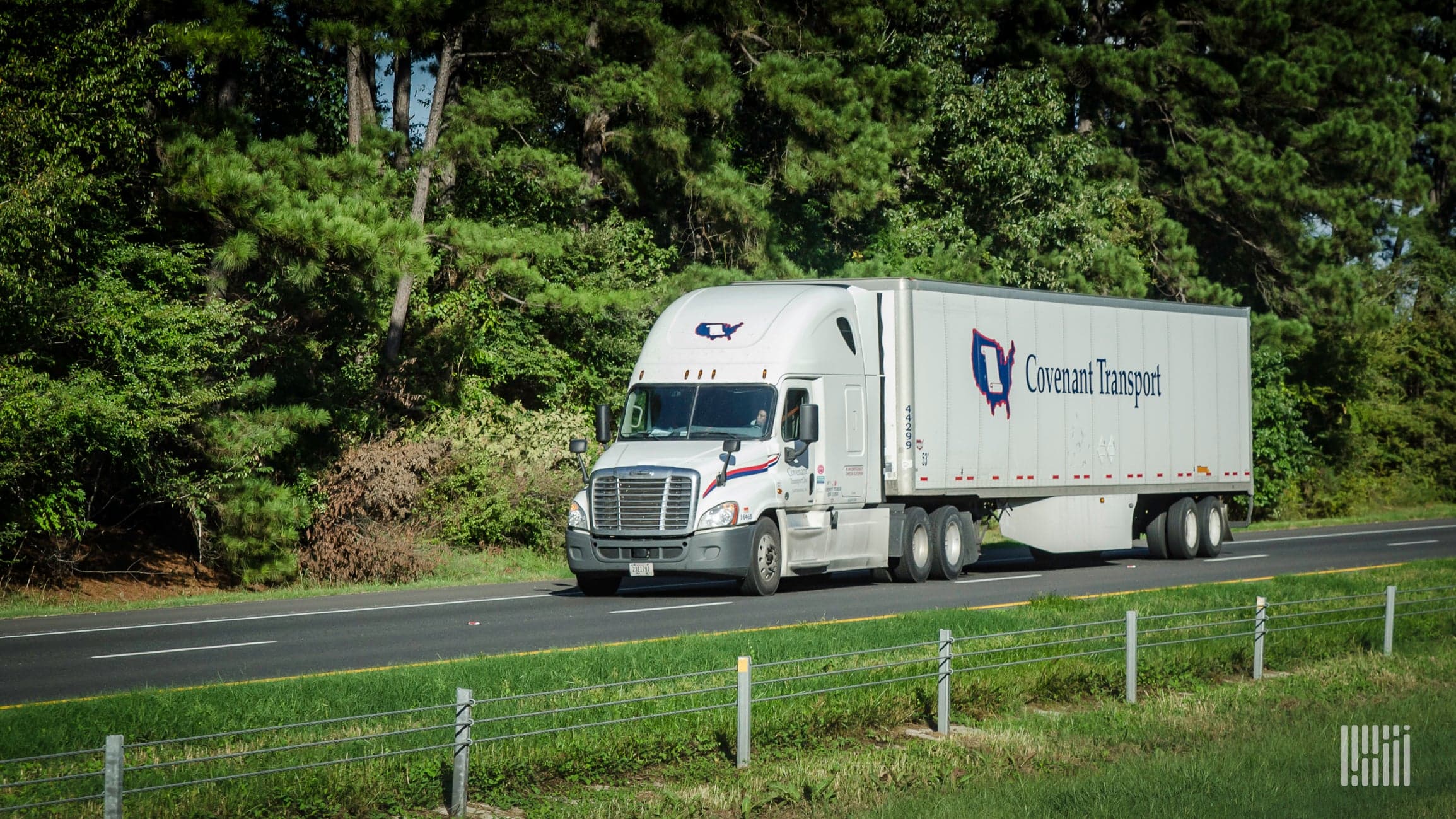
Covenant Logistics reported Q1 2026 earnings miss with operating ratio deteriorating to 98.0% from 97.2%, but freight revenue per mile rose 9.1% to $2.76 indicating tightening trucking capacity. CEO noted improving freight volumes and pricing momentum building through March.
Rising trucking rates and capacity constraints signal higher shipping costs ahead for marketplace sellers, especially those using FBM or 3PL services. Monitor your shipping cost per unit trends now before Q2 rate increases hit your margins.
This reflects broader logistics inflation hitting ecommerce fulfillment costs, making Amazon's FBA network increasingly attractive versus third-party logistics as trucking rates rise industry-wide.
Pull your shipping cost reports from Q1 and calculate cost per unit trends - if trucking makes up >20% of logistics spend, budget for 10%+ increases in Q2.
Review FBM vs FBA economics for your top SKUs - tightening trucking capacity makes Amazon's logistics network more cost-competitive.
Bottom Line
Trucking capacity crunch means higher shipping costs for FBM sellers.
Source Lens
Industry Context
Useful background context, but lower-priority than direct platform, community, or operator intelligence.
Impact Level
medium
Trucking capacity crunch means higher shipping costs for FBM sellers.
Key Stat / Trigger
freight revenue per mile rose 9.1% to $2.76
Focus on the operational implication, not just the headline.
Full Coverage
Covenant Logistics Group reported weaker-than-expected first-quarter 2026 earnings as severe winter weather and higher fuel costs weighed on performance, though improving freight trends in March point to a potential rebound. The Chattanooga, Tennessee-based truckload and logistics provider posted net income of $4.
4 million, or 17 cents per diluted share, down from $6. 6 million, or 24 cents per share, a year earlier. Adjusted earnings per share came in at $0. 26, compared to $0. 32 in the prior-year period.
CEO David Parker said the quarter “fell short of expectations,” citing January and February disruptions, but noted improving freight volumes and pricing toward the end of the quarter. window. googletag = window. googletag || {cmd: []}; googletag. cmd. push(function() {googletag.
defineSlot('/21776187881/FW-Responsive-Main_Content-Slot1', [[300, 100], [320, 50], [728, 90], [468, 60]], 'div-gpt-ad-1709668545404-0'). defineSizeMapping(gptSizeMaps. banner1). addService(googletag. pubads()); googletag. pubads(). enableSingleRequest(); googletag. pubads(). collapseEmptyDivs(); googletag. enableServices(); }); googletag. cmd.
push(function() {googletag. display('div-gpt-ad-1709668545404-0'); }); “Our positive operating performance and the momentum we carried into the second quarter” includes a growing pipeline of new customers and rate increases with select shippers, Parker said in a news release. The company revenue beat first quarter revenue estimates at $307.
2 million, but earnings per share of $0. 26 missed the $0. 30 forecast. Covenant Logistics Group (NYSE: CVLG) reported first quarter results after the market closed on Thursday. The carrier will hold a conference call to discuss results with analysts at 10 a. m. Friday. Covenant provides truckload, expedited, dedicated, and logistics services across the U.
S. Revenue rises, margins compress Total revenue increased 14% year over year to $307. 2 million, driven by a 15. 9% rise in freight revenue, excluding fuel surcharges. Despite top-line growth, profitability weakened. Operating income declined to $6. 3 million from $7. 6 million, while the operating ratio deteriorated to 98. 0% from 97.
2%, reflecting higher costs. Fuel expenses, inflationary pressures and higher purchased transportation costs weighed on margins, alongside weather-related disruptions early in the quarter. Segment performance mixed Covenant’s business segments showed divergent trends: window. googletag = window. googletag || {cmd: []}; googletag. cmd.
push(function() {googletag. defineSlot('/21776187881/fw-responsive-main_content-slot3', [[728, 90], [468, 60], [320, 50], [300, 100]], 'div-gpt-ad-1665767553440-0'). defineSizeMapping(gptSizeMaps. banner1). addService(googletag. pubads()); googletag. pubads(). enableSingleRequest(); googletag. pubads(). collapseEmptyDivs(); googletag.
enableServices(); }); googletag. cmd. push(function() {googletag. display('div-gpt-ad-1665767553440-0'); }); Dedicated truckload was a bright spot, with revenue rising 10. 9% to $91. 1 million and operating income more than doubling, supported by improved fleet productivity. Expedited truckload revenue fell 10. 3% to $71.
9 million as tractor count declined and miles per unit dropped. Managed Freight surged 59. 6% to $90. 7 million, largely due to acquisitions completed in late 2025, though margins compressed due to higher capacity costs. Warehousing revenue increased 14. 6% to $27. 6 million, driven by new customer onboarding, but startup costs limited profit growth.
Overall truckload revenue was essentially flat year over year at $188. 1 million. Rates improve, capacity tightens Operationally, Covenant saw improving pricing metrics despite softer utilization: Average freight revenue per total mile rose 9. 1% to $2. 76 Revenue per loaded mile increased 12. 1% Miles per tractor declined 5.
7% These trends reflect tightening capacity and stronger pricing power, even as fleet size contracted modestly. Management also pointed to industrywide driver shortages and improving demand as tailwinds heading into the second quarter. Covenant reduced net debt by $51 million during the quarter to $245.
3 million, lowering its leverage ratio and improving liquidity. window. googletag = window. googletag || {cmd: []}; googletag. cmd. push(function() {googletag. defineSlot('/21776187881/fw-responsive-main_content-slot4', [[300, 100], [320, 50], [728, 90], [468, 60]], 'div-gpt-ad-1709668086344-0'). defineSizeMapping(gptSizeMaps. banner1). addService(googletag.
pubads()); googletag. pubads(). enableSingleRequest(); googletag. pubads(). collapseEmptyDivs(); googletag. enableServices(); }); googletag. cmd. push(function() {googletag.
display('div-gpt-ad-1709668086344-0'); }); The company expects 2026 capital expenditures of $40 million to $50 million, significantly below 2025 levels, as it focuses on improving returns and reallocating assets.
Outlook: Sequential improvement expected Executives said demand is strengthening, with contract freight and committed capacity agreements supporting a gradual r
Original Source
This briefing is based on reporting from Freightwaves. Use the original post for full primary-source context.
Style
Audience