

Norfolk Southern awarded control of disputed eastern port rail line
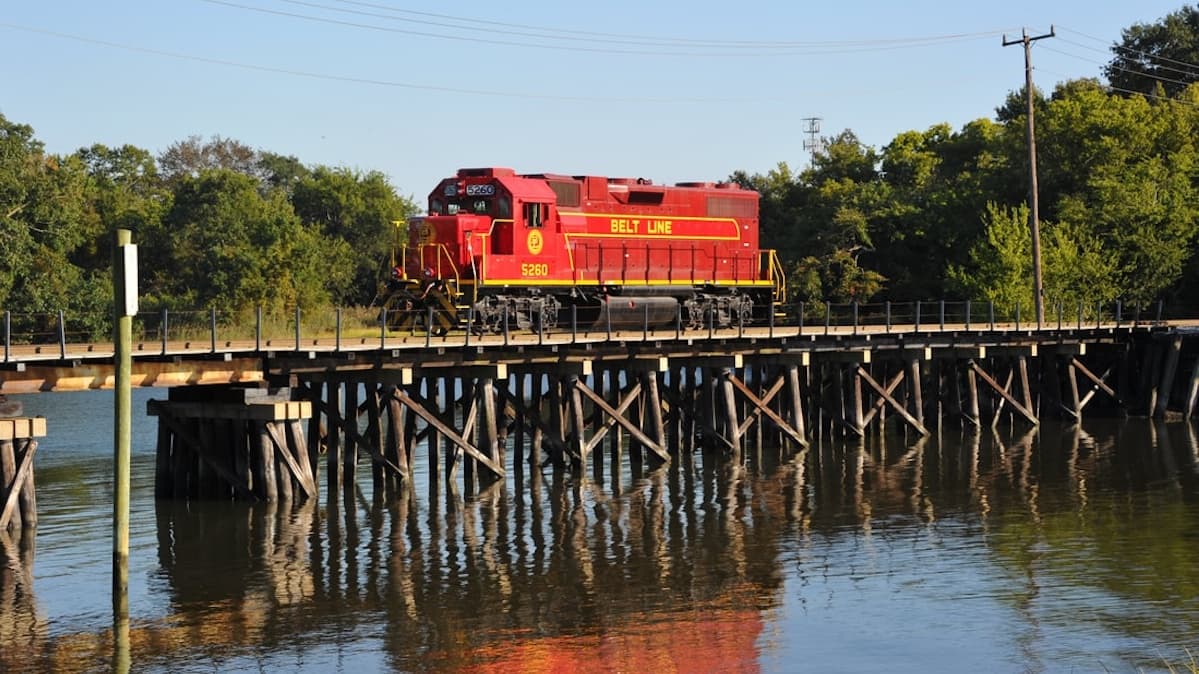
Norfolk Southern won federal approval to control the Norfolk & Portsmouth Belt Line railroad serving Virginia's port after a 7-year legal dispute with CSX. The decision maintains current port access arrangements but includes 5-year regulatory oversight.
This preserves existing shipping routes and costs through Virginia ports, avoiding potential disruption to East Coast logistics networks. Sellers using Norfolk-area fulfillment should see stable inbound shipping costs and transit times.
Rail consolidation continues as major carriers fight for port access control, potentially affecting future shipping route options and pricing power for importers.
Review Q1 inbound shipping costs via Virginia ports -- if above budget, diversify to other East Coast entry points before peak season.
Map current supplier routes through Norfolk International Terminals to identify any CSX-dependent shipments that could face future delays.
Bottom Line
Norfolk Southern rail control preserves current Virginia port logistics for sellers.
Source Lens
Industry Context
Useful background context, but lower-priority than direct platform, community, or operator intelligence.
Impact Level
medium
Norfolk Southern rail control preserves current Virginia port logistics for sellers.
Key Stat / Trigger
36-mile railroad line serving Port of Virginia
Focus on the operational implication, not just the headline.
Full Coverage
The Surface Transportation Board has granted Norfolk Southern’s formal request to control the Norfolk & Portsmouth Belt Line, a terminal switching railroad that serves the Port of Virginia. CSX (NASDAQ: CSX) and NS (NYSE: NSC) have been locked in a legal dispute over the NPBL for seven years.
NS has controlled the 36-mile NPBL since 1982 by virtue of its 57% ownership stake; CSX owns the other 43% of the railroad that was created as a neutral switching carrier in 1896. It was through this dispute that regulators discovered that NS never sought authority to control the NPBL in 1982 as part of the Norfolk & Western-Southern Railway merger.
In a regulatory housekeeping move, NS subsequently sought formal board approval in 2025. But CSX opposed this, contending that it should have direct access to the Virginia Port Authority’s Norfolk International Terminals via NPBL, which reaches the dockside terminal over NS track.
CSX also alleged, among other things, that NS and NPBL set a switching rate that effectively prevents CSX from competing at NIT. The STB’s 32-page decision released Monday rejected those arguments. The issues CSX raised stemmed from longstanding ownership and rate structures, not NS’s control itself, the board said.
Forced trackage rights, the board said, would expand competition beyond the status quo, which would exceed its regulatory authority in this type of case. CSX also sought trackage rights over NS and NPBL to reach NIT under a separate proceeding, which was held in abeyance pending resolution of the NPBL control case.
The board said that in that separate proceeding CSX will be able to make arguments that trackage rights are in the public interest. The board added that with the control decision, the board does not take a position on the merits of those arguments. The STB’s decision also conditioned its approval of NS control of NPBL.
Among the conditions: The board will hold NS to representations it made during the case, including that NPBL remain a neutral switching carrier operated on a uniform, cost-plus basis for the benefit of its owners. A five-year board oversight period. Subscribe to FreightWaves’ Rail e-newsletter and get the latest insights on rail freight right in your inbox.
Original Source
This briefing is based on reporting from Freightwaves. Use the original post for full primary-source context.
Style
Audience