

Three Strategies for Closing Fleet Risk Blind Spots
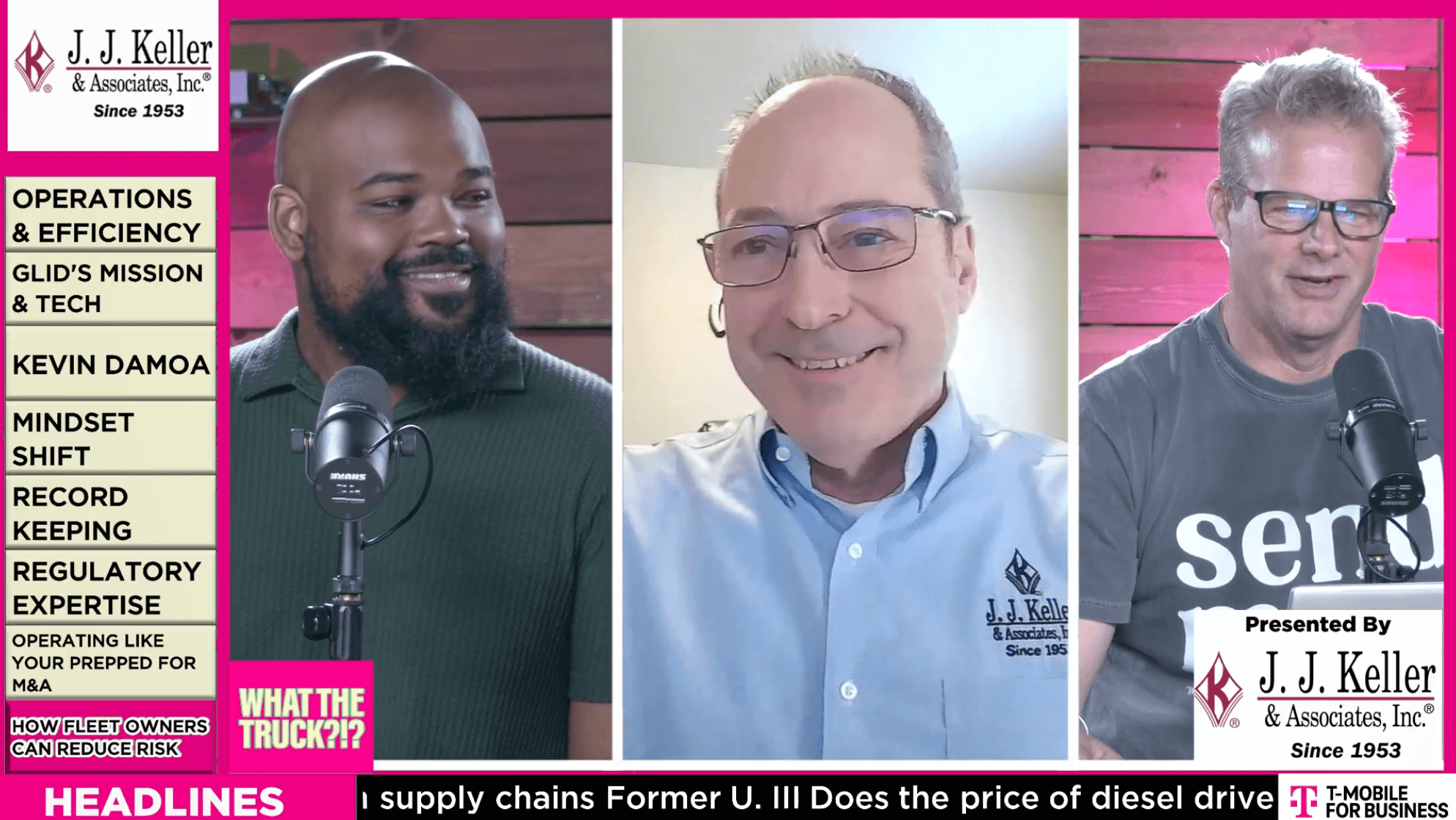
Fleet risk management article discusses three strategies for transportation companies to close operational blind spots through M&A-ready operations, regulatory expertise, and litigation-ready records. Content focuses on trucking and freight operations with no connection to ecommerce fulfillment or marketplace selling.
This freight industry content has zero relevance to Amazon, Walmart, or Target sellers who don't operate their own trucking fleets. The strategies discussed apply to transportation companies, not marketplace merchants managing inventory, advertising, or customer relationships.
This represents content misalignment - transportation industry insights don't translate to ecommerce marketplace operations or seller strategies.
Skip this article - it's about trucking fleet management, not ecommerce operations or marketplace selling strategies.
Focus on marketplace-specific risk management like account health, policy compliance, and inventory planning instead.
Bottom Line
Trucking fleet advice irrelevant for marketplace sellers.
Source Lens
Industry Context
Useful background context, but lower-priority than direct platform, community, or operator intelligence.
Impact Level
medium
Trucking fleet advice irrelevant for marketplace sellers.
Key Stat / Trigger
No single quantitative trigger surfaced in this report.
Focus on the operational implication, not just the headline.
Full Coverage
Fleet operators tend to think of risk in terms of isolated events, such as a crash, a failed inspection, or a compliance lapse. But according to Bob O’Connell, Account Executive of Strategic Accounts at J. J. Keller & Associates, that way of thinking is itself the biggest blind spot in the industry.
“A lot of carriers, big and small, believe that their risk is based on isolated incidents,” O’Connell said in a recent appearance on FreightWaves’ What the Truck?!? with host Malcolm Harris. “That’s really not the case. You’re being judged on all of it, the consistency of your entire operation.”
The distinction matters because regulators and plaintiff attorneys alike are looking at patterns, not snapshots. A fleet that performs well on one audit but lacks the operational discipline to sustain that performance over time is exposed in ways its leadership may not fully appreciate until it’s too late.
O’Connell laid out a three-part framework for how fleets of any size can close their risk gaps and move from reactive to proactive postures: operate as though a merger or acquisition is imminent, build genuine regulatory expertise internally, and maintain litigation-ready records at all times.
Run your fleet like someone’s about to buy it The first strategy O’Connell outlined may sound like it belongs in a boardroom rather than a dispatch office, but the logic is straightforward.
A fleet that’s always ready for due diligence is a fleet that’s always ready for scrutiny from any direction, whether that’s an insurance carrier, a federal auditor, or a plaintiff’s legal team. “A merger and acquisition forces discipline, not only on the financial side, but through the entire operational side,” O’Connell said.
“If you’re taking a look at it from that viewpoint, what you’re going to see is that if you’re always ready for a merger and acquisition, you’re always going to be ready for somebody to come in and pull the covers back on your entire operation.” That readiness, O’Connell argues, has compounding benefits.
Fleets that maintain tight operational visibility are better positioned to push back on insurance rate increases, respond to audits with confidence, and demonstrate to outside parties that they’re running a disciplined shop. “If you’re ready for somebody to be viewing your organization in a very detailed format, you’re ready for a lot of things,” he said.
That includes showing your insurance provider how well you perform to get lower rates. The same principle applies when litigation enters the picture. A fleet with a merger-ready posture already has its documentation organized, its compliance records accessible, and its operational narrative coherent.
Regulatory expertise can’t live in one person’s head The second pillar of O’Connell’s framework centers on regulatory knowledge, and specifically on why fleets can’t afford to treat compliance as a static competency that lives with a single internal hire. The Federal Motor Carrier Safety Regulations (FMCSRs) are constantly evolving.
The pipeline of changes (from the congressional record to the federal register to state and municipal rulemaking) is broader than most fleet operators realize. O’Connell says that outside compliance partners exist precisely because no single internal team can track the full scope of regulatory change in real time.
“You would have to have a fleet of people to manage that,” he said. “Why not turn that over to a specialist that does nothing else every single day?” But outside expertise alone isn’t sufficient. The real value comes from pairing external regulatory intelligence with internal operational knowledge. “It’s not just the regulations,” O’Connell said.
“It’s how those regulations affect your organization, because regulations aren’t really one size fits all. You have to be able to look at the regulatory expertise, make sure you understand those regulations, and make sure you’re being notified of when they’re changing and how they’re changing.”
Cookie-cutter compliance strategies fail because operations can be very diverse from one fleet to the next. The regulatory burden looks different depending on whether a carrier is running small-cap package delivery, waste haul operations, or long-haul linehaul, and each type requires its own operational interpretation of the same regulatory landscape.
“You have to have bench strength so that your inside person understands the operation,” O’Connell said. “All of your competitors have to comply with the same regulatory landscape.” J. J.
Keller’s Certified Transportation Regulatory Expert (CTRE) Program bridges the gap between regulatory knowledge and operational application so a fleet’s internal staff can fully understand the FMCSRs and comply with them more effectively.
If it’s not written down, it doesn’t exist Litigation-ready record keeping may be the most immediately actionable of O’Connell’s strategies, and it’s where the consequences of failure are most visible. Both regulators and plaintiff attorne
Original Source
This briefing is based on reporting from Freightwaves. Use the original post for full primary-source context.
Style
Audience