

Three Trucks Hit CSX Trains in Metro Atlanta in Under a Week. Every One of Them Is a Lesson in the Crossing Mistake That Kills Drivers.
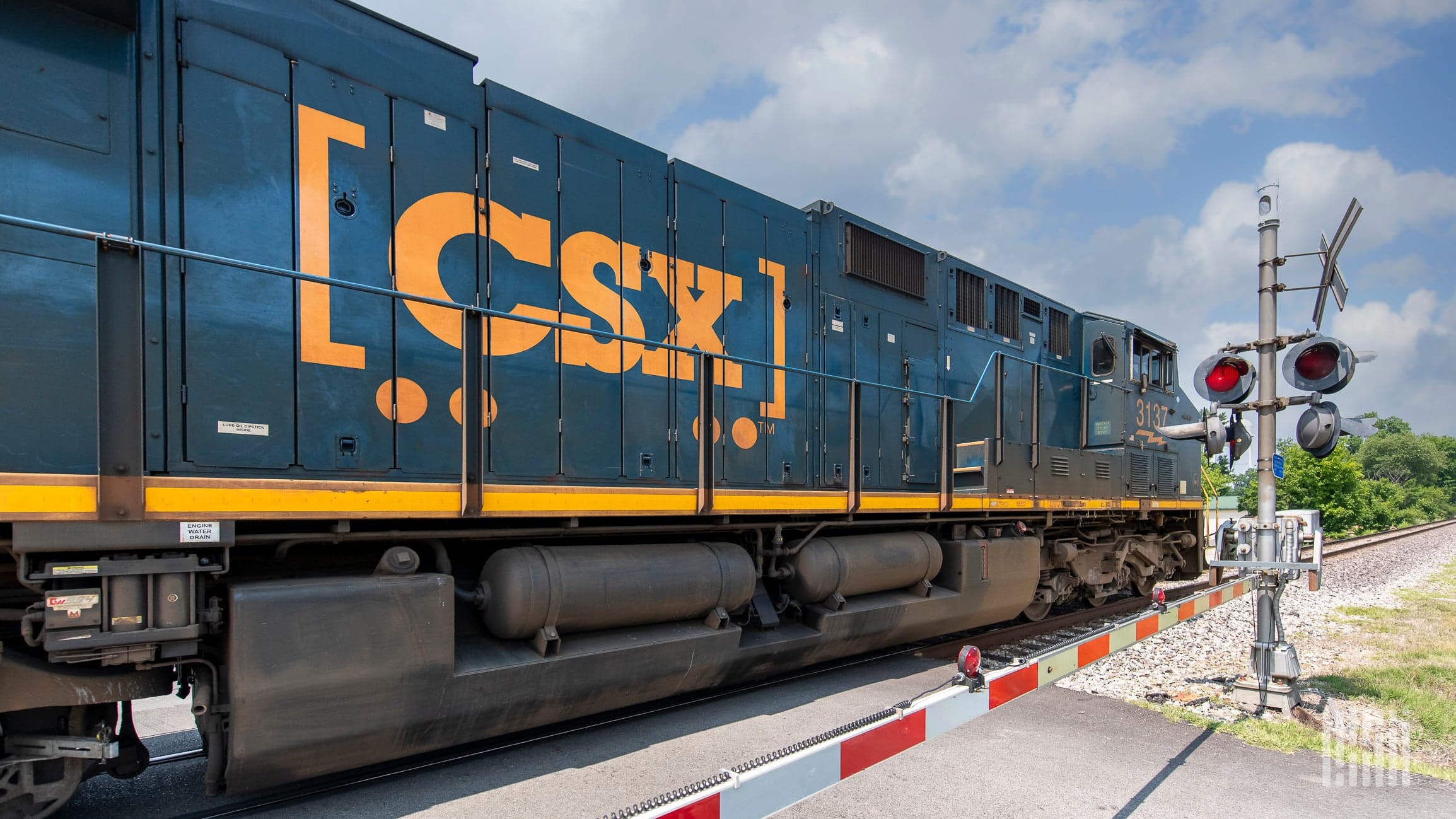
In the span of five days, three tractor-trailers were struck by CSX freight trains in metro Atlanta. The trucks were destroyed. Fires broke out in each case. By something close to luck, no one was killed. That cluster is worth every owner-operator’s attention, not because Atlanta is uniquely dangerous, but because the same scenario repeated […] The post Three Trucks Hit CSX Trains in Metro Atlanta in Under a Week. Every One of Them Is a Lesson in the Crossing Mistake That Kills Drivers. appeared
Source Lens
Industry Context
Useful background context, but lower-priority than direct platform, community, or operator intelligence.
Impact Level
medium
Use this briefing to decide whether your team needs an immediate workflow, policy, or reporting change.
Key Stat / Trigger
No single quantitative trigger surfaced in this report.
Focus on the operational implication, not just the headline.
Full Coverage
In the span of five days, three tractor-trailers were struck by CSX freight trains in metro Atlanta. The trucks were destroyed. Fires broke out in each case. By something close to luck, no one was killed.
That cluster is worth every owner-operator’s attention, not because Atlanta is uniquely dangerous, but because the same scenario repeated three times in one week, and it is the scenario that ends drivers’ lives at crossings all over the country. Here is what happened, and the hard operational lesson underneath it.
Three Crashes, Same Story The first hit on the afternoon of June 25, in Fairburn, a fast-growing logistics suburb on Atlanta’s south side. A CSX train struck a tractor-trailer at the Highway 29 crossing near Bishop Road.
According to Fairburn Police Chief Anthony Bazydlo, the truck had gotten stuck on the tracks and could not clear in time before the train arrived. The driver had just enough time to get out and run before the train hit the rig. The truck caught fire. Two people were aboard the train, one suffered minor injuries, and the truck driver was unhurt.
As the chief put it, the train was not going to stop and does not stop quickly, and there was real potential for loss of life from both the impact and the fire. The second came the very next morning, June 26, just before 3:45 a. m. , at the Lee Street crossing in southwest Atlanta.
A southbound CSX freight train struck a tractor-trailer and dragged it hundreds of feet before stopping. The truck was destroyed, it caught fire, and what appeared to be hundreds of packages were scattered across the tracks.
The crash happened directly beneath MARTA infrastructure and forced the transit agency to shut down rail service between West End and Oakland City stations, running a bus bridge during the morning commute. The truck driver could not be located at first. A nearby resident told Channel 2 he could not see how anyone got out of that wreck.
The driver, it later emerged, was in shock, walked to a relative’s home, and turned himself in to investigators afterward. The third happened this morning, just after 3 a. m. , near Boulder Park Road and Nathan Road in southwest Atlanta. Another CSX train, another tractor-trailer, another collision under investigation. No injuries reported.
In all three, investigators have said the same thing: the trucks ended up on the tracks as a train approached, and they have not yet explained why the vehicles were positioned there at the moment of impact. That “why” is the entire ballgame, and it is where the lesson lives for every driver who crosses tracks.
Why a Truck on the Tracks Is the Deadliest Position in Trucking Whether it is a high cresting crossing where the landing gear gets stuck, or a driver simply isn’t paying attention, a freight train cannot stop for you. This is the single most important fact about grade crossings, and it does not care how good a driver you are.
A loaded freight train can require more than a mile to stop from track speed. By the time a locomotive engineer sees a truck hung up on the crossing ahead, there is virtually nothing the engineer can do. The physics have already decided the outcome.
The only variable left is whether the truck is out of the way in time, and that is determined entirely by decisions the truck driver made before the train ever came into view. Trucks get caught on crossings for reasons that are specific to large vehicles and that a four-wheeler never has to think about.
A long wheelbase and low ground clearance can leave a trailer high-centered on a humped or uneven crossing, the undercarriage grounding out on the raised track bed while the wheels lose their grip. A driver who pulls onto the tracks expecting the traffic ahead to keep moving can get boxed in with the trailer still on the rails when traffic stops.
Tight crossing geometry, a sharp approach angle, or a crossing that sits close to an intersection can all leave a long vehicle straddling the tracks with nowhere to go.
Frederick Burns, a flatbed driver who spoke to Atlanta media after the Fairburn crash, said plainly that getting stuck on tracks is a hazard experienced drivers are acutely aware of and that these situations are not as rare as people think. The Atlanta cluster is a concentrated, visible version of a national problem.
Collisions at grade crossings disproportionately involve large trucks and buses precisely because those vehicles need more time and distance to clear the tracks than anything else on the road. When the margin is thin, the truck is the vehicle most likely to still be on the rails when the train arrives.
The Rules That Exist Specifically to Keep This From Happening Because the consequences are so large, there is a specific set of practices built around commercial vehicles at crossings, and they exist precisely because the failure mode is fatal. Never start across a crossing you cannot completely clear, period.
This is the cardinal rule and the one that would have prevented most truck-tra
Original Source
This briefing is based on reporting from Freightwaves. Use the original post for full primary-source context.
Style
Audience