

The Supreme Court just told every freight broker that they can be sued
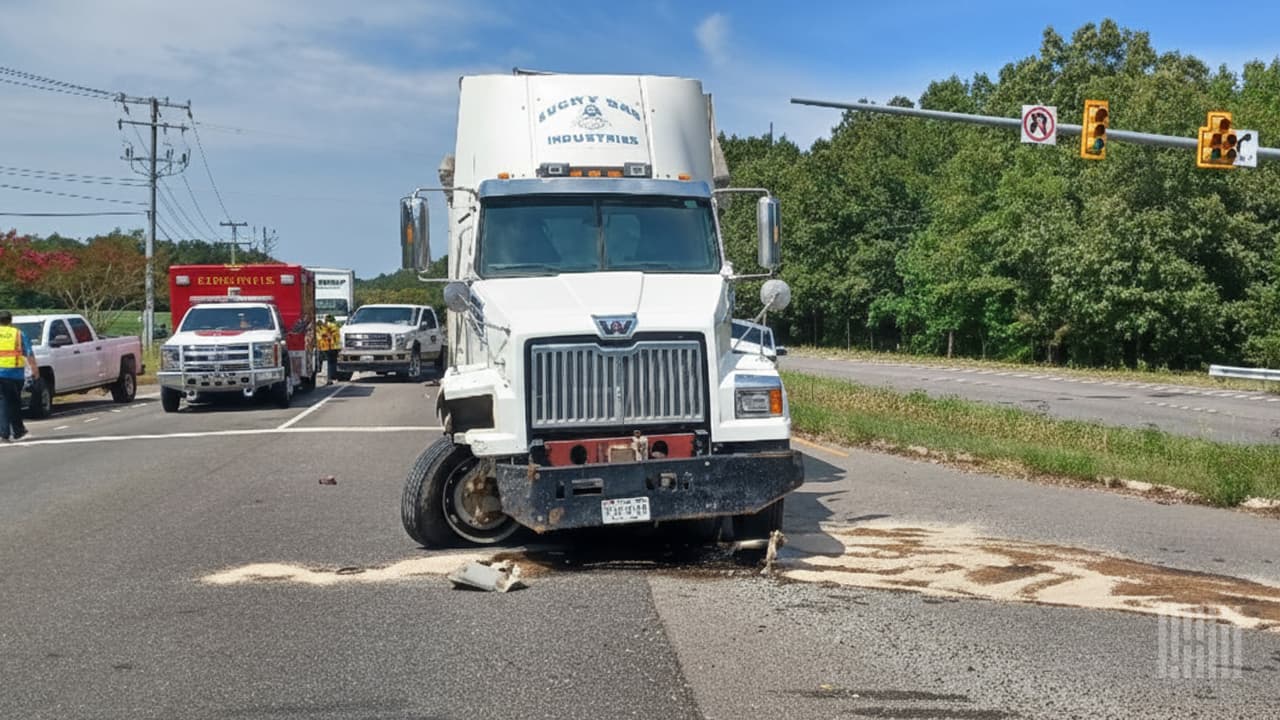
The Supreme Court ruled unanimously today that state negligent-hiring claims against freight brokers are not preempted by the FAAAA. Twenty-eight thousand brokers just woke up in a different legal universe. The post The Supreme Court just told every freight broker that they can be sued appeared first on FreightWaves.
Source Lens
Industry Context
Useful background context, but lower-priority than direct platform, community, or operator intelligence.
Impact Level
medium
Use this briefing to decide whether your team needs an immediate workflow, policy, or reporting change.
Key Stat / Trigger
No single quantitative trigger surfaced in this report.
Focus on the operational implication, not just the headline.
Full Coverage
The Supreme Court of the United States handed down its decision in Montgomery v. Caribe Transport II, LLC, this morning. It was unanimous. Nine to zero. Justice Amy Coney Barrett wrote the opinion.
Justice Brett Kavanaugh filed a concurrence, joined by Justice Samuel Alito, saying the case was closer than the majority opinion suggested, but agreeing with the result. A negligent-hiring claim against a freight broker is not preempted by the Federal Aviation Administration Authorization Act. The FAAAA’s safety exception, 49 U. S. C.
Section 14501(c)(2)(A), saves it. States retain authority to regulate safety “with respect to motor vehicles,” and require a broker to exercise ordinary care when selecting a carrier that concerns motor vehicles. That is the whole thing. Eight pages. No dissent. The Seventh Circuit is reversed. The case goes back for proceedings consistent with the opinion.
Shawn Montgomery, the driver who lost his leg when Yosniel Varela-Mojena veered off course in a Mack Truck hauling plastic pots through Illinois, can now pursue his negligent-hiring claim against C. H. Robinson. The freight brokerage industry’s federal preemption defense is over. Barrett’s opinion is remarkably short for a case this consequential.
The analytical framework fits on a napkin. The FAAAA preempts state laws “related to a price, route, or service” of a motor carrier or broker “with respect to the transportation of property.” Section 14501(c)(1). But the safety exception preserves “the safety regulatory authority of a State with respect to motor vehicles.” Section 14501(c)(2)(A).
The court asked one question. Is a negligent-hiring claim against a broker a claim “with respect to motor vehicles”? The FAAAA does not define “with respect to.” The court relied on dictionary definitions and its prior construction in Dan’s City Used Cars, Inc. v. Pelkey (2013), where it said the phrase means “concerns.”
The FAAAA defines “motor vehicle” as a vehicle propelled by mechanical power and used on a highway in transportation. Section 13102(16). Put it together. A claim is “with respect to motor vehicles” if it concerns the vehicles used in transportation. Requiring C. H. Robinson to exercise ordinary care in selecting a carrier concerns motor vehicles.
Most obviously, Barrett wrote, the trucks that will transport the goods. The three counterarguments C. H. Robinson raised all failed. C. H. Robinson argued that reading the safety exception this way would swallow the preemption clause whole. Barrett said no. The safety exception saves only claims involving motor vehicle safety.
State laws related to prices, routes, and services that have nothing to do with safety remain preempted. The clause still does work. It just does not protect brokers from accountability when their carrier selection puts dangerous trucks on the road. C. H. Robinson argued that Montgomery’s reading creates surplusage.
Barrett said the surplusage exists regardless of how you define “with respect to motor vehicles” because the overlap comes from the word “safety,” not from the breadth of the phrase. C. H. Robinson pointed to subsection (b) of the FAAAA, which preempts state regulation of intrastate broker activities and contains no safety exception.
The argument was that Congress must have intended brokers to be fully shielded from safety claims; why leave the safety exception out of subsection (b)? Barrett acknowledged that it is “not obvious” why Congress included a safety exception in subsection (c) but not in subsection (b).
Then she wrote the line that will be quoted in every brief filed in this area for the next decade: “Better to live with the mystery than to rewrite the statute.” Barrett wrote the holding. Kavanaugh wrote the roadmap for what comes next. Kavanaugh, joined by Alito, said this case was closer than the majority opinion suggested.
He walked through the contextual considerations on both sides, and his analysis is the most honest accounting of the competing interests that any federal judge has put on paper in this area. In favor of the brokers, Kavanaugh noted two things. First, the FAAAA mandates minimum insurance coverage for trucking companies but not for brokers.
Section 13906(a)(1) versus (b)(2)(A). That gap suggests Congress did not anticipate tort suits against brokers for carrier selection. If it had, it presumably would have mandated insurance for them too. Second, the subsection (b) anomaly. Everyone agrees that the FAAAA preempts state tort suits against brokers for arranging intrastate transportation.
Montgomery’s reading means state tort suits are permitted for interstate transportation but are preempted for intrastate transportation. That is, as Kavanaugh wrote, “exactly backward” from what ordinary preemption doctrine rooted in federalism would predict. Then Kavanaugh laid out why those points do not carry the day.
The FAA Authorization Act was an economic deregulation statute. It was not a safety deregulation statute. Congress left state
Original Source
This briefing is based on reporting from Freightwaves. Use the original post for full primary-source context.
Style
Audience