

Houston gains cargo share as volumes soften at West Coast ports
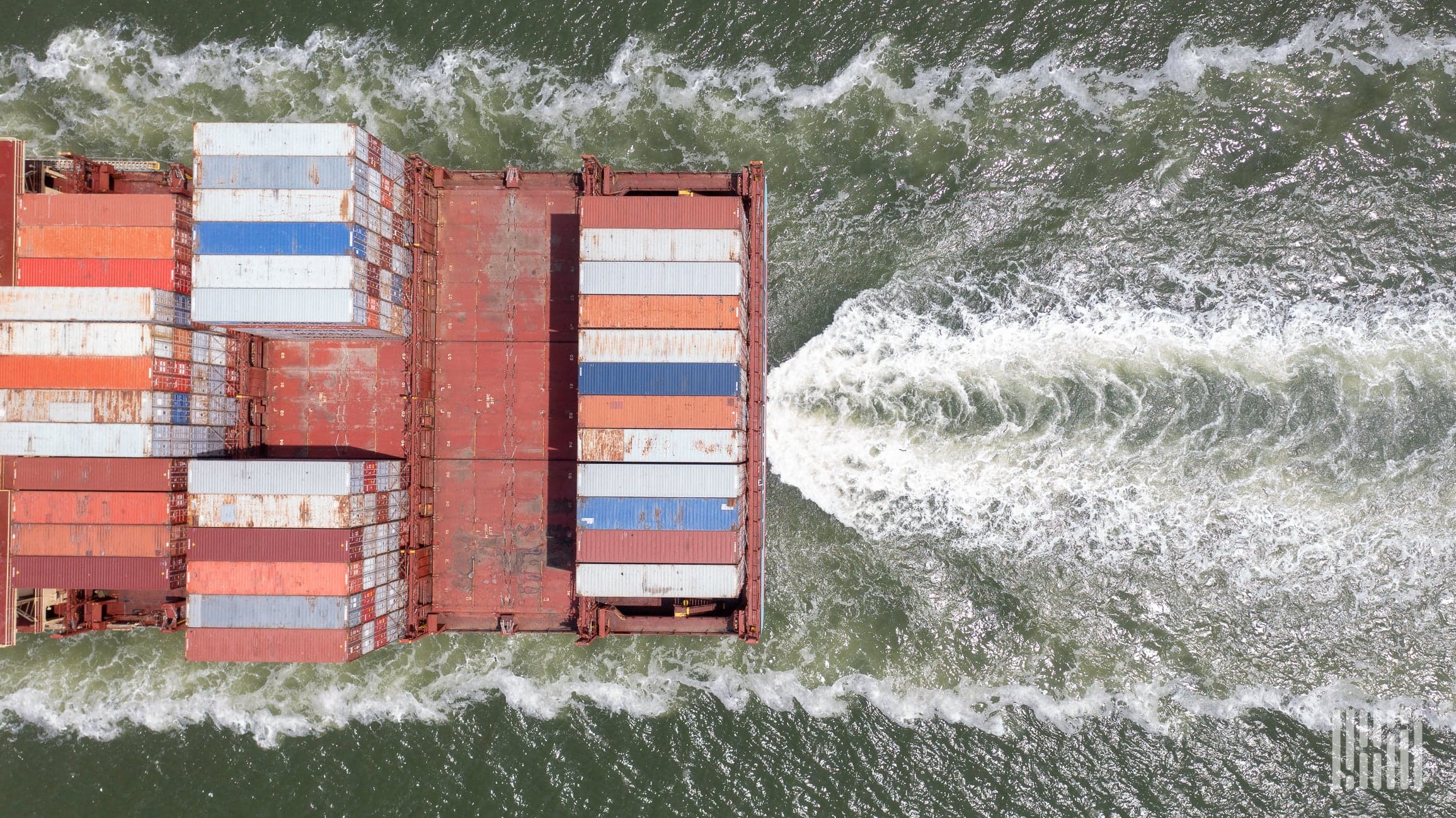
Flexport leaders said import demand remains uneven across North America, with Houston and East Coast ports gaining share. The post Houston gains cargo share as volumes soften at West Coast ports appeared first on FreightWaves.
Source Lens
Industry Context
Useful background context, but lower-priority than direct platform, community, or operator intelligence.
Impact Level
medium
Use this briefing to decide whether your team needs an immediate workflow, policy, or reporting change.
Key Stat / Trigger
No single quantitative trigger surfaced in this report.
Focus on the operational implication, not just the headline.
Full Coverage
Executives at Flexport said ocean and air freight markets are showing signs of tightening capacity and elevated transportation costs heading into summer during the company’s North America Freight Market Update webinar on Thursday.
The webinar featured Nathan Strang, Kyle Beaulieu and David Grinevald, who discussed shifting import patterns, tighter vessel deployment, fuel surcharges and ongoing disruptions tied to Middle East tensions and global trade uncertainty. Flexport, founded in 2013 by Ryan Petersen and based in San Francisco, provides global logistics solutions. Strang said U.
S. import volumes have softened at several major gateways following a strong 2025, with the ports of Los Angeles and Long Beach both seeing declines of roughly 1. 5% year over year. “Houston’s growth continues,” Strang said during the webinar. “We’ve seen a lot of containerized cargo going into Houston.
Improvements to the ship canal have really allowed larger vessels to get in there and heavier vessels to go into the port of Houston.”
Strang said cargo is increasingly shifting toward East Coast and Gulf Coast ports, particularly Virginia and Houston, driven by changes in warehousing strategies, direct-to-consumer fulfillment and trans-Pacific service adjustments.
“The overall trend is that we’re still seeing a little bit of cargo slipping over to the East Coast for various reasons,” Strang said. “Houston is still very popular.” SONAR’s Inbound Ocean Shipments Index measures freight booking activity for shipments entering the U. S. at the port level based on estimated departure dates.
Port Houston recently saw a huge spike in bookings in mid-March just after the U. S. -Iran conflict began on February 28. SONAR’s Inbound Ocean Shipments Index for Port Houston (IOSI. USHOU) shows bookings for freight bound for Houston are increasing faster than Los Angeles and Long Beach and is up 7. 2% year over year. To learn more about SONAR, click here.
Strang also highlighted persistent operational disruptions across global trade lanes, including vessel congestion in Europe, soybean-export bottlenecks in South America and continued instability in the Middle East. “The Strait of Hormuz is still very much non-operational,” Strang said. “It is closed so the Jebel Ali port is not available.”
Beaulieu said carriers tightened trans-Pacific eastbound capacity during May by blanking sailings around China’s May Day holiday, creating a firmer supply-demand environment entering the second half of the month. “Supply is tighter now than it’s been for most of 2026,” Beaulieu said.
Beaulieu said deployment levels are expected to improve into late May and early June, although service disruptions could still constrain effective capacity. “The open question is whether there will be a demand increase that would keep utilization up throughout June and in essence be an early peak,” Beaulieu said.
Beaulieu added that rising operating costs and fuel surcharges continue to pressure ocean freight pricing globally. “Everyone should expect elevated rate levels to continue through the end of the month,” Beaulieu said.
On the air cargo side, Grinevald said the market has entered a “wait-and-see mode” after several weeks of rising rates, with global airfreight pricing stabilizing around $3. 29 per kilogram despite weakening tonnage volumes. “The main phenomenon at play here is that we’re seeing a decoupling between rates and volume,” Grinevald said.
“Rates kept on rising even though tonnage fell.” Grinevald said geopolitical tensions in the Middle East continue to disrupt airline operations and fuel markets globally, even as some airspace restrictions ease. “The repercussions of the Middle East situation are global,” Grinevald said.
Grinevald said airlines continue to face operational uncertainty tied to insurance restrictions, rerouted flight paths and volatile fuel prices. “We are now standing at 23-year highs,” Grinevald said of jet fuel prices.
Executives also fielded questions about congestion at the ports of Savannah and Vancouver, rail service into inland hubs and the likelihood of additional general rate increases, or GRIs, during the summer shipping season.
Beaulieu said current trans-Pacific market conditions suggest carriers are likely to hold mid-May GRIs as tighter vessel supply supports higher pricing. “Capacity has tightened very much as a result of some of the blanks that were in market for May and then tightening of the supply-demand balance,” Beaulieu said.
The post Houston gains cargo share as volumes soften at West Coast ports appeared first on FreightWaves.
Original Source
This briefing is based on reporting from Freightwaves. Use the original post for full primary-source context.
Style
Audience